
The Deceptive Green Checkmark
Your automated tests are passing. The CI pipeline glows green. But what if the test failed the first, second, or even third time before finally succeeding? Cypress's built-in retry mechanism, designed to handle transient environmental issues, can inadvertently mask deeper, intermittent product defects. Treating a successful retry as a clean pass is a common mistake, leading to a false sense of security and potentially shipping buggy code.
Browser tests are inherently complex. They interact with networks, asynchronous UI states, database calls, and the unpredictable nature of animations. These factors can cause tests to fail sporadically. Cypress retries offer a pragmatic solution, re-running a test if it fails due to these ephemeral conditions. However, the danger lies in assuming that the final 'Pass' erases the initial 'Fail'. This approach overlooks the crucial signal that a test required multiple attempts to succeed.
The core issue is a misunderstanding of what a test result signifies. A test outcome is not a single bit of information; it has dimensions. The final verdict (Pass/Fail) is only one part. Equally important is the history of attempts. Did it pass on the first try, or did it take several attempts? This attempt history is a vital reliability signal, telling you more about the stability of your application than a simple final pass.
Two Dimensions of Test Results
To truly understand test reliability, we must decouple the final result from the attempt history. A more nuanced approach involves storing and analyzing both pieces of information. Consider a simple table that maps attempt history to the final outcome and the reliability signal it provides:
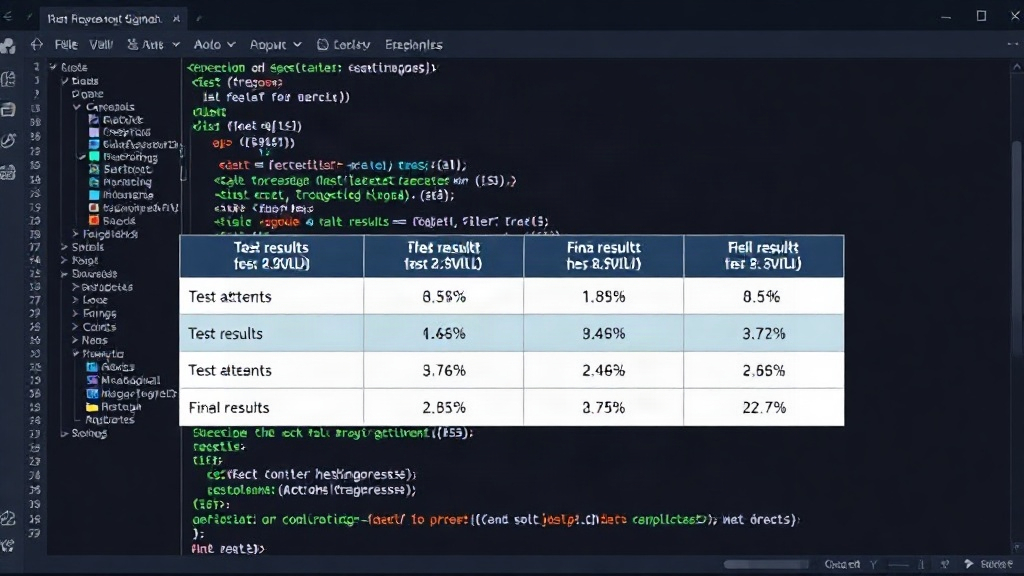
This table highlights critical distinctions:
- Pass (1 attempt): The test passed on its first try. This indicates stable behavior under current conditions.
- Fail, Pass (multiple attempts): The test failed initially but passed on a subsequent retry. This is the classic 'flaky' scenario. It suggests an intermittent issue that the retry mechanism happened to overcome. The system might have recovered, or the retry might have simply landed on a moment of stability. This is a warning sign.
- Fail, Fail, Fail: The test failed consistently across all allowed retries. This indicates a clear, reproducible defect in the application or test environment.
- Pass, Fail: This scenario is less common with typical retry configurations (which usually retry on failure), but it represents non-repeatable behavior. If a test passes initially and then fails on a subsequent run (perhaps due to a different test running first, or environmental changes), it also signals instability.
A CI pipeline that simply reports 'Pass' when a test eventually succeeds after multiple retries is providing incomplete information. It's like a doctor saying a patient is healthy because they survived a critical illness, without acknowledging the severity of the initial condition and the struggle to recover. The 'Fail, Pass' scenario is not a clean win; it's evidence of fragility.
Identifying and Addressing Flakiness
When a test requires retries, it's a signal that something is unstable. This instability can stem from several sources:
- Network Latency: Slow API responses or network interruptions can cause elements to not be ready when the test expects them.
- Asynchronous Operations: UI updates that don't complete immediately, or background processes that interfere with test execution.
- Race Conditions: Multiple parts of the application attempting to access or modify shared resources simultaneously, leading to unpredictable states.
- Browser/Environment Variability: Differences in rendering speed, background processes on the testing machine, or even subtle timing variations between test runs.
- Test Data Issues: Inconsistent or corrupted test data can lead to unexpected application behavior.
- Application Bugs: The most concerning possibility is that the intermittent failure is a genuine bug in the application logic that only manifests under specific, hard-to-pinpoint conditions.
The mistake is treating the successful retry as a normal pass. Instead, the system should flag tests that required retries. This flag indicates a deviation from ideal behavior. Developers should then investigate these flagged tests to understand why the retry was necessary. Was it a transient network blip that resolved itself, or was the application in a bad state that the retry fortuitously skipped over?
Implementing a Better Strategy
To gain accurate insights, testing frameworks and CI/CD pipelines should be configured to store and report attempt history. This means not just logging the final outcome but also recording the number of retries and the outcome of each attempt.
Here's how you can approach this:
- Configure Cypress Retries: Ensure Cypress is configured with a reasonable number of retries. The default is 0, so you'll need to set this in your `cypress.config.js` or `cypress.json` file. For example:
retries: { run_attempts: 2 }. This tells Cypress to retry a failing test up to two additional times. - Capture Attempt Data: Your CI/CD system should be able to capture detailed test results, including which tests failed initially and passed on retry. Many CI platforms integrate with Cypress to provide this data. Look for plugins or custom reporters that can export this granular information.
- Analyze the Data: Regularly review tests that required retries. Treat these as candidates for deeper investigation. Don't just look at the final pass/fail status.
- Fix the Root Cause: If a test consistently requires retries, it's a strong indicator of an underlying problem. This might involve optimizing application code, improving test waits, or fixing actual bugs.
- Differentiate Signals: Your reporting should clearly distinguish between tests that pass on the first attempt and those that pass after retries. This allows teams to prioritize fixing flaky tests over those that are consistently stable.
By treating a passing retry not as a victory but as a diagnostic alert, development teams can uncover and fix the intermittent issues that truly degrade software quality. This shift in perspective transforms Cypress retries from a potential bug concealer into a powerful tool for identifying and resolving the subtle instabilities that plague complex applications.