Cynative Security Research Agent: A New Paradigm for Cloud Security
Cynative has introduced a new AI-powered agent designed to transform how security professionals interact with their cloud infrastructure. The Cynative Security Research Agent aims to provide a safe, non-intrusive way to query and understand complex cloud environments, a critical need in an era of escalating cloud-native threats and intricate configurations.
Traditional methods of security research within cloud environments often involve direct access to live systems. This can be fraught with peril, as missteps or overly aggressive queries can inadvertently disrupt production workloads, cause outages, or even trigger unintended security alerts. For security teams, this creates a difficult trade-off: the need for deep insight versus the risk of operational impact. Cynative’s agent seeks to eliminate this dichotomy by offering a read-only, AI-driven interface that abstracts away the complexities of direct cloud interaction.
How the Cynative Agent Works
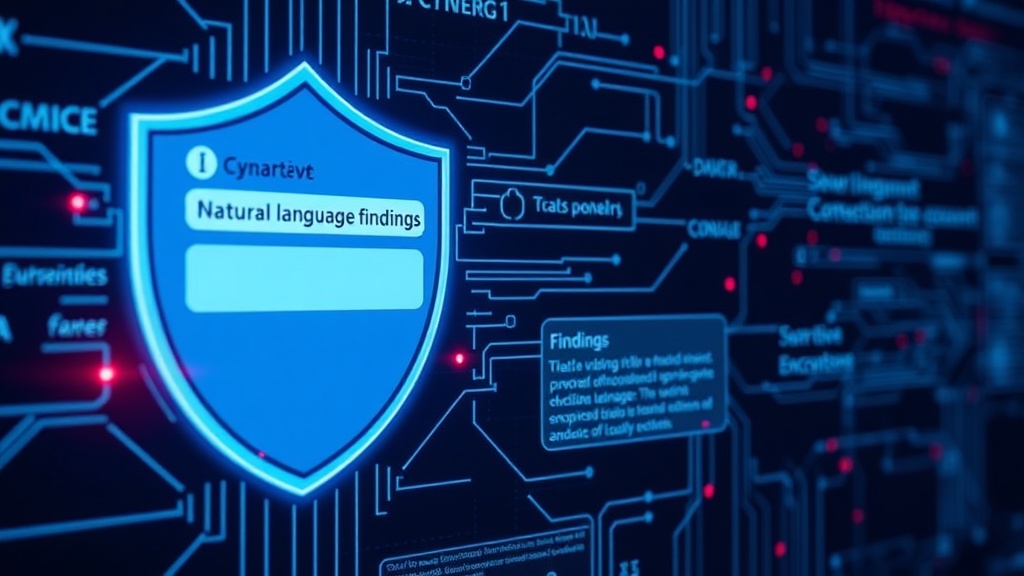
The core innovation of the Cynative Security Research Agent lies in its ability to understand and interpret natural language queries about cloud security posture. Instead of requiring security analysts to be fluent in a multitude of cloud provider APIs, CLI commands, and IAM policies, the agent allows them to ask questions in plain English. For instance, a user could ask, "Show me all S3 buckets that are publicly accessible" or "List all EC2 instances without associated security groups." The agent then translates these natural language requests into the necessary API calls and data retrieval operations across the target cloud environment.
Crucially, the agent operates in a read-only capacity. This design principle is central to its promise of not breaking production. It means the agent can gather information about configurations, permissions, network settings, and resource states without the ability to modify, delete, or otherwise alter any live cloud resources. This is akin to having a highly knowledgeable and diligent auditor who can inspect every corner of your data center without touching a single server or cable. The agent accesses cloud APIs to collect metadata and configuration details, which are then processed by its AI to provide concise, actionable answers.
Key Features and Benefits
The Cynative Security Research Agent offers several key features tailored to the needs of modern security teams:
- Natural Language Querying: Security professionals can interact with their cloud environment using simple, conversational language, lowering the barrier to entry for complex investigations.
- Read-Only Operations: The agent's non-intrusive approach ensures that production environments remain stable and unaffected during security research, mitigating risks of accidental disruption.
- Comprehensive Cloud Coverage: The agent is designed to work across major cloud providers (e.g., AWS, Azure, GCP), providing a unified interface for multi-cloud security analysis.
- AI-Powered Insights: Beyond simply retrieving data, the AI component analyzes the collected information to identify potential security misconfigurations, vulnerabilities, and compliance risks.
- Contextual Understanding: The agent aims to understand the relationships between different cloud resources and services, enabling more sophisticated queries and deeper insights into the security posture. For example, understanding that a specific IAM role is attached to a particular EC2 instance and that instance has public internet access provides a richer security context than just knowing the IAM role exists.
The benefit of this approach is a significant acceleration in the speed and accuracy of cloud security assessments. Instead of spending hours or days manually sifting through dashboards and running complex scripts, security analysts can get answers in minutes. This allows teams to be more proactive in identifying and remediating risks, staying ahead of potential breaches.
Addressing the Cloud Complexity Challenge
Cloud environments are notoriously complex and dynamic. The proliferation of microservices, serverless functions, and containerized applications, coupled with the intricate web of Identity and Access Management (IAM) policies and network configurations, makes comprehensive security oversight a monumental task. Misconfigurations are a leading cause of cloud breaches, often stemming from human error or a lack of complete understanding of the blast radius of a particular setting.
The Cynative agent tackles this complexity head-on. By abstracting the underlying cloud infrastructure, it allows security teams to focus on the 'what' and 'why' of security, rather than the 'how' of interacting with specific cloud APIs. This is particularly valuable for organizations that operate in multi-cloud environments, where managing security across different providers with their unique services and interfaces can be overwhelming. The agent acts as a universal translator and investigator, making the security audit process more efficient and less error-prone.
The Future of Cloud Security Research
The introduction of the Cynative Security Research Agent signals a broader trend towards AI-driven security operations. As cloud infrastructures become more complex and the threat landscape continues to evolve, tools that can automate, simplify, and enhance security analysis are becoming indispensable. The ability to query vast amounts of data in natural language, without risking operational stability, is a significant step forward.
What remains to be seen is how effectively these AI agents can handle increasingly nuanced and context-dependent security questions. As cloud environments grow more sophisticated, the ability of the AI to understand implicit relationships and infer potential risks based on subtle configuration details will be paramount. Furthermore, the integration of such agents into existing security workflows and CI/CD pipelines will be crucial for widespread adoption. The promise is clear: faster, safer, and more effective cloud security research. The execution will depend on the agent's continued evolution and its ability to adapt to the ever-changing cloud landscape.