Attackers Exploited Valid Credentials, Not Software Flaws
In a stark reminder that the weakest link in cybersecurity is often human, CRM software provider Beacon has confirmed a significant data breach. The incident, which came to light on July 29, 2026, and was disclosed to customers on August 3, was not the result of a sophisticated exploit targeting Beacon's core software. Instead, attackers gained access by using compromised login credentials. This means that no software patch or security update for the CRM itself would have prevented this specific intrusion.
Beacon CRM, a cloud-based platform used by over 1,000 charities for managing donations, memberships, and event ticketing, experienced an unauthorized third party accessing its systems. The intruders leveraged valid credentials to download copies of database backups. Beacon's notification to its clients indicates that all data, including sensitive attachments, may have been exfiltrated. This incident underscores a growing trend where attackers bypass complex zero-day exploits in favor of simpler, more direct methods of entry.
The Credential Compromise Epidemic
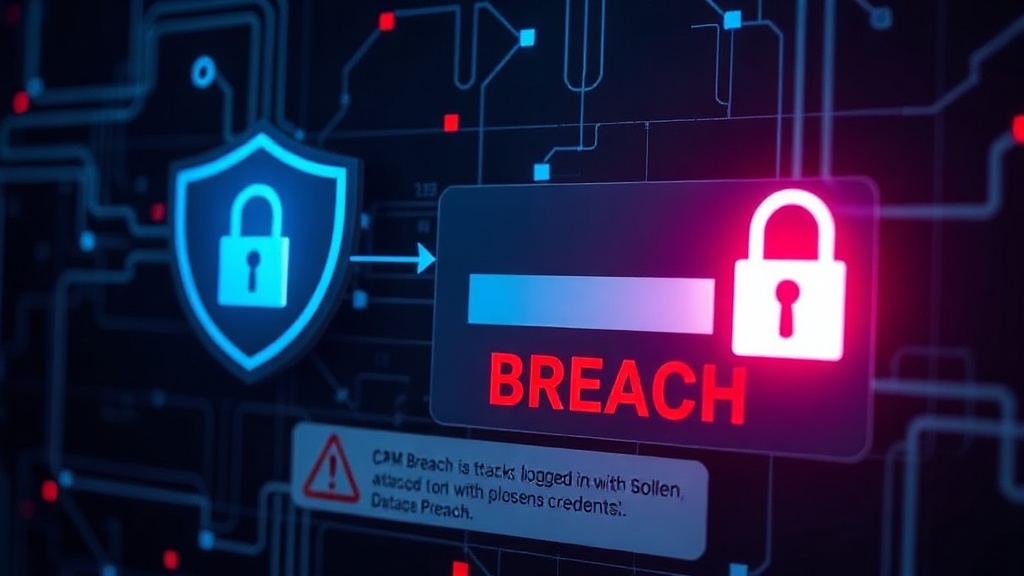
The root cause of this breach lies in the widespread issue of credential compromise. Attackers obtain these credentials through various means, including phishing attacks, purchasing them on the dark web from previous data leaks, or using credential stuffing attacks against less secure services that users might reuse passwords for. Once a valid username and password combination is acquired, the attacker can present themselves to the CRM system as a legitimate user.
The excerpt from the original publication highlights this critical point: "attackers turned up holding a valid credential or an OAuth token nobody had revoked, then used ordinary product features to pull data out in bulk. No patch would have stopped any of it." This is a crucial distinction. Security vulnerabilities in software, such as SQL injection flaws or cross-site scripting (XSS) bugs, require specific exploits to be developed and deployed. In contrast, stolen credentials provide a direct, authenticated path into the system, bypassing many traditional perimeter defenses.
The attack on Beacon CRM is particularly concerning given its user base. Charities often handle highly sensitive personal information, including donor details, financial contributions, and personal identifiers of beneficiaries and volunteers. The compromise of this data can have severe consequences, ranging from reputational damage and loss of trust to financial fraud and identity theft for individuals involved.
Implications for CRM Users and Providers
For charities relying on Beacon CRM, the immediate concern is the extent of the data exposure and the steps they need to take to protect their own constituents. They are advised to assume all data within their account was compromised. This means re-evaluating their security posture, potentially notifying their own donors and stakeholders, and implementing enhanced monitoring for suspicious activity related to their operations.
For CRM providers like Beacon, this incident serves as a harsh lesson. While robust software security is paramount, the reality of credential-based attacks means that identity and access management (IAM) must be treated with equal, if not greater, importance. This includes implementing multi-factor authentication (MFA) by default, robust monitoring for anomalous login patterns, and clear protocols for credential revocation and session management. The ability to detect and respond to compromised credentials quickly is as vital as patching software vulnerabilities.
The trend of credential stuffing and phishing-driven breaches is unlikely to abate. Attackers are continually seeking the path of least resistance. When sophisticated exploits are difficult to find or execute, they will pivot to exploiting human error and weak password hygiene. This incident should prompt a broader conversation within the SaaS industry about default security settings and user education, especially for platforms handling sensitive data.
What Happens Next?
Beacon's response, while reactive, involves notifying customers and advising them on the potential scope of the breach. The company's focus will now shift to understanding precisely how the credentials were compromised and strengthening its internal controls to prevent recurrence. For the affected charities, the path forward involves damage control, communicating with their stakeholders, and potentially migrating to more secure systems or demanding stronger security guarantees from their vendors.
The broader cybersecurity community will likely analyze this event as another case study in the persistent threat of credential theft. It highlights that even well-intentioned organizations can fall victim if their users' credentials are compromised elsewhere. The challenge for all organizations, from small charities to large enterprises, is to build a defense-in-depth strategy that accounts for both technical vulnerabilities and human factors. Relying solely on software security without addressing credential management is akin to building a fortress with an unlocked front door.
This incident at Beacon CRM isn't just about one company's data being exposed; it's a symptom of a larger, ongoing battle against attackers who are increasingly leveraging stolen credentials to infiltrate systems. The focus must be on proactive measures: strong password policies, mandatory MFA, regular security awareness training, and vigilant monitoring for suspicious access patterns. Without these, even the most secure software can be rendered vulnerable by a simple, stolen password.