
ContextsBase Unveiled: Centralizing Product Knowledge for AI
ContextsBase has officially launched its AI Knowledge Platform, a new tool designed to help product teams manage and leverage their internal knowledge bases. The platform aims to make product information accessible and actionable for AI applications, addressing a common pain point for organizations looking to integrate AI into their workflows without losing track of critical product details.
The core problem ContextsBase seeks to solve is the fragmentation and inaccessibility of product knowledge. In many companies, information about product features, specifications, user feedback, and development roadmaps is scattered across various documents, wikis, chat logs, and databases. This makes it difficult for both human team members and AI systems to find and utilize the right information efficiently. ContextsBase positions itself as a unified layer that aggregates this disparate data, structures it, and makes it queryable.
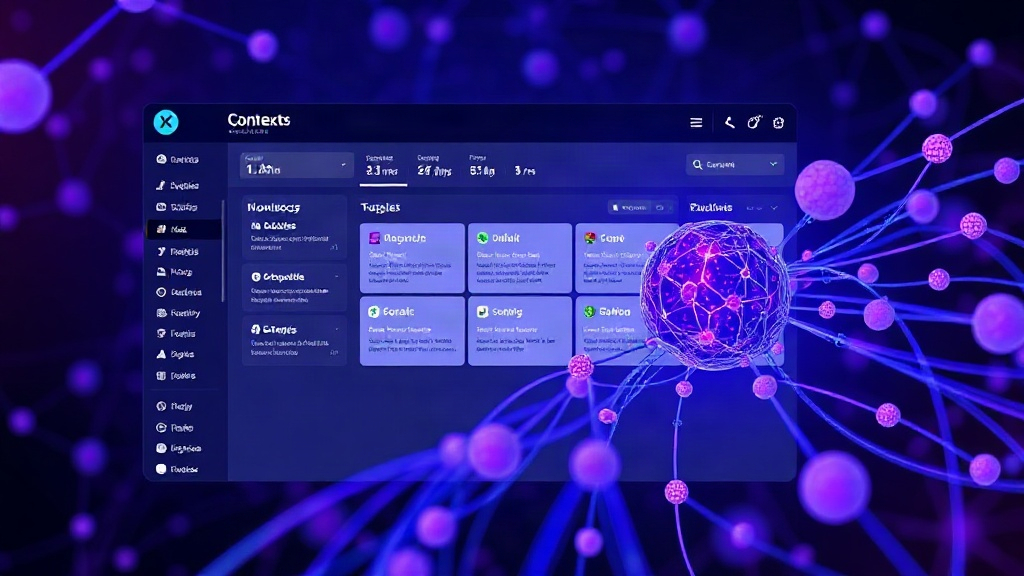
At its heart, ContextsBase functions as a sophisticated knowledge graph tailored for product information. It ingests data from multiple sources, including internal documentation, customer support tickets, user research, and engineering notes. Once ingested, the platform uses AI to understand the relationships between different pieces of information, creating a rich, interconnected knowledge base. This structured data can then be used to answer complex questions about the product, identify trends in user feedback, or even generate documentation.
The platform offers several key functionalities. Firstly, it provides robust data ingestion capabilities, supporting a wide range of file formats and integration points with popular business tools. This ensures that existing knowledge repositories can be easily incorporated. Secondly, ContextsBase employs advanced natural language processing (NLP) and machine learning (ML) to semantically understand the content. This goes beyond simple keyword matching, allowing the AI to grasp context, intent, and relationships within the data. Thirdly, it offers a powerful query interface, enabling users to ask natural language questions and receive precise, context-aware answers derived directly from the knowledge base.
Targeting Product Development Workflows
ContextsBase is specifically designed to enhance the productivity of product managers, engineers, designers, and customer support teams. For product managers, it can surface insights from user feedback to inform roadmap decisions. For engineers, it can provide quick access to technical specifications or historical design choices. Customer support can use it to find accurate answers to user queries more rapidly, reducing resolution times and improving customer satisfaction. The platform promises to democratize access to product knowledge, moving away from siloed information to a shared, intelligent resource.
The implications for AI integration are significant. By providing a clean, structured, and semantically rich knowledge base, ContextsBase acts as a crucial enabler for deploying AI agents or chatbots that need to understand a company's specific products. Instead of training general-purpose AI models on vast, generic datasets, organizations can fine-tune or prompt AI systems with their own curated product knowledge, leading to more accurate and relevant AI-driven interactions. This could range from internal AI assistants that help employees find information to external-facing AI tools that provide detailed product support.
The company highlights its focus on data security and privacy. For internal knowledge bases, sensitive product roadmaps, competitive analyses, or customer data must remain protected. ContextsBase asserts that its platform is built with enterprise-grade security measures, ensuring that data is encrypted and access controls are robust. This commitment is vital for gaining the trust of companies that handle proprietary information.
While the specifics of the underlying AI models are not detailed, the emphasis is on their ability to process and organize unstructured text and data into a coherent knowledge structure. This involves techniques likely related to topic modeling, entity recognition, and relation extraction, all orchestrated to build a dynamic knowledge graph. The platform's ability to continuously learn and update from new data sources is also a key selling point, ensuring the knowledge base remains current.
ContextsBase's launch enters a growing market for AI-powered knowledge management tools. Several companies are exploring ways to make internal data more accessible and actionable through AI. However, ContextsBase's specific focus on product knowledge and its ambition to serve as a foundational layer for AI applications within product development workflows appear to be its differentiating factors. The challenge will be in demonstrating tangible improvements in efficiency and insight generation for its target users.
The platform is available now, with details on pricing and enterprise solutions expected to be released following its initial launch phase. The company is actively seeking feedback from early adopters to refine its features and capabilities.