
The Bottleneck in LLM Inference
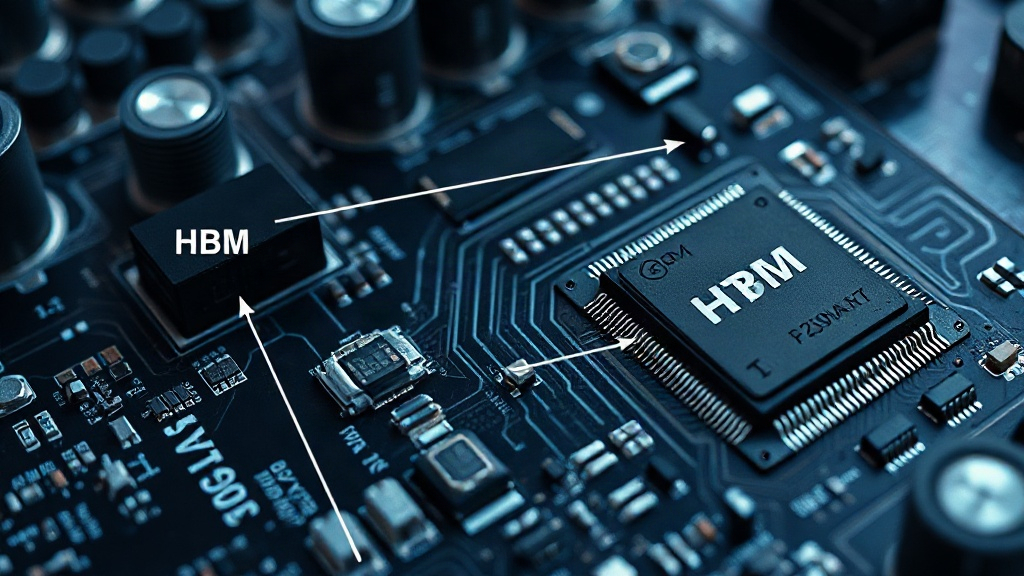
Large Language Models (LLMs) demand immense computational power and memory bandwidth, especially during the inference phase where they generate responses. A primary bottleneck has been the limited bandwidth between the GPU's High Bandwidth Memory (HBM) and the system's main host memory (DRAM). While HBM offers superior speed, its capacity is often insufficient for the massive parameter sets of modern LLMs. Consequently, parts of the model must reside in slower DRAM, leading to frequent, performance-crippling data transfers across the PCIe bus.
This limitation forces a choice: either accept slower inference due to memory constraints or employ complex model partitioning strategies that can be difficult to manage and optimize. The ideal solution would leverage the combined capacity and bandwidth of both memory tiers without introducing significant overhead.
The research paper “BOOST: Concurrent Access to Host Memory and HBM to Accelerate LLM Inference,” authored by researchers from Georgia Tech, Nvidia Research, and Stanford University, introduces a novel runtime system designed to overcome this challenge. The system, aptly named BOOST, is the first of its kind to enable concurrent and proportional access to both GPU memory tiers. By doing so, it effectively combines the bandwidth of host memory and HBM, unlocking significant gains in LLM inference throughput.
Introducing the BOOST Runtime System
BOOST operates by intelligently managing the data flow between the GPU and both its dedicated HBM and the system's DRAM. Traditionally, when an LLM’s parameters exceed HBM capacity, the model is either loaded entirely into DRAM (leading to slow access) or split across HBM and DRAM, requiring explicit data movement operations. BOOST bypasses these limitations by allowing the model to access data residing in both memory spaces concurrently.
The system’s core innovation lies in its ability to partition the LLM’s parameters dynamically. It learns the optimal distribution of model weights across HBM and DRAM based on the inference workload. Crucially, it then enables the GPU to fetch data from both locations simultaneously. This is not a simple caching mechanism; rather, it’s a fundamental shift in how the GPU interacts with its memory hierarchy during inference. Instead of sequential reads or explicit prefetching, BOOST orchestrates parallel reads from HBM and DRAM, effectively pooling their bandwidth.
Think of it less like a single, fast highway with limited lanes, and more like a sophisticated traffic management system that can seamlessly direct vehicles onto both a high-speed rail line and a well-maintained secondary road, ensuring continuous, high-volume flow. The system aims to extract the maximum available bandwidth from the combined memory pool, thereby reducing the time spent waiting for data and accelerating the overall inference process.
Performance Gains and Implications
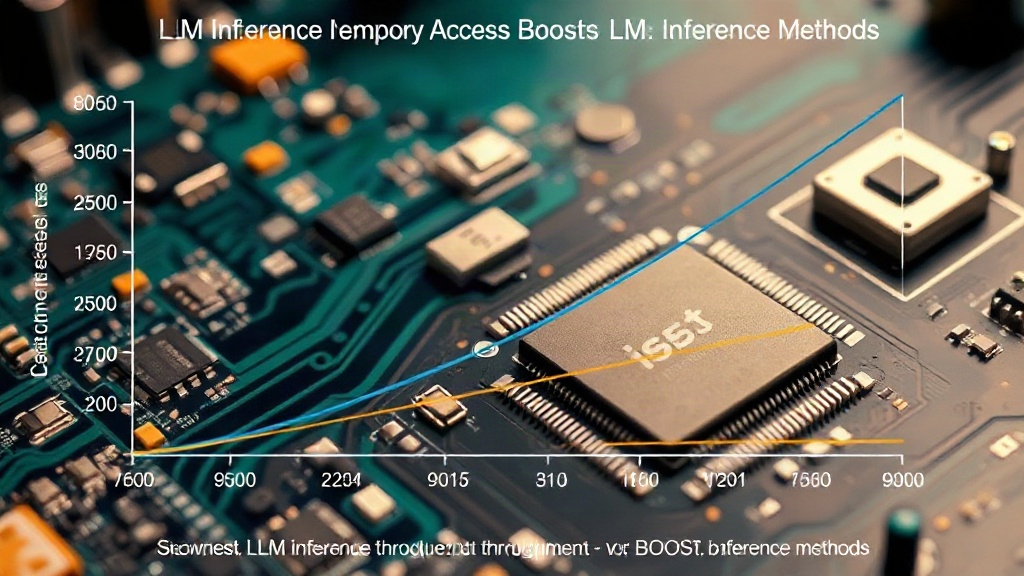
The paper details significant performance improvements achieved using the BOOST system. Benchmarks show that BOOST can nearly double the inference throughput for large models compared to traditional methods that rely solely on HBM or employ basic model parallelism strategies. This dramatic improvement stems directly from exploiting the combined bandwidth of HBM and DRAM, effectively mitigating the memory bottleneck.
The proportional access capability is key here. BOOST doesn't just throw data at the GPU from anywhere; it intelligently allocates parts of the model to HBM and DRAM based on access patterns and memory speeds, ensuring that the most frequently accessed parameters are readily available while less critical ones are fetched from DRAM without stalling the entire pipeline. This dynamic allocation and concurrent access mechanism allow the system to achieve performance levels previously unattainable without specialized, high-capacity HBM configurations.
The implications for the LLM ecosystem are substantial. For developers and researchers working with ever-larger models, BOOST offers a practical path to achieving faster inference without necessarily requiring next-generation hardware with vastly increased HBM capacity. This could democratize access to high-performance LLM inference, making it more feasible for a wider range of applications and hardware configurations. Companies can potentially deploy more powerful models on existing infrastructure, reducing hardware costs and time-to-market for AI-driven products.
Broader Impact and Future Work
The success of BOOST highlights a critical area of research: optimizing memory access patterns for AI workloads. As models continue to grow in size and complexity, simply increasing HBM capacity becomes economically and physically unsustainable. Innovations like BOOST, which focus on intelligent management and utilization of existing memory tiers, are crucial for continued progress. This approach could be extended beyond LLMs to other memory-intensive AI workloads, such as those in computer vision or scientific computing.
While BOOST demonstrates remarkable gains, there are still avenues for further exploration. The researchers note that optimizing the runtime system for different GPU architectures and memory configurations will be an ongoing effort. Furthermore, understanding the precise trade-offs between latency and throughput under various workload conditions could lead to even more refined tuning. The challenge ahead is to integrate such sophisticated runtime systems seamlessly into existing deep learning frameworks, making these performance enhancements accessible to a broader developer community.
What remains to be seen is how quickly these runtime optimizations can be integrated into widely adopted deep learning frameworks like PyTorch or TensorFlow. Developers need robust, easy-to-use tools to benefit from these advancements without becoming experts in memory management themselves.