
The Problem: Missing Failure Path Tests
A common pitfall in software development is creating test suites that appear comprehensive but fail to exercise the most critical parts of the code: the failure paths. This is precisely the situation a developer found with their commit message generation script, git_commit.py. While the script includes a --selftest block, an audit revealed that its eight assertions do not touch the code segments designed to handle actual failures.
The script's purpose is to read a staged Git diff and use an AI model (claude -p) to generate a commit message. The author identified five distinct exit paths within git_commit.py, each representing a real-world failure mode encountered during the project's development. These include issues with network communication, subprocess execution, and the AI model's response. Despite the script's reliance on external processes and network calls—inherently prone to failure—the existing self-tests do not simulate these conditions.
This oversight was discovered when the developer reviewed their test coverage after seeing a trending post about evaluating test assertion counts. The realization dawned that while many assertions existed, they were primarily validating successful execution paths, not the more complex and vital error handling logic.
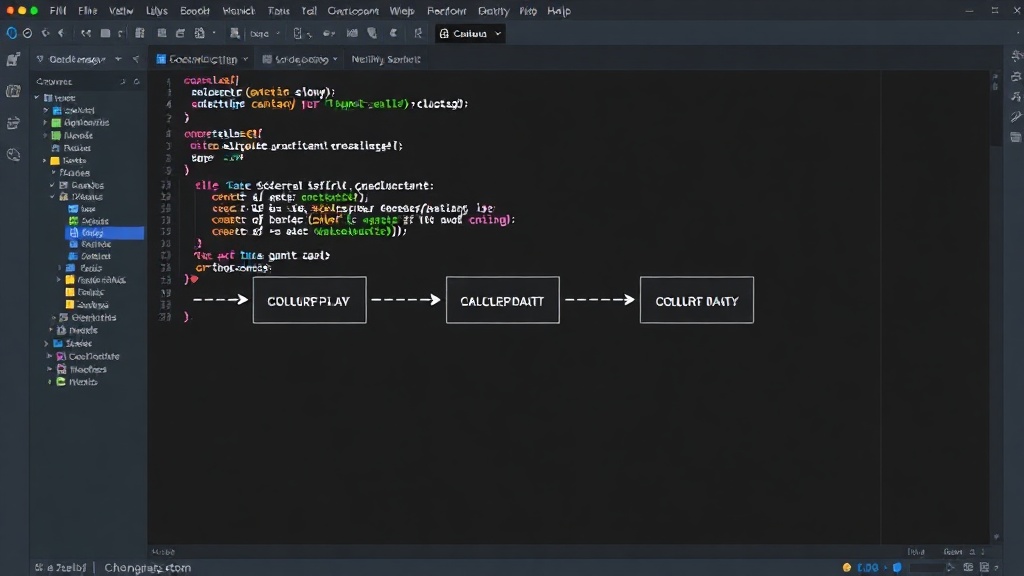
A Tale of Two Test Suites
The developer's repository contains three scripts that interact with external systems: publish_devto.py, server.py, and git_commit.py. Of these, two—publish_devto.py and server.py—feature --selftest blocks that effectively stub out risky external calls and deliberately exercise failure branches. This practice ensures that the scripts behave as expected when these external dependencies falter.
git_commit.py, however, stands apart. Its self-test suite, while present, is insufficient. It calls claude -p to transform a diff into a commit message. The script is designed to exit with different statuses based on various potential issues, such as the AI returning an empty response, an error during the API call, or network connectivity problems. These are not theoretical edge cases; they are modes of failure the developer has personally encountered and addressed in the past.
The core issue is that the --selftest block in git_commit.py does not simulate these failure conditions. It appears to focus only on the happy path, where everything functions correctly. This leaves the script vulnerable to unexpected behavior or outright crashes when real-world issues arise with the AI service or its network connection.
The Danger of Incomplete Test Coverage
The practice of writing tests that only cover successful execution is a pervasive problem. It creates a false sense of security. A test suite might report 100% coverage, or a high number of assertions, but if those assertions are not probing the actual failure modes, the code remains brittle. This is particularly dangerous for scripts that rely on external services, which are never guaranteed to be available or responsive.
Consider the analogy of a building inspector who only checks if the doors open and the lights turn on, but never tests the fire exits, structural integrity under stress, or plumbing under pressure. The building might look functional on the surface, but it could fail catastrophically when the unexpected occurs.
In the case of git_commit.py, a failure in the claude -p call could lead to corrupted commit messages, incomplete commits, or the script simply crashing and halting the developer's workflow. Without tests that specifically mock or trigger these failure states, such issues might only be discovered in production, or worse, during a critical deployment.
The author's realization serves as a potent reminder for all developers: it's not just about the quantity of tests, but the quality and the specific scenarios they cover. Probing failure paths is as crucial, if not more so, than verifying success, especially for code interacting with the outside world.
Next Steps and Best Practices
The immediate next step for the developer is to augment the --selftest block in git_commit.py. This involves using a mocking library or direct stubbing to simulate the various failure responses from the claude -p subprocess. Each of the five identified exit paths should have at least one corresponding test case within the self-test suite.
For other developers, this situation highlights several best practices:
- Audit Existing Tests: Regularly review test suites, especially for critical scripts, to ensure they cover failure scenarios. Look beyond simple assertion counts.
- Prioritize External Dependencies: Scripts interacting with networks, databases, file systems, or subprocesses require robust testing of their error handling.
- Adopt Mocking/Stubbing: Utilize tools and techniques to simulate external service failures, network errors, and unexpected return values.
- Embrace Defensive Programming: Write code that anticipates and handles errors gracefully, and then write tests to prove it.
The developer's candid admission on dev.to provides a valuable learning opportunity. It underscores that even seemingly simple scripts can harbor significant vulnerabilities if their failure modes are not rigorously tested. The goal should always be to build resilient software, and that resilience is proven not when things work, but when they inevitably don't.