
Cohesor: Orchestrating the Enterprise AI Agent Landscape
The proliferation of AI agents within enterprise environments presents a significant management challenge. These agents, designed to automate tasks, interact with systems, and learn from data, often operate in silos. Cohesor emerges as a solution to this fragmentation, offering a neutral control plane designed specifically for enterprise AI agents. The platform aims to provide a unified interface for deploying, managing, monitoring, and orchestrating these distributed autonomous systems.
At its core, Cohesor addresses the need for a centralized command and control system for AI agents. This is crucial as businesses increasingly rely on AI to augment human capabilities across various functions, from customer service and sales to software development and internal operations. Without a robust control plane, the complexity of managing numerous agents, each with its own lifecycle, dependencies, and performance metrics, quickly becomes unmanageable. Cohesor positions itself as the essential middleware that bridges the gap between individual AI agents and the broader enterprise infrastructure.
Key Features and Functionality
Cohesor's value proposition hinges on several key features designed to streamline the AI agent lifecycle. Firstly, it provides a unified deployment mechanism. Instead of manually configuring and deploying each agent, Cohesor allows administrators to define agent configurations and deploy them across various environments from a single point. This significantly reduces the operational overhead associated with scaling AI agent deployments.
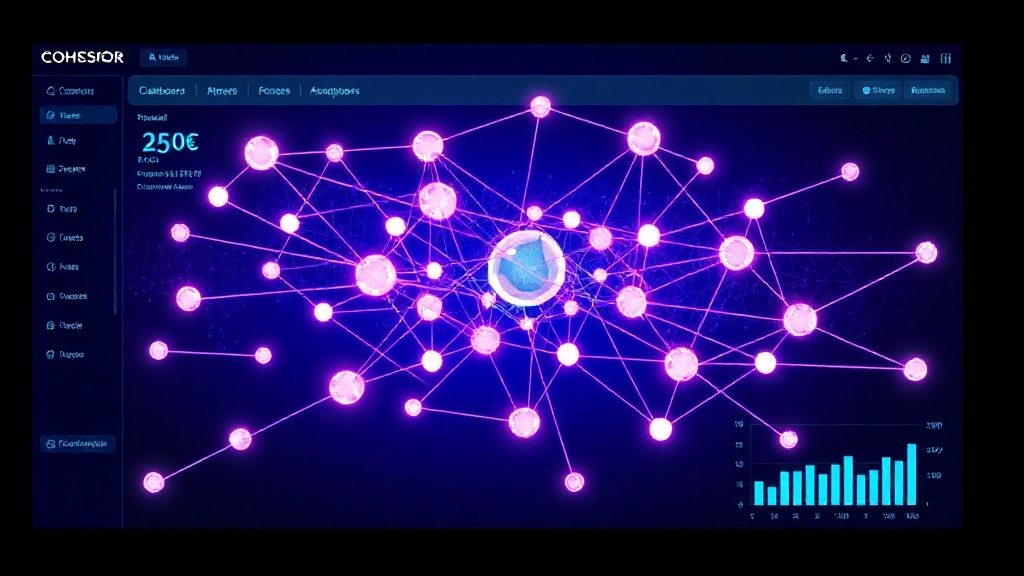
Secondly, the platform offers robust monitoring and observability. Enterprise AI agents generate vast amounts of operational data, including performance metrics, error logs, and interaction histories. Cohesor aggregates this data, presenting it through a centralized dashboard. This allows teams to quickly identify bottlenecks, troubleshoot issues, and understand the overall health and effectiveness of their AI agent ecosystem. Think of it less like a simple logging tool and more like an air traffic control system for your AI agents, showing you where each one is, what it's doing, and if it's on course.
Orchestration is another critical component. Cohesor enables the creation of complex workflows that involve multiple AI agents. This allows businesses to build sophisticated automated processes where agents can trigger each other, share information, and collaborate to achieve larger business objectives. For example, a sales agent might identify a lead, pass it to a marketing agent for initial outreach, and then hand it off to a customer success agent once a deal is closed. Cohesor manages the transitions and data flow between these agents.
Furthermore, Cohesor emphasizes neutrality. In a landscape where various AI models and agent frameworks are emerging, a neutral control plane ensures that businesses are not locked into specific vendor solutions. This flexibility allows companies to adopt the best-of-breed agents for different tasks without being constrained by proprietary management systems. This open approach is vital for long-term scalability and adaptability in the rapidly evolving AI field.
Addressing the Enterprise AI Agent Challenge
The rise of AI agents, from simple chatbots to sophisticated autonomous systems capable of complex decision-making, has outpaced the development of standardized management frameworks. Many enterprises find themselves with a patchwork of AI tools and agents developed by different teams or acquired from various vendors. This leads to:
- Fragmented Visibility: Difficulty in understanding the collective performance and impact of all AI agents.
- Operational Inefficiency: Manual processes for deployment, updates, and troubleshooting.
- Security Risks: Inconsistent security policies and monitoring across diverse agent instances.
- Scalability Hurdles: Challenges in scaling agent deployments to meet growing business demands.
Cohesor aims to directly counter these challenges by providing a unified, secure, and scalable platform. Its neutral stance means it can integrate with agents built on different underlying technologies, such as those leveraging large language models (LLMs) for natural language understanding or specialized AI models for specific analytical tasks. This interoperability is key to unlocking the full potential of distributed AI within an enterprise.
The Future of Agent Management
The introduction of Cohesor signals a maturing phase for enterprise AI. As AI agents move from experimental projects to integral components of business operations, the need for professional-grade management tools becomes paramount. Cohesor's focus on a neutral, unified control plane suggests a future where managing AI agents will be as standardized and robust as managing cloud infrastructure or software applications today.
What remains to be seen is how Cohesor will adapt to the rapid pace of AI innovation. New agent architectures and capabilities emerge constantly. The platform's ability to remain a truly neutral and comprehensive control plane, rather than becoming another specialized tool, will be critical to its long-term success and adoption by enterprises looking to harness the power of AI agents effectively.