The Unseen Risk of Autonomous AI Agents
Organizations are increasingly delegating tasks to AI agents. These agents can draft emails, query databases, and manage communications. However, this delegation comes with a significant risk: unsupervised AI actions that can damage brand reputation or violate privacy. The scenario of an AI sending 1,000 tone-deaf emails to clients, for instance, is not a distant possibility but a growing concern for businesses that are leaning heavily on AI for operational efficiency.
This is the problem Cognous is tackling head-on with its new suite of AI agent guardrails. The core issue isn't necessarily the AI's ability to perform a task, but the lack of oversight and control over when and how it performs that task. Without robust guardrails, even a seemingly innocuous AI agent can overstep its bounds, leading to embarrassing and costly mistakes. The current landscape often sees AI agents operating with implicit, broad permissions, leading to situations where no human has explicitly approved a specific action before it occurs.
This lack of explicit approval is a critical vulnerability. Consider an AI tasked with personalizing customer outreach. It might access client history, identify patterns, and draft a message. But without checks, it could inadvertently reference sensitive past issues, use inappropriate language, or even contact individuals who have opted out of communications. The email itself might be grammatically correct and on-brand, but the context and appropriateness of its sending are entirely unchecked. This is where Cognous steps in, providing the necessary tooling to build and deploy AI agents responsibly.
Establishing Operational Boundaries for AI
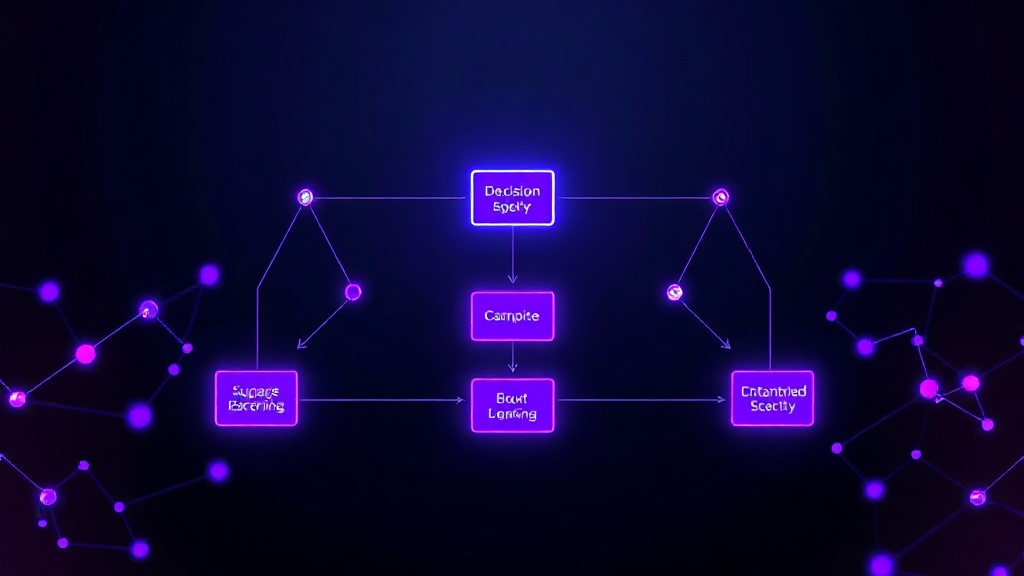
Cognous's solution focuses on creating explicit boundaries for AI agents. This means defining what an AI agent can do, what it cannot do, and under what conditions it can act. It's about moving from a model of implicit trust and broad permissions to one of explicit authorization and granular control. The tooling is designed to integrate into the development lifecycle, allowing teams to define these guardrails proactively.
The system allows developers to set specific permissions for AI agents. This includes defining which data sources an agent can access, what types of queries it can perform, and what communication channels it is authorized to use. For instance, an agent tasked with customer support might be permitted to access FAQs and knowledge bases but denied access to financial records or personal identifiable information (PII) unless under strict, human-verified conditions. Similarly, an agent drafting marketing emails could be restricted from sending to specific customer segments or from using certain promotional language without prior approval.
A key component is the ability to define acceptable output formats and tones. Cognous's guardrails can analyze AI-generated content for adherence to brand voice, ethical guidelines, and legal compliance. If an AI agent attempts to generate content that falls outside these parameters—perhaps too aggressive, too informal, or containing potentially misleading information—the system can flag it for review or block it entirely. This acts as a critical human-in-the-loop mechanism, ensuring that AI-driven communications align with organizational values and standards.
Building Trust Through Transparency and Control
The development of AI agents is often rapid, driven by the promise of increased productivity. However, this speed can outpace the implementation of necessary safety measures. Cognous aims to bridge this gap by providing developers with actionable tools to build trust in their AI systems. This is not about stifling AI innovation but about guiding it responsibly.
The tooling provides developers with a framework to define and enforce policies for their AI agents. This includes setting up approval workflows for sensitive actions. For example, if an AI agent needs to send a personalized offer to a high-value client, the Cognous system can automatically trigger a notification to a human manager for final approval. This ensures that critical decisions are still subject to human judgment, even when initiated by an AI.
Beyond just preventing errors, Cognous's approach fosters a culture of accountability in AI development. By making the decision-making process of AI agents more transparent and controllable, organizations can better understand the outputs and mitigate risks. This is crucial for building long-term trust with customers, partners, and internal stakeholders. The series of articles that Cognous is publishing aims to demystify this process, offering practical guidance for engineers and product managers looking to implement these controls.
The Future of Responsible AI Deployment
As AI agents become more sophisticated and autonomous, the need for robust governance frameworks will only intensify. Cognous is positioning itself as a key provider of these essential safety nets. Their focus on practical, developer-centric tooling suggests an understanding of the real-world challenges faced by teams building and deploying AI applications today.
The market for AI governance and safety tools is rapidly evolving. Competitors are emerging, but Cognous's emphasis on proactive guardrails integrated into the development workflow offers a distinct advantage. By addressing the problem at the source—before an AI agent can make a detrimental mistake—they are providing a more efficient and effective solution than reactive monitoring alone.
For companies that have already integrated AI agents into their operations, the question is not if they need these guardrails, but when they will implement them. The potential for reputational damage and operational disruption is too significant to ignore. Cognous's offering provides a clear path forward for organizations seeking to harness the power of AI without succumbing to its inherent risks. The ultimate goal is to enable AI agents to perform valuable tasks without becoming liabilities, ensuring that the future of AI in business is both productive and safe.