
Bridging the Native Gap for Java Developers
For years, the ability to create native home screen widgets and dynamic interface elements like iOS Live Activities and Android's Dynamic Island remained largely out of reach for developers relying solely on Java and cross-platform frameworks. Codename One, an open-source framework for building native mobile applications using Java, has now bridged this gap. The latest release introduces support for these powerful UI elements, allowing developers to leverage a single Java codebase to target multiple platforms.
Historically, creating widgets presented a significant challenge for frameworks like Codename One. Widgets must render and update independently of the main application, often when the application itself is not running. This requires a rendering engine, an event dispatch thread, and a live object graph—resources typically unavailable to background processes. Codename One's approach circumvents these limitations by abstracting the native platform APIs for widgets, Live Activities, and Dynamic Island, presenting them as familiar Java components.
The framework's ability to handle these features means developers no longer need to write separate native code for each platform's specific widget or dynamic display requirements. This unification significantly reduces development time and complexity, especially for teams already invested in the Java ecosystem.
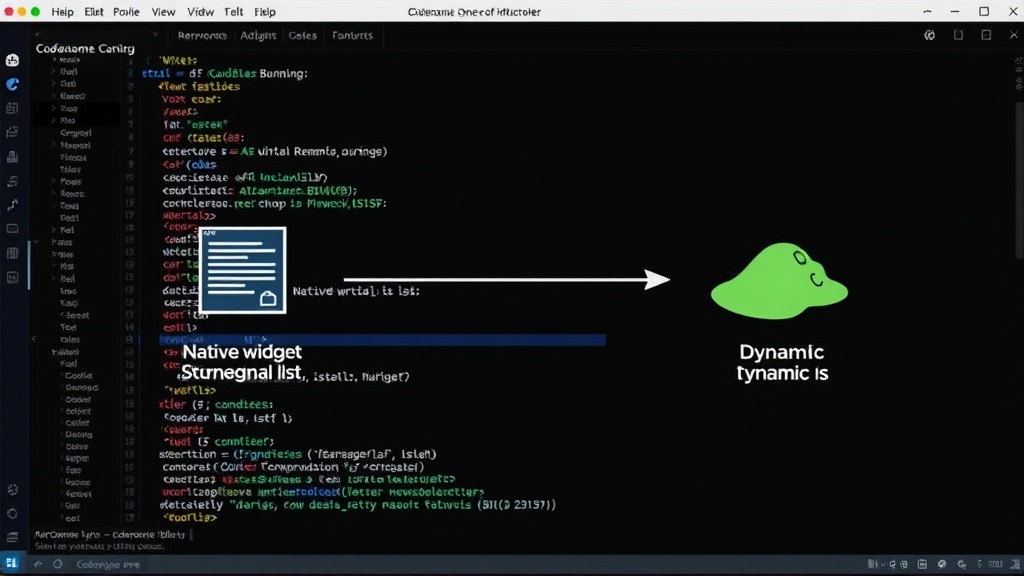
Widgets: Beyond the App Lifecycle
Widget support was a long-standing request within the Codename One community. The core difficulty lay in rendering components outside the standard application lifecycle. Traditional Codename One Component objects depend on the application's renderer, event loop, and active object graph. Home screen widgets, however, operate in a constrained environment, often with no active application process. Codename One's solution abstracts these platform-specific requirements, enabling developers to design and implement widgets using familiar Java constructs.
This means developers can define the appearance and behavior of their widgets in Java. The framework then compiles this definition into the native widget format for Android (App Widgets) and iOS (WidgetKit). The framework handles the complexities of background updates, data fetching, and rendering, abstracting away the native SDKs. This enables a truly cross-platform widget development experience.
Live Activities and Dynamic Island: Real-time Information at a Glance
The introduction of Live Activities for iOS and the Dynamic Island for newer iPhones presents another significant opportunity for real-time information delivery. Codename One's new APIs allow developers to create these dynamic displays directly from their Java code. Live Activities enable apps to show timely, glanceable information—like sports scores, delivery status, or workout progress—directly on the lock screen and in the Dynamic Island.
The Dynamic Island, in particular, offers a unique way to present ongoing activities. It can expand and contract to display alerts, notifications, and background task status. Codename One's integration means Java developers can now programmatically control what appears in the Dynamic Island, whether it's a music player's playback controls, a timer, or navigation directions. This provides a consistent user experience across different iOS devices that support the feature, all managed through a unified Java API.
Developer Experience and Implications
The value proposition for developers is clear: write once, deploy everywhere, with access to cutting-edge native features. This reduces the need for specialized native development skills or maintaining multiple codebases. For existing Codename One projects, integrating these new features is likely to be a straightforward addition, enhancing existing applications with richer, more interactive user experiences without a complete rewrite.
The framework's open-source nature also means that the community can contribute to and benefit from these advancements. As platforms evolve and introduce new dynamic UI elements, Codename One aims to keep pace, providing Java developers with a powerful tool to remain competitive in the mobile app landscape. This move democratizes access to advanced native features, making them accessible to a broader range of developers and businesses.
The challenge for any cross-platform framework is to abstract complex native features without sacrificing performance or developer flexibility. Codename One's commitment to providing a unified Java API for Widgets, Live Activities, and Dynamic Island suggests a mature approach to this challenge. Developers can now focus on the logic and user experience of their applications, trusting the framework to handle the intricacies of native platform integrations.
What remains to be seen is how effectively Codename One handles the edge cases and performance nuances of these features across the vast spectrum of Android and iOS devices. However, the initial offering represents a significant step forward for Java mobile development, bringing powerful, modern native interface elements within reach of a single, unified codebase.