The Core Observation: Control the Path
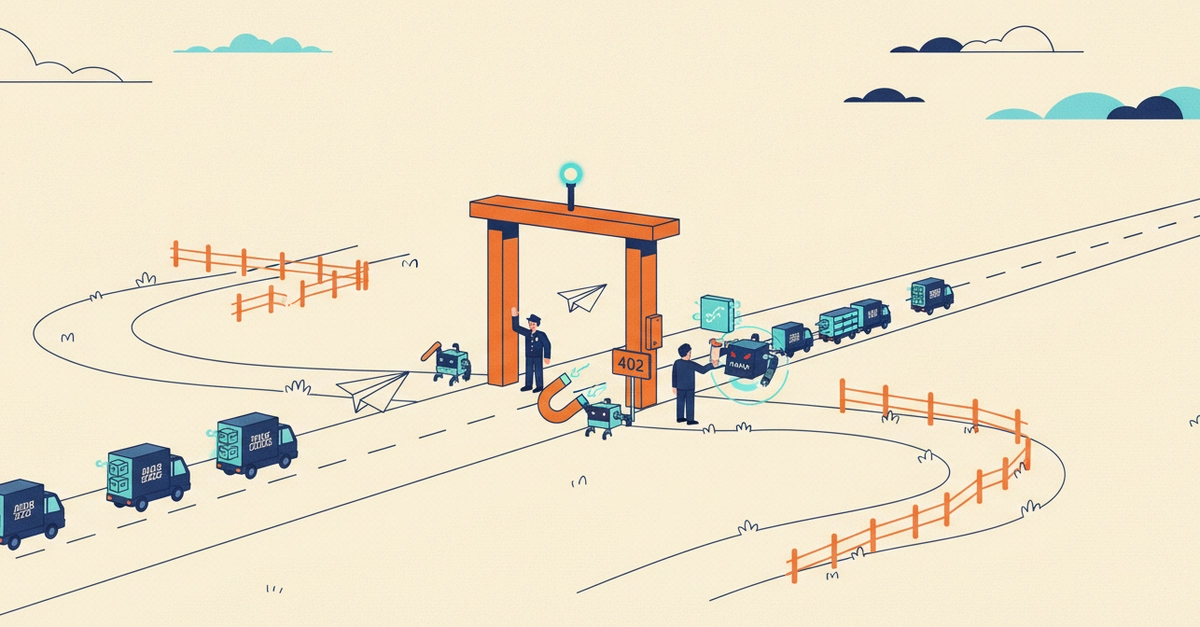
Cloudflare's enduring strategy for 16 years can be distilled to a single, powerful principle: owning the path. This isn't about building the most innovative applications or services. Instead, it's about positioning oneself at the critical choke points of internet traffic. Think of it less like building a new highway and more like owning all the toll booths on every major road. For Cloudflare, the internet itself is the highway, and their network is the toll-collecting infrastructure. This approach, while not flashy, has proven remarkably resilient and profitable.
This philosophy is deeply rooted in an understanding of how value is created and captured on the internet. The company recognized early on that if you control the infrastructure through which data flows, you gain leverage over every service that relies on that flow. This control allows Cloudflare to dictate terms, offer integrated solutions, and create a sticky ecosystem that is difficult for competitors to dislodge.
From CDN to a Universal Computer
Initially, Cloudflare's offering was primarily a Content Delivery Network (CDN). This service was a perfect embodiment of the "owning the path" strategy. By caching content closer to users, Cloudflare sat directly in the path between content providers and internet consumers. This not only improved performance but also provided a layer of security and reliability. The CDN was the initial hook, demonstrating the value of their network infrastructure.
However, the CDN was just the first step. The true genius of Cloudflare's strategy unfolded as they began to transform this path into a universal computer. The company's network, distributed globally, became a platform for running code. Services like Workers, which allow developers to execute JavaScript at the edge of Cloudflare's network, exemplify this evolution. Developers can now deploy applications directly onto Cloudflare's infrastructure, running them precisely where traffic is already passing. This turns the "path" into a computational substrate, rather than just a conduit.

Redefining Boundaries and Charging Tolls
By running code at the edge, Cloudflare effectively redraws the boundaries of traditional computing. Applications no longer need to be hosted on distant servers. Instead, they can live on Cloudflare's network, processing requests instantaneously. This is akin to moving the entire factory floor to the customer's doorstep. For users, this means lower latency, enhanced security, and often, reduced costs.
The monetization strategy follows naturally from this control. Cloudflare charges for access to this path and the compute capabilities it offers. These "tolls" come in various forms: security services, performance enhancements, and the ability to run edge compute applications. The more businesses rely on Cloudflare's network for their operations, the more deeply embedded it becomes, creating a powerful moat. The abundance of settings available on the Cloudflare dashboard, while seemingly complex, is a testament to the multifaceted control they offer over this digital path.
The Implication: A New Operating System
The culmination of this strategy is the emergence of what could be considered a new kind of operating system for the internet: Cloudflare OS. This isn't an OS in the traditional sense of Windows or macOS, but rather a pervasive layer of control and computation that sits between end-users and the underlying internet infrastructure. It's an environment where applications can be deployed, secured, and accelerated, all managed through a unified interface.
This approach has profound implications. It suggests a future where a significant portion of internet activity is mediated by a few dominant infrastructure providers who have successfully "owned the path." For developers, it means building applications with the edge in mind. For businesses, it represents a shift in how they architect their online presence, prioritizing performance, security, and reliability at the network's edge. Cloudflare's 16-year journey is a masterclass in strategic positioning, demonstrating that controlling the flow can be more powerful than controlling the source.