The Problem: Entangled AI Agent Definitions
AI agents, in their nascent stages, often begin as straightforward code: a prompt, a model call, and basic control flow. As these agents evolve, however, the distinction between their definition and the environment they run in blurs. Model configurations become intertwined with sensitive credentials. Tool access logic mixes with prompt engineering. The assumptions about persistence and deployment become baked into the agent's core logic. This tight coupling makes agents notoriously difficult to inspect, test, port to new environments, or recover from failures.
This entanglement creates a brittle system. If you need to update a tool, change a model provider, or simply move the agent to a different server, you often find yourself modifying the agent's core definition. This process is error-prone and hinders agility. It's akin to having your car's engine specifications hardcoded into the driver's manual; any engine tweak requires a manual rewrite and potentially invalidates the entire document.
The Solution: Portable Agent Manifests and Host Control
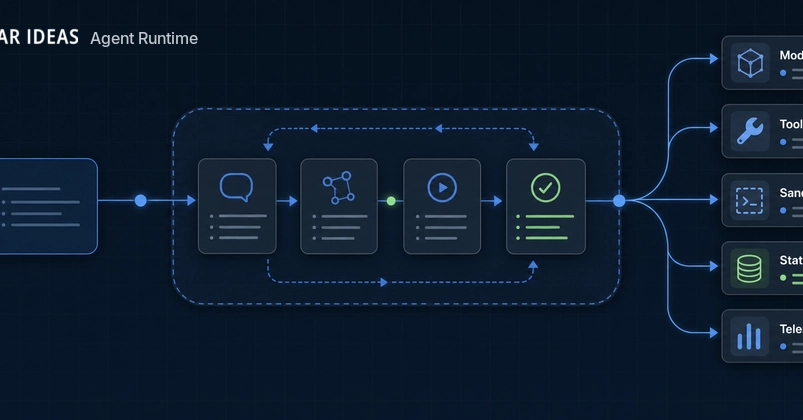
Clear Ideas has introduced the Agent Runtime, built around a deliberate separation of concerns. The core principle is that the agent's definition should be portable, acting as a clear contract, while the infrastructure responsible for executing that agent remains under the direct control of the host environment. This approach aims to solve the problems of entanglement, testability, and portability.
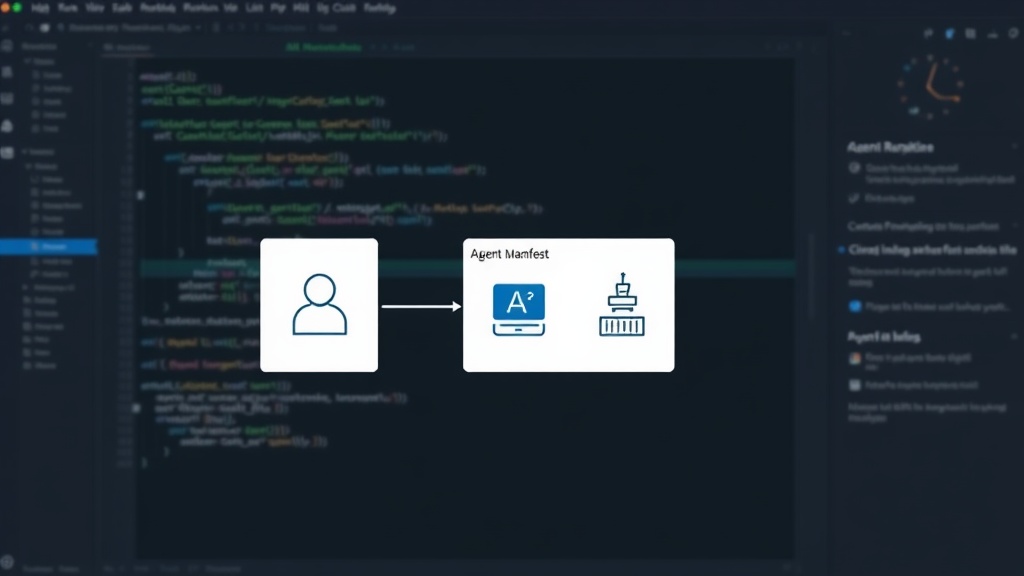
The foundation of this system is the Agent Manifest. This manifest serves as the portable contract for an AI agent. It's defined using versioned YAML or TypeScript, providing a structured way to describe an agent's components and behavior without hardcoding environment-specific details.
What an Agent Manifest Defines
An Agent Manifest is designed to be comprehensive yet abstract. It defines key aspects of an agent's operation:
- Prompts and Structured Outputs: The core instructions given to the AI model, along with the expected format for its responses. This allows for clear communication with the LLM and predictable parsing of its output.
- Typed Variables: Enables the definition of input and output variables with specific data types. This enhances type safety, making it easier to manage data flow within the agent and between the agent and its environment.
- Tools: A crucial component for agent functionality. The manifest declares the tools the agent can use, their input/output schemas, and their descriptions. This decouples the agent's logic from the specific implementation of the tools, allowing tools to be swapped or updated independently.
- Chains: Defines the sequence and logic for how prompts, tools, and variables interact. This is where the agent's workflow is constructed, dictating the flow of information and execution.
- Models: Specifies the AI models the agent can leverage, including their configurations. This allows for flexibility in choosing different models for different tasks or adapting to new model releases without altering the agent's core logic.
Host-Controlled Infrastructure: The Execution Layer
While the Agent Manifest defines *what* an agent does, the Clear Ideas Agent Runtime provides the infrastructure to execute it. This infrastructure is intentionally kept under host control. This means that the runtime environment—where the agent's code actually runs, where credentials are managed, and where tools are physically hosted—is managed separately from the agent definition itself.
This host control offers several advantages:
- Security: Credentials, API keys, and sensitive configurations are managed by the host infrastructure, not embedded within the agent manifest. This significantly reduces the risk of accidental exposure. The host can implement robust security policies, access controls, and secrets management.
- Flexibility: The same agent manifest can be deployed across different environments (development, staging, production) or even different cloud providers, as long as the host infrastructure provides the necessary tools and model access. The manifest doesn't need to change.
- Observability and Management: The host infrastructure can provide centralized logging, monitoring, and debugging capabilities for all agents running on it. This makes it easier to track agent performance, diagnose issues, and manage deployments at scale.
- Tooling and Dependencies: The runtime environment handles the installation and management of dependencies required by the agent or its tools. This prevents conflicts and simplifies the deployment process for the agent itself.
Benefits of the Decoupled Approach
This separation of concerns yields significant benefits for developers and organizations building with AI agents:
- Portability: Agent manifests can be easily shared, versioned, and deployed across different systems and teams without modification. Imagine treating your agent definition like a software library that can be pulled into any compatible runtime.
- Testability: Agents can be tested in isolation by providing mock environments or specific tool implementations to the runtime. This makes unit and integration testing much more straightforward.
- Maintainability: Changes to infrastructure, credentials, or tool implementations do not require changes to the agent's core logic. Updates can be rolled out to the infrastructure layer independently, reducing the risk of breaking agent functionality.
- Developer Experience: Developers can focus on defining the agent's intelligence and workflow without getting bogged down by infrastructure complexities or deployment specifics. The manifest acts as a clear, declarative interface.
- Reduced Vendor Lock-in: By abstracting model providers and tool implementations, the agent can be more easily adapted to use different services as needed, reducing reliance on specific vendors.
The Future of Agent Development
The Clear Ideas Agent Runtime's approach of portable manifests and host-controlled infrastructure represents a mature way to build and manage AI agents. It moves away from the fragile, entangled state of early agent development towards a more robust, modular, and manageable system. As AI agents become more integrated into critical business processes, this architectural pattern will be essential for ensuring reliability, security, and scalability.
The core innovation lies in treating the agent definition as a distinct, portable artifact, much like a container image or a configuration file, that can be executed by a standardized, yet host-managed, runtime. This paradigm shift is poised to accelerate the adoption and professionalization of AI agent development.