
The recent launch of Claude Opus 5 on July 24, 2026, brought with it a significant new capability: the effort parameter. While widely mentioned, its precise function, available levels, and impact on both request behavior and billing remain underexplored. This parameter offers a direct trade-off between operational cost and the model's generative capacity, providing developers and businesses with finer-grained control.
Understanding the Effort Parameter
The effort parameter in Claude Opus 5 is designed to allow users to dial in the computational resources allocated to a specific inference request. Think of it less like a simple on/off switch and more like a dimmer for a lightbulb – you can choose anywhere from a dim glow to full brightness, each with different energy consumption. In Opus 5, this parameter has five distinct levels. The default setting is high, representing a balance of performance and cost that Anthropic has recalibrated specifically for this latest model generation. It's crucial to note that configurations optimized for Opus 4.8 may not translate directly to Opus 5; re-evaluation is necessary due to these recalibrations.
Mismatched parameter combinations can lead to a 400 Bad Request error, particularly during migration phases. This underscores the need for careful testing and understanding of the new parameter's behavior.
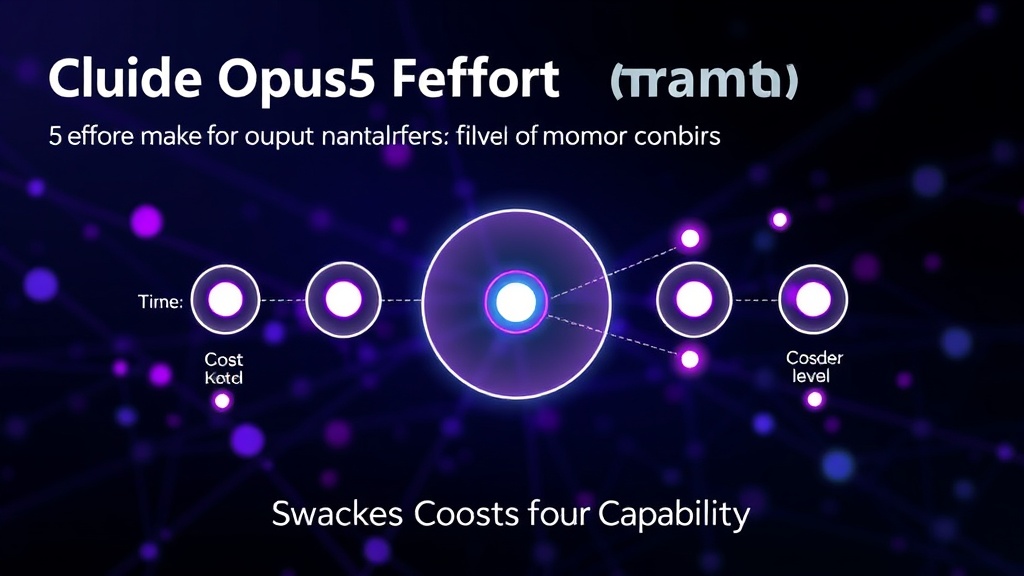
The Five Levels of Effort
Anthropic has defined five levels for the effort parameter, each influencing the model's internal processing and, consequently, its output and cost. While exact internal mechanisms are proprietary, the observable effects relate to the depth of computation, number of processing steps, and potentially the breadth of internal model states explored during generation. These levels are:
- Level 0 (Lowest Effort): This setting prioritizes speed and cost-efficiency above all else. Expect faster response times and lower per-request charges. However, the trade-off is a reduction in output nuance, coherence, and potentially accuracy. This level is suitable for tasks where rapid, albeit less sophisticated, output is sufficient, such as basic content summarization or initial data filtering.
- Level 1: A slight increase in computational resources compared to Level 0, offering marginal improvements in output quality while still maintaining a focus on speed.
- Level 2: This level represents a more balanced approach, offering a noticeable step up in the quality and depth of the model's responses without a drastic increase in cost or latency.
- Level 3: Here, the focus shifts more towards maximizing output quality and complexity. Expect more coherent, detailed, and accurate responses. This level will incur higher costs and potentially longer processing times.
- Level 4 (Highest Effort): This setting dedicates the most computational resources to a request. It is designed for tasks demanding the highest possible quality, accuracy, and nuance. This will result in the slowest response times and the highest per-request costs. Use this level for critical applications where the quality of the output is paramount, such as complex legal analysis, intricate code generation, or highly sensitive medical information processing.
The default setting, high, likely maps to one of the upper levels (e.g., Level 3 or 4), reflecting Anthropic's commitment to delivering high-quality outputs by default. Developers can explicitly set these levels to fine-tune their applications based on specific needs.
Impact on Cost and Performance
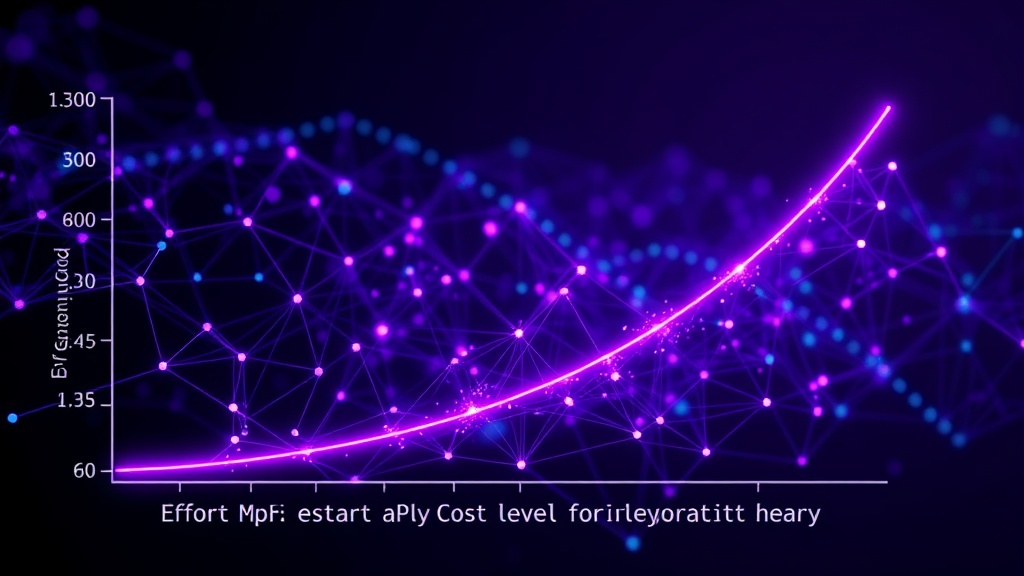
The effort parameter is intrinsically linked to the cost structure of Claude Opus 5. Higher effort levels consume more GPU time and computational resources, directly translating to a higher cost per API call. Conversely, lower effort levels reduce resource consumption, making them more economical for high-volume applications or tasks where absolute perfection is not required. This provides a powerful lever for cost optimization. For instance, a startup processing millions of user-submitted reviews might use a lower effort setting for initial sentiment analysis and escalate to a higher setting only for reviews flagged as potentially problematic.
Latency is the other major factor affected. Higher effort levels require more sequential processing or more complex parallel computations, leading to increased response times. This can be a critical consideration for real-time applications. A chatbot requiring instant replies might struggle with Level 4 effort, whereas an offline batch processing job for generating long-form reports could easily accommodate it.
Practical Implications for Developers
For developers integrating Claude Opus 5, the effort parameter opens up new avenues for optimizing their applications. The ability to dynamically adjust effort based on the specific task or user context is key. For example, an application could:
- Use lower effort for initial drafts: Generate a first pass of content quickly and cheaply, then allow users to request a higher-effort refinement.
- Implement tiered access: Offer basic-quality AI features at a lower subscription tier (using low effort) and premium, high-quality features at a higher tier (using high effort).
- Context-aware adjustments: Automatically select an effort level based on the complexity of the user's prompt or the sensitivity of the data being processed.
The surprise here is not just the existence of the parameter, but the explicit five-level granularity offered. This moves beyond a simple