Ubiquitous AI Assistance: Claude Cowork Goes Cross-Platform
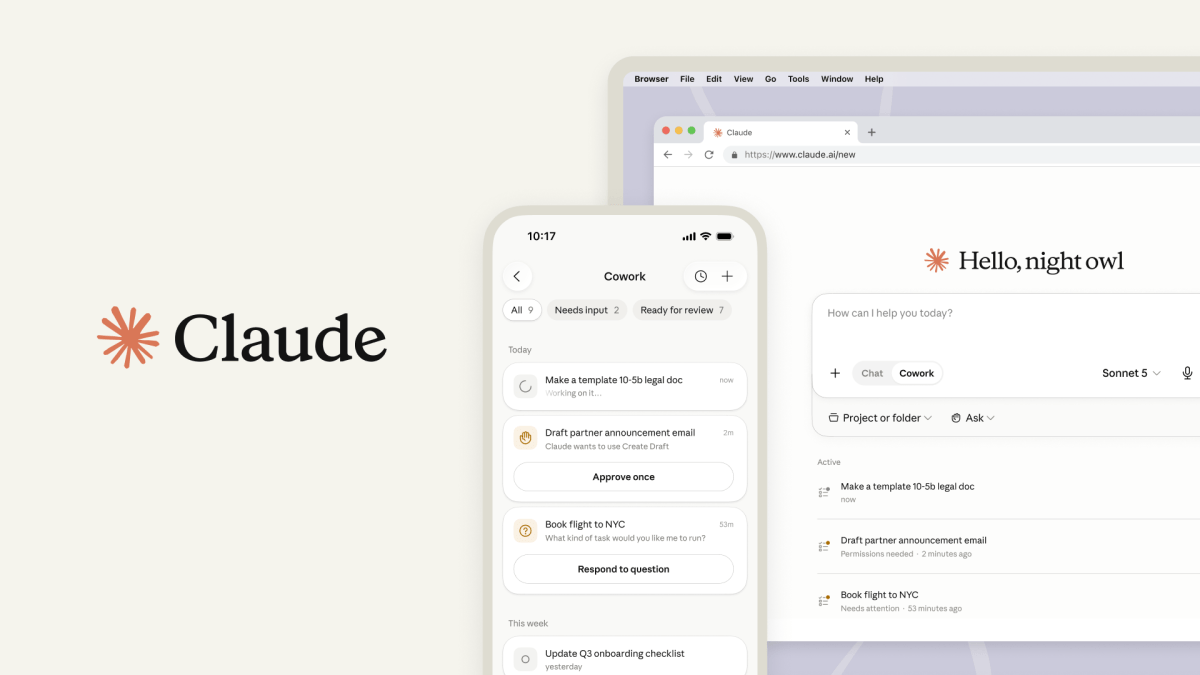
Claude Cowork, the AI-powered productivity agent designed to automate office tasks, has officially expanded its reach with the launch of dedicated mobile and web applications. This move democratizes access to its sophisticated task management and automation capabilities, allowing users to initiate, monitor, and retrieve work from any internet-connected device, regardless of location or whether their primary workstation is active.
Previously confined to desktop environments, Claude Cowork’s expansion signifies a strategic push to embed AI assistance more deeply into the daily workflows of professionals. The core promise remains: delegate tasks, receive timely updates, and access finished work without being tethered to a specific machine. This cross-platform availability transforms Claude Cowork from a powerful desktop tool into an always-on, always-available digital colleague.
The implications for team productivity are substantial. Imagine starting a complex report generation or data analysis on your work laptop, then receiving a push notification on your phone while commuting, detailing the progress. Later, from a tablet at a coffee shop, you can review the completed output and make immediate edits or approvals. This fluid interaction model eliminates the friction typically associated with task delegation and monitoring, particularly in hybrid or remote work scenarios.
This expansion is more than just a feature update; it’s a fundamental shift in how AI agents are integrated into the professional ecosystem. By offering a consistent experience across desktop, web, and mobile, Claude Cowork aims to become an indispensable part of the modern digital workspace. The development team highlighted that the goal is to make the AI agent feel as natural and accessible as any other essential productivity tool, such as email or messaging applications.
Seamless Task Handoff and Monitoring
The primary benefit of the new mobile and web applications lies in their ability to facilitate a continuous workflow. Users can initiate tasks via voice command or text input on their desktop application, such as drafting emails, summarizing meeting transcripts, or generating marketing copy. Once initiated, the task is managed by Claude Cowork’s AI engine.
The mobile app then serves as a real-time dashboard. Users receive discreet notifications about task status – whether it's in progress, requires clarification, or is complete. This allows for proactive management without constant checking. For instance, a marketing manager could be alerted that a social media campaign draft is ready for review while in a client meeting, enabling them to provide feedback promptly.
The web application offers a comprehensive interface for users who may not have their primary desktop application running or are on a different computer. It provides full functionality, mirroring the desktop experience, allowing for the initiation of new tasks, review of ongoing work, and retrieval of completed outputs. This ensures that work doesn't stall simply because a user is away from their primary workstation.
This end-to-end integration is a critical step in making AI agents practical for everyday office operations. It addresses the common challenge of AI tools being powerful but siloed, requiring users to conform to the tool's limitations rather than the tool adapting to the user's dynamic work environment. The ability to start on one device and finish on another, with constant visibility, is a significant leap forward.
Under the Hood: Architecture and Future Implications
While specific technical details of the cross-platform architecture remain proprietary, the strategy suggests a cloud-centric backend that synchronizes task states and outputs across all user interfaces. This implies robust data synchronization mechanisms and a scalable infrastructure capable of handling concurrent requests from various devices. The use of native mobile applications (likely for iOS and Android) and a responsive web application indicates a commitment to providing a performant and user-friendly experience on each platform.
The move also signals a broader industry trend: the commoditization of AI capabilities and the subsequent race to integrate them seamlessly into existing workflows. As more companies develop specialized AI agents for coding, design, or administrative tasks, the differentiators are increasingly becoming the user experience and the depth of integration into daily operations. Claude Cowork’s cross-platform strategy positions it as a contender for becoming a central orchestrator of these diverse AI functionalities.
The surprising detail here is not the launch itself, but the speed at which AI agents are evolving from single-purpose tools into pervasive digital assistants. What nobody has addressed yet is what happens to the vast amount of contextual data these agents gather across multiple platforms. Ensuring user privacy and data security becomes paramount as these agents become more embedded in our professional lives. Claude Cowork’s success will hinge not only on its automation capabilities but also on its ability to build and maintain user trust in its data handling practices.
What This Means for the Modern Professional
For developers, this means AI assistants are no longer confined to IDE plugins or command-line tools. They can now be managed from anywhere, potentially freeing up cognitive load for more complex problem-solving. Imagine delegating routine code documentation or test case generation to an AI that you can monitor from your phone during a commute, ensuring that essential but time-consuming tasks are always progressing.
Founders and business leaders gain a more powerful lever for team efficiency. By equipping their entire organization with accessible AI agents, they can drive down operational costs and accelerate project timelines. The ability to manage tasks and review outputs on the go can significantly improve responsiveness and agility, crucial for startups navigating competitive markets.
Creators and knowledge workers will find their workflows enhanced by the flexibility. Whether drafting a proposal, editing a document, or researching a topic, the ability to start on a desktop and seamlessly continue on a mobile device removes barriers to productivity. This flexibility is key in an era where work is increasingly project-based and often requires collaboration across distributed teams.
Ultimately, Claude Cowork’s expansion to mobile and web represents a significant step towards a future where AI agents are not just tools, but integral, accessible partners in every aspect of professional work, bridging the gap between digital and physical workspaces.