Leveraging AI for Code Deployment
The integration of AI coding assistants into software development lifecycles is rapidly evolving. While tools like Claude Code can generate code, their application in the crucial deployment phase requires a strategic approach. Optimizing Continuous Integration and Continuous Deployment (CI/CD) pipelines for these AI agents is no longer a theoretical exercise but a practical necessity for development teams aiming to boost efficiency and reduce manual oversight.
Effectively deploying code generated or assisted by AI agents like Claude Code involves more than simply copying and pasting. It demands a re-evaluation of existing CI/CD practices to accommodate the unique characteristics of AI-generated code. This means focusing on robust testing, clear version control, and intelligent automation that can handle the nuances of AI contributions. The goal is to create a system where AI acts as a force multiplier, not a potential point of failure.
One of the primary challenges is ensuring the quality and security of AI-generated code. Unlike human developers who follow established patterns and can be directly questioned about their logic, AI outputs can sometimes be unexpected or contain subtle vulnerabilities. Therefore, the CI/CD pipeline must incorporate enhanced validation steps. This includes automated code reviews that go beyond syntax checks to analyze for potential security flaws, adherence to architectural guidelines, and performance implications. Static Application Security Testing (SAST) and Dynamic Application Security Testing (DAST) tools become even more critical when AI is involved in code creation.
Enhancing Testing and Validation
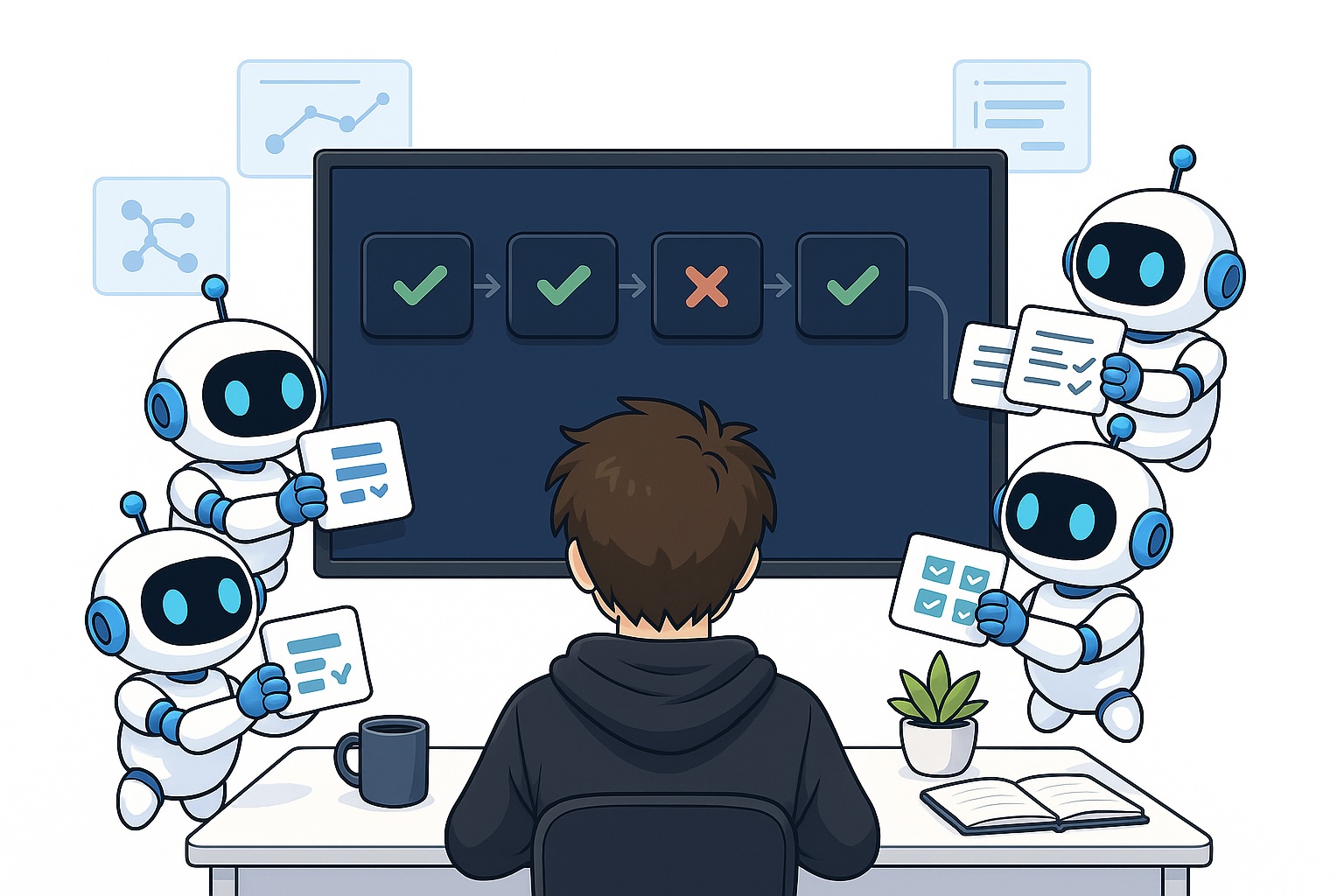
Automated testing is the bedrock of any reliable CI/CD pipeline, but its role is amplified when deploying AI-assisted code. Unit tests, integration tests, and end-to-end tests must be comprehensive and designed to catch a wider range of potential issues. Consider the AI agent as a junior developer on the team; its code needs rigorous peer review and extensive testing before it can be trusted in production. Developers must define clear testing matrices and ensure that the CI/CD pipeline executes these tests automatically upon code generation or modification.
Beyond traditional testing, incorporating AI-powered testing tools can further enhance the validation process. These tools can analyze code for potential bugs, performance bottlenecks, and even predict the likelihood of regressions. This layered approach to testing provides a safety net, ensuring that code quality is maintained even as development velocity increases with AI assistance. The ability to automatically generate test cases based on code changes or requirements is another area where AI can assist, further streamlining the deployment process.
Version control also plays a pivotal role. Every piece of code, whether human-written or AI-generated, must be tracked meticulously. When using AI for code generation, it's crucial to clearly tag or label the AI-contributed sections. This aids in debugging and auditing, allowing teams to quickly identify which parts of the codebase originated from an AI and to roll back changes if necessary. Strategies for handling merge conflicts also need to be adapted, as AI might introduce code that clashes with human-written logic in unexpected ways.
Automating the AI Integration
The true power of integrating Claude Code into deployment lies in automating the workflow. This involves setting up triggers within the CI/CD system that initiate code generation or refinement tasks for the AI. For instance, a new feature request or a bug report could automatically prompt Claude Code to generate a draft solution. The pipeline would then proceed to test, validate, and potentially deploy this draft, with human oversight at key decision points.
This automation extends to the configuration of the AI agent itself. Teams can develop prompts and parameters that guide Claude Code to produce code compliant with specific project standards, security policies, and performance requirements. The CI/CD pipeline can then feed these configurations to the AI agent, ensuring that its output is immediately more aligned with production readiness. This proactive configuration minimizes the need for extensive post-generation modifications.
What remains a challenge is developing standardized prompts that universally optimize AI code generation for deployment across diverse programming languages and project architectures. While specific prompts can be tailored, a general framework for