The Problem: Fragmented Claude Code Development
Managing code generated by Claude, particularly across multiple repositories and sessions, has become a significant challenge. Developers often find themselves juggling numerous terminal windows, fragmented transcripts, and scattered routines, leading to inefficiencies and a lack of centralized oversight. This scattered approach makes it difficult to maintain consistency, track errors, and ensure that code adheres to desired standards over time.
This is the problem that led to the creation of Claude Basecamp. Initially conceived as a way to simply keep tests consistently passing, the project evolved into a more ambitious endeavor: an operating system designed to manage the entire lifecycle of Claude-generated code.

Introducing Claude Basecamp: A Declarative Approach
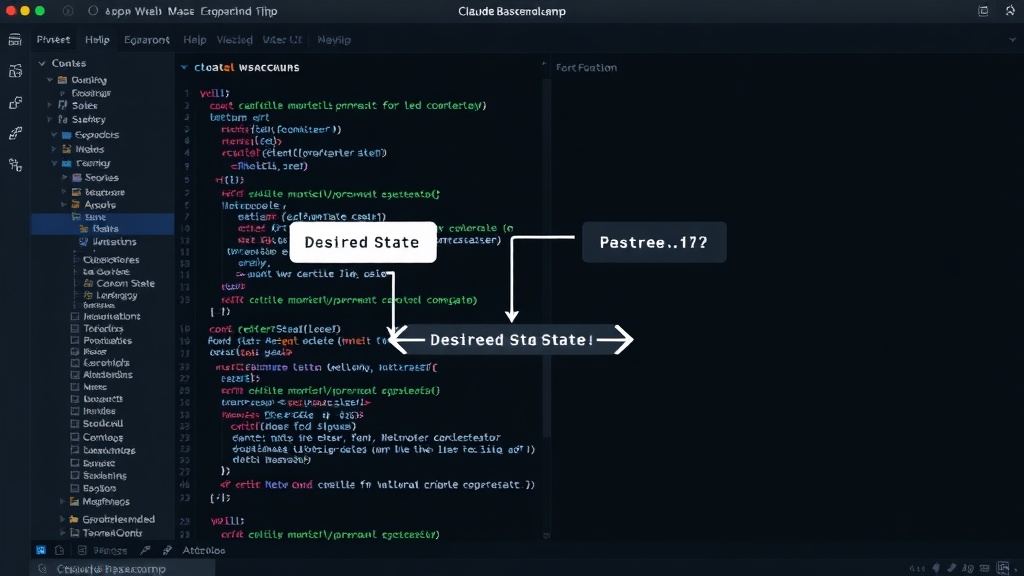
Claude Basecamp is an open-source project aiming to bring a Kubernetes-like declarative model to Claude Code development. The core idea is to allow developers to declare a desired state for their codebase, and have Basecamp continuously reconcile reality to match that state. This "reconciliation loop" is the primary mechanism through which Basecamp promises to simplify and centralize Claude Code management.
The project is accessible via a simple command-line interface. Users can run it directly without installation or complex configuration:
npx claude-basecamp
Upon execution, Claude Basecamp automatically discovers projects that Claude Code is already aware of. It then provides a centralized interface, accessible at http://localhost:4747, to manage these projects. The tool is designed to run on macOS, Linux, and Windows, ensuring broad accessibility for developers across different operating systems.
Key Features: The Reconciliation Loop and Beyond
The standout feature of Claude Basecamp is its standing checks and reconciliation loop. Developers can define specific conditions or states that must always be true for their code. Basecamp then actively monitors and enforces these conditions, automatically correcting deviations from the declared state. This is analogous to how Kubernetes manages infrastructure by ensuring that the actual state of a cluster always matches the desired state defined in its configuration.
While the reconciliation loop is the most noticeable component, it serves a larger purpose: to become the central "operating system" for all Claude Code activities. This includes tracking every repository, every session, every routine, every connector, every skill, and even every past mistake. The goal is to eliminate the fragmentation of information and provide a single pane of glass for managing the entire Claude Code ecosystem.
The project is currently seeking community contributions to further develop its capabilities. The initial focus is on refining the reconciliation loop, but the long-term vision encompasses a comprehensive suite of tools for managing AI-generated code.
Why This Matters for Claude Code Users
For developers working extensively with Claude Code, Claude Basecamp offers a compelling solution to common pain points. By centralizing management and introducing a declarative, state-reconciliation model, it promises to:
- Reduce manual oversight: Automate the enforcement of code standards and consistency.
- Improve reliability: Ensure that critical code states (like passing tests) are continuously maintained.
- Enhance discoverability: Provide a unified view of all Claude Code projects and their status.
- Streamline workflows: Consolidate scattered tools and transcripts into a single interface.
The open-source nature of Claude Basecamp invites collaboration, allowing the community to shape its future development. Developers are encouraged to try the tool, report bugs, and contribute features. The project's success will depend on its ability to address the diverse needs of the Claude Code development community and evolve into a robust, indispensable tool.
The Road Ahead: Community and Collaboration
The open-sourcing of Claude Basecamp marks the beginning of its journey. The creator is actively seeking help from the community to build out its features and address the complexities of managing AI-generated code. The immediate need is for contributions to the reconciliation loop, but the broader vision is to create a comprehensive OS for Claude Code. This collaborative approach is crucial for building a tool that can genuinely serve the needs of developers working at the forefront of AI-assisted coding.
The project is available for anyone to try, break, and improve. The hope is that Claude Basecamp will evolve into the de facto standard for managing Claude Code, much like Kubernetes has for infrastructure. The core value proposition—declarative state management for AI-generated code—is a powerful one, and its open-source nature fosters an environment where this vision can be realized through collective effort.