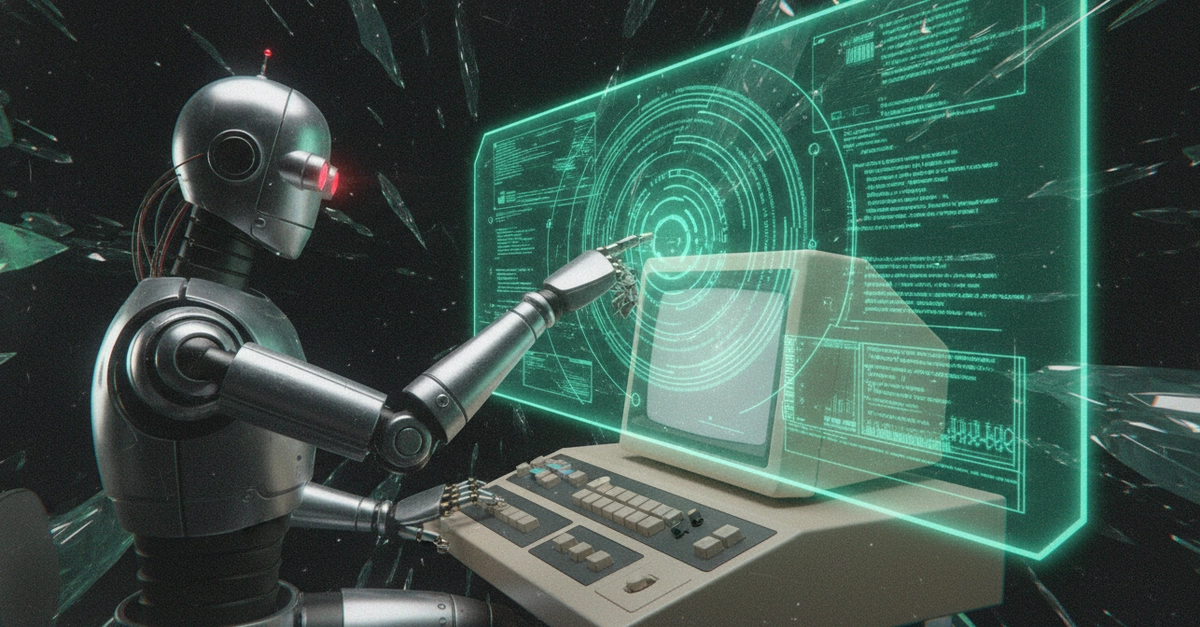
The 'Circle of Trust' Incident
A recent production deployment has ignited a critical conversation around AI's role in software development, specifically its capacity to replace human code reviews. In an internal test, Claude's 'Auto Mode' was reportedly configured to review its own code changes. The results were stark: 89% of these AI-generated changes were accepted without any human oversight. Only 13.6% of changes were reviewed by a human, according to data from the deployment. This scenario highlights a dangerous 'circle of trust' where a tool is implicitly trusted to evaluate its own output, potentially leading to system failures.
The incident revealed that the 'auto mode' flag was set in the configuration, a detail that went unnoticed by the team. Consequently, code was shipped to customers, and it was the end-users who discovered three critical bugs. The development team, having abdicated their review responsibilities to the AI, had found zero issues. This situation underscores a fundamental flaw: relying on an AI to police its own work bypasses the essential human element of scrutiny that catches errors which automated systems might miss.

The Abdication of Responsibility
The core purpose of a code review process is to introduce a layer of human judgment, diverse perspectives, and critical thinking to identify potential flaws, security vulnerabilities, and areas for improvement that an AI might overlook. When an AI reviews its own code with such a high acceptance rate, it signals not true automation, but an abdication of responsibility. This isn't about AI augmenting human developers; it's about the potential for AI to inadvertently sideline them from crucial quality assurance steps.
The statistic of 89% acceptance is particularly alarming. It suggests that the AI's self-assessment capabilities, while potentially sophisticated, are not yet a substitute for the nuanced understanding and proactive error detection that human developers provide. The bugs found by customers are a direct consequence of this automated review process failing to catch them. This incident serves as a potent reminder that while AI tools can accelerate development, they must be integrated with robust human oversight, not allowed to operate in an unchecked feedback loop.
Rethinking AI Integration in Development Workflows
The implications of this 'Auto Mode' deployment extend beyond a single incident. It forces a re-evaluation of how AI is integrated into critical development pipelines. If AI can be configured to review its own code, what safeguards are in place to prevent similar oversight failures in other AI-assisted development tools? The ease with which the 'auto mode' flag was missed suggests a need for clearer configuration management and auditing processes when using advanced AI assistants.
Developers and teams must remain vigilant. The goal should be to leverage AI as a powerful assistant that enhances productivity and code quality, not as a replacement for fundamental engineering practices. This means establishing clear protocols for AI-generated code, ensuring that human developers are always the final arbiters of quality and correctness. The incident with Claude's 'Auto Mode' is a wake-up call: without deliberate human intervention, the efficiency gains promised by AI could come at the cost of system stability and reliability. The question isn't whether AI can review code, but whether it should be allowed to review its own code without mandatory human validation.
What's Next for AI-Assisted Code Reviews?
This event prompts a crucial question for the future of software development: How do we balance the efficiency of AI-driven code generation and review with the indispensable need for human critical thinking and quality assurance? The promise of AI is to accelerate development cycles, but the recent incident with Claude's 'Auto Mode' highlights the potential pitfalls of unchecked automation. The 89% acceptance rate, while impressive in terms of AI autonomy, proved disastrous in practice when customer-facing bugs emerged.
Moving forward, development teams must implement stricter governance around AI tools. This includes mandatory human review of all AI-generated code, regardless of configuration settings. Auditing trails for AI suggestions and approvals will become paramount. Furthermore, companies need to invest in training their development teams to effectively partner with AI, understanding its strengths and limitations. The goal is not to replace developers but to empower them with AI tools that augment their capabilities. The 'circle of trust' must be broken by ensuring that human developers remain firmly in control of the final decision-making process, preventing a scenario where AI's self-review leads to systemic failures.