Exploitation Underway for Critical Cisco Unified CM Vulnerability
A high-severity Server-Side Request Forgery (SSRF) vulnerability, identified as CVE-2026-20230, within Cisco Unified Communications Manager (Unified CM) and its Session Management Edition (Unified CM SME) is now actively being exploited by attackers. Cisco disclosed the flaw on June 3rd, warning that successful exploitation could grant attackers root privileges on affected devices. The vulnerability allows an unauthenticated, remote attacker to initiate SSRF attacks by leveraging an affected Cisco Unified CM or Unified CM SME device as a pivot point.
The implications of this vulnerability are significant, particularly for organizations relying on Cisco's Unified Communications suite for their internal and external communication infrastructure. SSRF attacks are notoriously versatile; they can be used to probe internal networks, access sensitive internal services that are not meant to be exposed to the internet, or even interact with cloud metadata endpoints to steal credentials. In this specific case, the ability for an attacker to gain root privileges elevates the threat considerably, potentially allowing for complete compromise of the affected system.
Understanding the SSRF Vulnerability and Its Impact
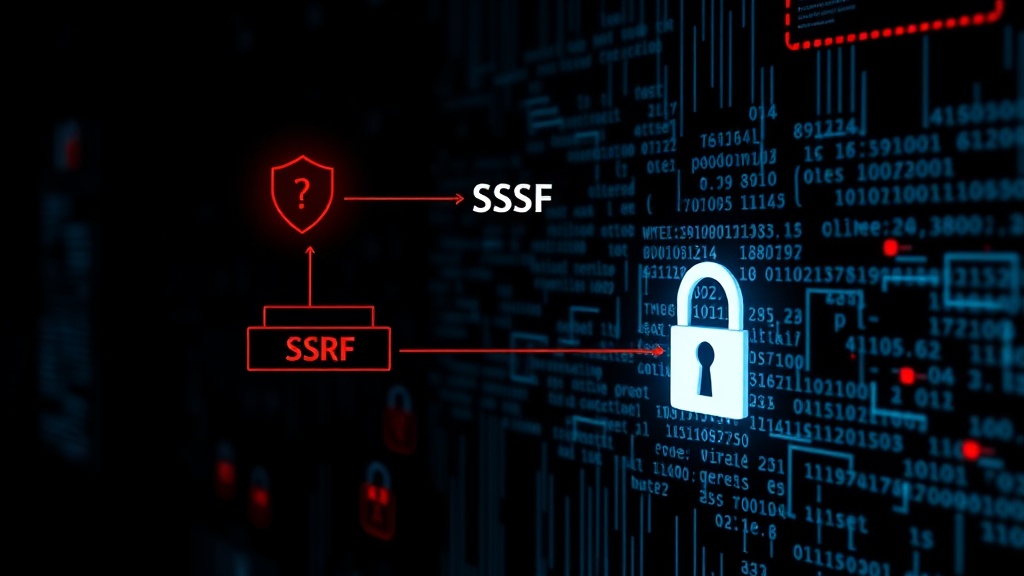
Server-Side Request Forgery vulnerabilities occur when a web application fetches a remote resource without validating the user-supplied URL. An attacker can then manipulate the application to send forged HTTP requests from the application's server to an unexpected destination. In the context of Cisco Unified CM, this means an attacker could trick the communication manager into making requests to internal network resources that are normally firewalled off, or even to external services controlled by the attacker. The fact that this vulnerability requires no authentication makes it particularly dangerous, as any unpatched system exposed to an attacker could become an immediate target.
Cisco's advisory highlights that the vulnerability resides in the core functionality of Unified CM and Unified CM SME. These platforms are central to enterprise voice and video communications, managing call routing, device registration, and user presence. A compromise of these systems can have cascading effects, disrupting critical business operations, enabling eavesdropping on communications, or serving as a beachhead for further lateral movement within an organization's network.
Urgent Patching Mandates and Government Action
The severity and active exploitation of CVE-2026-20230 have prompted swift action from cybersecurity authorities. The U.S. Cybersecurity and Infrastructure Security Agency (CISA) has issued an urgent directive, mandating federal agencies to patch the vulnerability by Sunday. This short timeline underscores the critical nature of the threat and the agency's assessment of the immediate risk posed by unpatched Cisco Unified CM systems within the federal network. Such directives are typically reserved for vulnerabilities that are being actively weaponized and pose a clear and present danger to national security and critical infrastructure.
While the CISA directive specifically targets federal agencies, it serves as a strong signal to all organizations using Cisco Unified CM and Unified CM SME. The underlying vulnerability is platform-wide. If federal agencies are being told to patch within days, it implies that private sector entities are also at significant risk and should prioritize remediation efforts. The speed at which exploitation is being observed, coupled with the potential for root-level access, suggests that threat actors are actively scanning for and targeting vulnerable systems. This is not a vulnerability that can be deferred; immediate action is required.
Mitigation and Remediation Steps
Cisco has released security updates to address CVE-2026-20230. The primary mitigation strategy is to apply these updates as soon as possible. Organizations should consult Cisco's official security advisory for the specific versions of Unified CM and Unified CM SME that are affected and the corresponding patches or workarounds. For systems that cannot be immediately patched, Cisco may offer interim guidance, but these are generally not a substitute for a full security update. Administrators should verify that their systems are running the latest available software versions. Beyond patching, network segmentation and strict access controls can help limit the potential impact of an SSRF attack, even if a system is compromised. Regularly reviewing network traffic for anomalous requests originating from Unified CM devices can also provide early warning signs of exploitation.
The exploitation of CVE-2026-20230 serves as a stark reminder of the persistent threats facing enterprise communication systems. As these systems become more integrated and sophisticated, the potential attack surface expands. Proactive security hygiene, including diligent patch management and continuous monitoring, remains the most effective defense against rapidly evolving cyber threats.