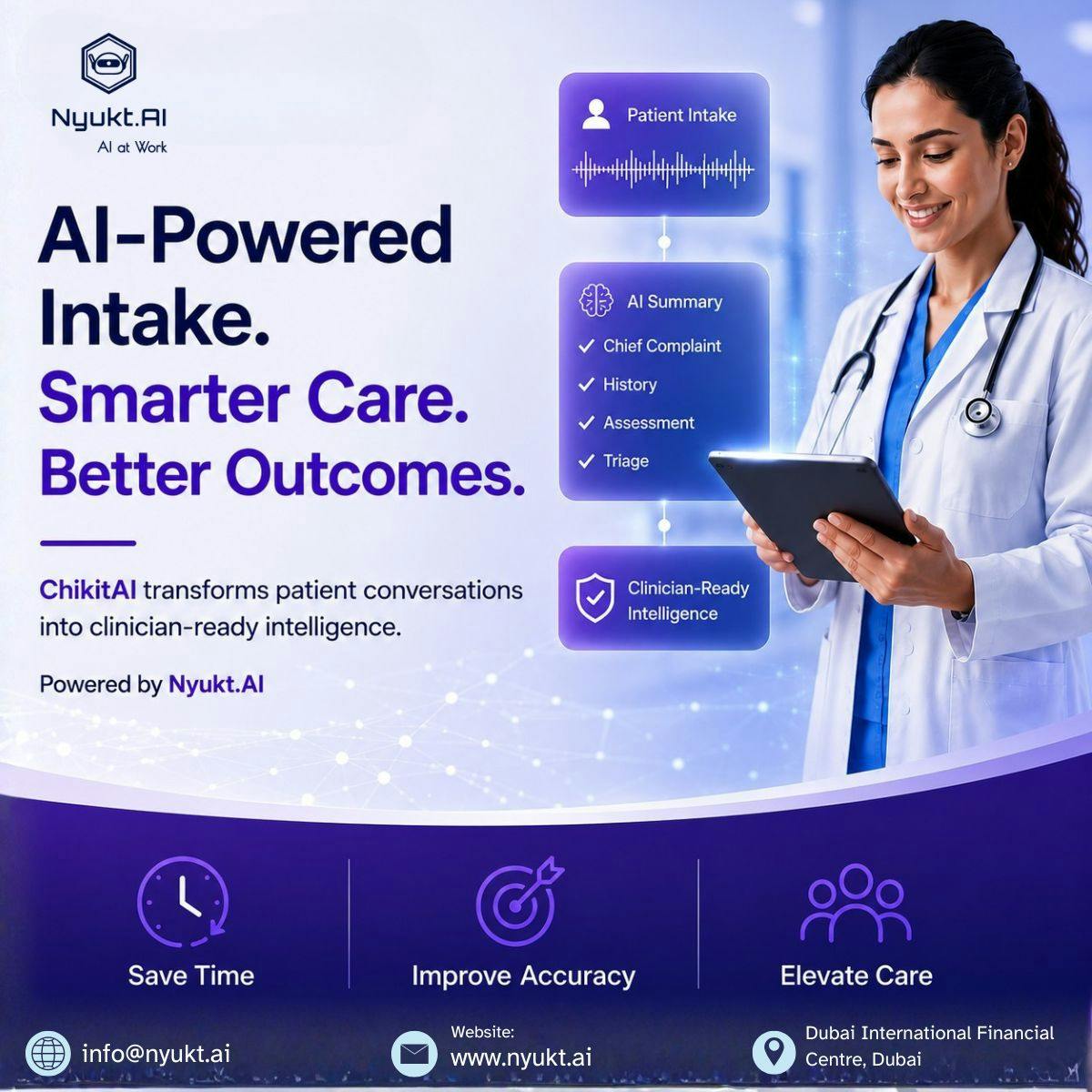
ChikitAI: Agentic AI for Healthcare Triage
ChikitAI has emerged with a novel approach to healthcare automation, introducing an agentic AI designed specifically for patient triage and care pathway management. The platform aims to address the growing strain on healthcare systems by automating repetitive tasks and providing intelligent support for clinical decision-making.
The core of ChikitAI's offering lies in its ability to deploy AI agents that can autonomously navigate complex healthcare workflows. Unlike traditional AI models that might offer static recommendations, ChikitAI's agents are designed to be dynamic and context-aware, capable of interacting with various data sources and systems to facilitate patient care. This includes analyzing patient symptoms, medical history, and available resources to suggest optimal next steps, whether that involves scheduling appointments, recommending diagnostic tests, or providing preliminary care advice.
The implications for healthcare providers are significant. By automating the initial stages of patient interaction and assessment, ChikitAI can free up valuable time for doctors, nurses, and administrative staff. This allows clinical professionals to focus on more complex cases and direct patient interaction, potentially improving the quality of care and reducing burnout. For patients, the platform promises a more streamlined and potentially faster route to receiving appropriate care, reducing wait times and improving the overall patient experience.
How Agentic AI Transforms Triage
Traditional AI in healthcare often operates in a reactive mode, providing insights based on historical data or specific algorithms. ChikitAI's agentic approach, however, is proactive and interactive. Think of it less like a static medical encyclopedia and more like an exceptionally well-trained, tireless assistant who can actively gather information, consult protocols, and even initiate actions within approved parameters. These AI agents are built to understand the nuances of patient intake, identify potential red flags, and guide patients through the initial steps of their healthcare journey.
The agentic nature means these AI systems can perform a sequence of tasks. For instance, an agent could first interact with a patient via a secure portal to gather symptom information. Based on this input, it could then query a patient's electronic health record (EHR) for relevant history, cross-reference symptoms with a vast medical knowledge base, and consult internal hospital protocols for similar cases. Finally, it could present a summarized assessment and recommended triage pathway to a human clinician for review and approval, or even directly schedule an appointment if the case falls within predefined low-risk parameters.
This level of automation is particularly valuable in high-volume environments where early-stage assessment can become a bottleneck. ChikitAI's technology aims to be a force multiplier, enabling healthcare facilities to manage more patients efficiently without compromising the depth of care. The platform's design emphasizes integration with existing healthcare IT infrastructure, a critical factor for adoption in a sector often challenged by legacy systems.

Addressing the Healthcare Bottleneck
The healthcare industry worldwide faces persistent challenges: rising patient volumes, physician shortages, and the administrative burden on clinical staff. ChikitAI positions its agentic AI as a direct solution to these pressures. By automating tasks such as initial symptom assessment, eligibility checks, and appointment scheduling, the platform can significantly reduce the workload on frontline healthcare professionals.
The system is designed to learn and adapt. As more data is processed and more interactions occur, the AI agents can refine their triage accuracy and efficiency. This continuous improvement cycle is crucial for maintaining high standards of care in a dynamic medical environment. Furthermore, ChikitAI's focus on automation extends beyond just triage; it aims to create smoother care pathways for various conditions, ensuring patients receive the right care at the right time, from the right provider.
What remains to be seen is the extent to which these agentic systems can reliably handle the inherent variability and complexity of human health. While AI can process vast amounts of data and follow protocols, the art of medicine often involves intuition and nuanced judgment that are difficult to codify. ChikitAI's success will likely depend on its ability to strike the right balance between automation and human oversight, ensuring that critical decisions remain in the hands of experienced clinicians.
The Future of AI in Patient Care
ChikitAI's entry into the market signifies a broader trend towards more sophisticated AI applications in healthcare. The move from simple diagnostic aids to autonomous agents capable of managing workflows represents a significant leap forward. This technology has the potential to redefine how healthcare systems operate, making them more responsive, efficient, and patient-centric.
For healthcare founders and administrators, ChikitAI offers a glimpse into the future of operational efficiency. The ability to automate critical, yet time-consuming, patient intake and management processes could lead to substantial cost savings and improved resource allocation. The platform's agentic capabilities suggest a path towards truly intelligent healthcare systems that can adapt and scale with demand.
As ChikitAI rolls out its solution, the focus will undoubtedly be on its real-world impact: demonstrable improvements in patient outcomes, reductions in clinical staff workload, and the seamless integration into existing healthcare infrastructures. The promise of agentic AI in healthcare is immense, and ChikitAI is positioning itself at the forefront of this transformative wave.