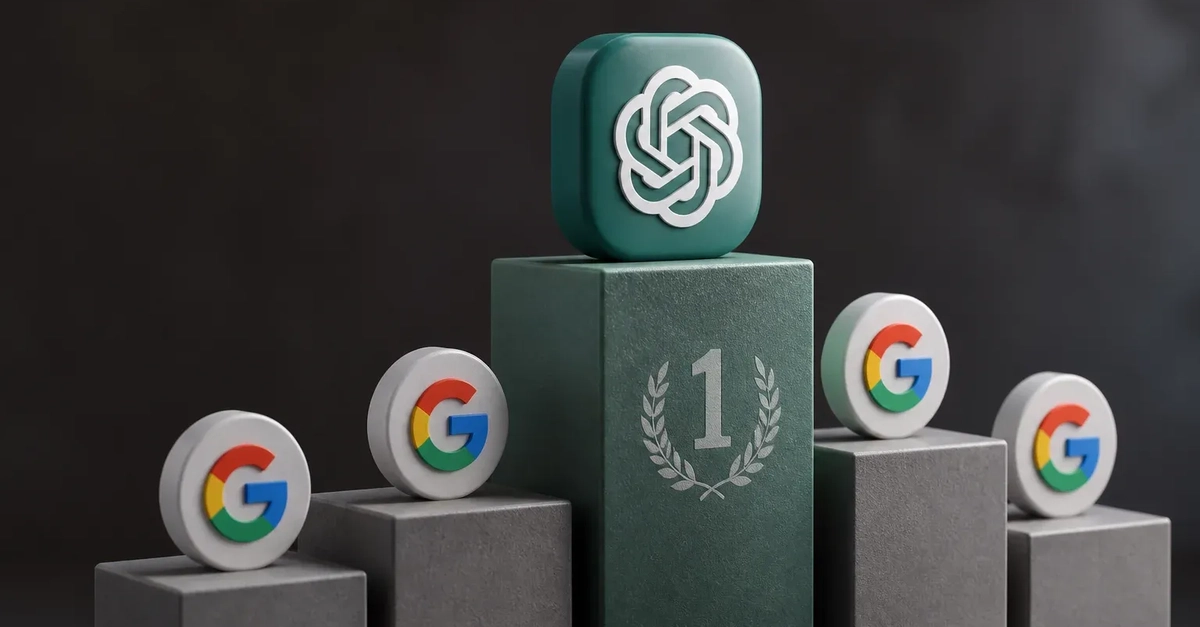
ChatGPT's Paid Search Dominance on Google
ChatGPT has emerged as a top destination for paid clicks originating from Google searches, capturing approximately 4.75% of all Google traffic directed to its platform via paid placements in Q3 2026. This finding, detailed in a recent analysis by iPullRank, places OpenAI's AI model ahead of other major digital entities like YouTube, Wikipedia, and Amazon in terms of paid-click share from Google referrals. The data suggests that paid search is a critical, though not exclusive, component of ChatGPT's user acquisition strategy, complementing organic search, direct traffic, and other referral sources.
While this data does not disclose OpenAI's specific advertising spend, bid strategies, or overall advertising volume, it clearly indicates that paid search ads represent a more substantial portion of Google-driven traffic to ChatGPT compared to other leading destinations. This is a significant observation for a platform that has rapidly gained mainstream adoption, often perceived as being primarily driven by organic buzz and word-of-mouth. The study focused on zero-click and paid-click metrics, providing a snapshot of how users are discovering and accessing top online destinations through Google search.
The implications are far-reaching for how AI platforms are positioning themselves in a crowded digital landscape. For years, major tech companies have relied heavily on organic search and direct traffic for user acquisition. ChatGPT's notable paid-click share suggests a deliberate strategy to capture users actively searching for AI solutions, information about AI, or even direct competitors. This approach allows OpenAI to directly target specific search queries, ensuring visibility at a crucial decision-making moment for potential users.
iPullRank's analysis likely involved sophisticated tracking of Google search results pages and subsequent user click-throughs to various destinations. The methodology would have needed to differentiate between organic listings, paid advertisements, and other elements on the search results page. By quantifying the proportion of paid clicks relative to total Google referrals, the study provides a clear benchmark for ChatGPT's performance against industry giants that have long dominated online search traffic.
Competitive Landscape and Strategic Implications
The competitive landscape for user attention on Google Search is fierce. Platforms like YouTube, Wikipedia, and Amazon, while massive in their own right, appear to rely more heavily on organic discoverability and established brand recognition for their Google traffic. YouTube, for instance, is intrinsically linked to video content discovery, often serving as a destination itself rather than solely a result of a Google search query. Wikipedia, as an encyclopedic resource, benefits immensely from its authoritative organic ranking for factual queries. Amazon, a retail giant, leverages a combination of direct traffic, brand searches, and deeply integrated SEO for its product listings.
ChatGPT's approach, as evidenced by its paid-click share, is more akin to a direct response marketing strategy. It suggests that OpenAI is willing to invest in paid placements to ensure its AI capabilities are visible to users who might not organically discover it. This could include users searching for terms like "AI chatbot," "write code with AI," "generate text," or even queries related to productivity tools that AI can enhance. The 4.75% figure, while seemingly small in absolute terms, represents a significant portion of traffic when considering the vastness of Google's search ecosystem and the sheer volume of users who interact with its search results daily.
The success of this strategy could be attributed to several factors. Firstly, the AI space is rapidly evolving, and new users are constantly seeking out the latest and most capable tools. Paid ads can effectively cut through the noise and present ChatGPT as a leading solution. Secondly, OpenAI may be employing sophisticated targeting strategies, ensuring their ads are shown to users most likely to convert into active users or subscribers. This targeted approach can be more efficient than broad-stroke organic strategies alone.
Beyond Paid Clicks: A Holistic View
It is crucial to view ChatGPT's paid-click share within the broader context of its overall user acquisition. The platform's meteoric rise has undeniably been fueled by viral adoption, strong organic search performance, and direct user engagement. The iPullRank data does not diminish these other vital channels; rather, it highlights the strategic addition of paid search as a complementary tactic. For developers and businesses looking to integrate AI into their workflows, understanding these diverse discovery paths is essential.
The fact that a significant portion of users are clicking on paid ads to reach ChatGPT raises questions about the future of AI tool discovery. Will paid search become the primary driver for emerging AI technologies, or is this a temporary phase as the market matures? Furthermore, how will competitors respond? We might see an increase in paid search bidding wars for AI-related keywords, potentially driving up advertising costs across the board. This could also prompt competitors to invest more heavily in their own organic SEO and content strategies to maintain visibility without incurring higher ad expenses.
The analysis by iPullRank provides a valuable data point for marketers, product managers, and strategists in the AI and tech sectors. It underscores the importance of a multi-channel approach to user acquisition, where paid search can play a pivotal role in capturing high-intent users. As AI continues to permeate various industries, understanding the nuances of how users discover and access these powerful tools will be key to sustained growth and market leadership.