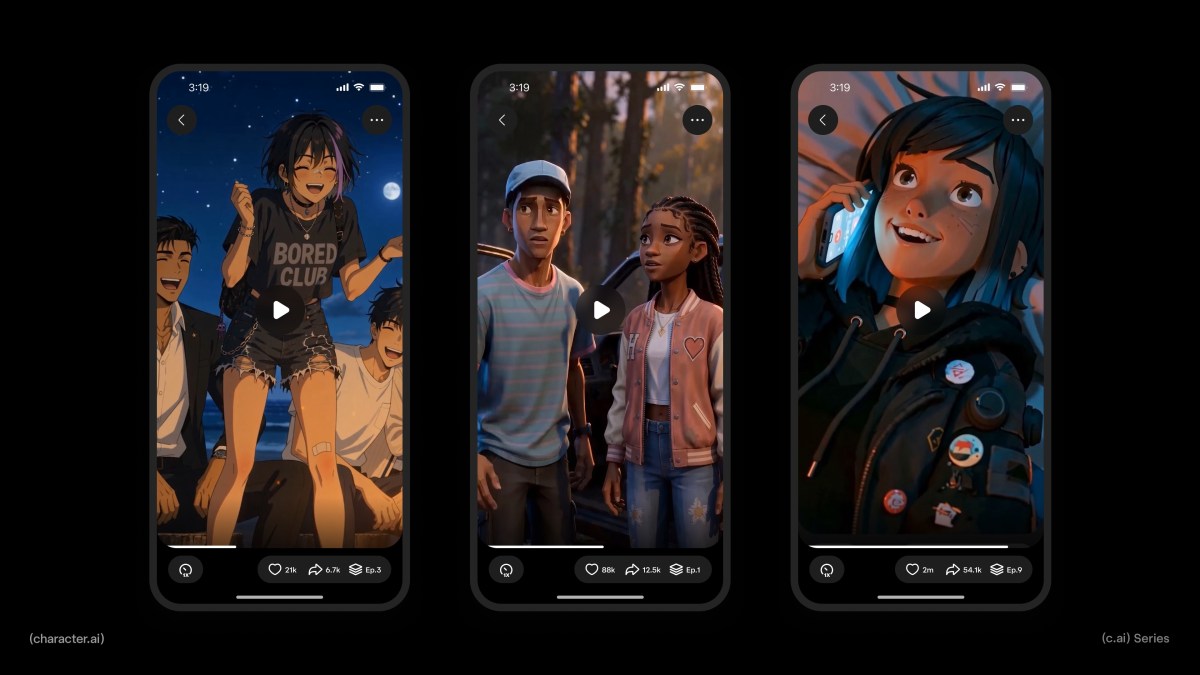
Character.AI Ventures into Original Microdrama Production
Character.AI, a platform known for its AI-powered chatbots that can embody virtually any persona, is now stepping into the role of content producer. The company has begun creating its own original microdramas, a move that significantly expands its creative output beyond user-generated content. This strategic pivot sees Character.AI not just as a host for AI characters, but as a creator of narrative experiences.
The microdramas are designed to be short, engaging narratives, often in genres appealing to younger audiences, such as romance, fantasy, and slice-of-life. However, the true innovation lies in how Character.AI integrates its core technology. Unlike traditional passive viewing experiences, these microdramas are inherently interactive. Users are not merely spectators; they are invited to become active participants.
The unique selling proposition, and the twist that sets Character.AI apart, is the ability for users to directly engage with the characters featured in these productions. After watching or reading a segment of a microdrama, users can initiate conversations with the AI personas of the characters. This allows for an unprecedented level of immersion, where the audience can ask characters questions about their motivations, their backstory, or even their reactions to events within the narrative. Furthermore, users can roleplay alongside these characters, forging new storylines or exploring alternate plotlines that diverge from the original production.

The Mechanics of Interactive Narrative
The technical underpinnings of this feature leverage Character.AI's sophisticated large language models. Each character within a microdrama is powered by a distinct AI persona, trained on specific dialogue, personality traits, and narrative arcs. When a user chooses to interact, they are essentially entering a real-time dialogue with an AI that embodies that character. The AI is programmed to maintain character consistency, responding to user queries and prompts in a manner that aligns with the established personality and the ongoing story.
This creates a dynamic feedback loop. A user might ask a character about a decision they made in the drama, prompting the AI to generate a response that might reveal new insights or even contradict the user's interpretation. This can lead to emergent gameplay where users actively shape their understanding of the characters and their world, or even create entirely new branches of narrative. For instance, a user could ask a fictional detective character about clues they missed in a case presented in the microdrama, potentially leading the AI to 'recall' or 'invent' details that were not part of the original script.
The content itself is developed by Character.AI's internal creative teams. They script the core narratives, define character archetypes, and establish the foundational personalities for the AI. This ensures a baseline quality and coherence for the microdramas. However, the interactive layer is where the true potential for user-driven content emerges. The platform is essentially offering a framework for co-creation, where the initial narrative is a springboard for infinite user-generated variations and extensions.
Broader Implications for Content Consumption and Creation
Character.AI's move into interactive microdramas signals a potential shift in how digital content is consumed and created. It moves beyond the passive consumption model of traditional television and film, and even the pre-defined choices of many interactive games. Here, the interaction is fluid, conversational, and driven by the user's curiosity and imagination. It’s less like choosing path A or B in a choose-your-own-adventure book and more like having an extended, improvised conversation with a character you’ve just met in a compelling story.
This approach could be particularly appealing to a generation that has grown up with interactive digital experiences and is accustomed to personalization. The ability to 'talk' to characters, to probe their minds, and to influence their perceived reality offers a deeper form of engagement than simply watching them on a screen. It blurs the lines between audience and actor, viewer and creator.
For creators, this presents a new paradigm. It requires a different kind of storytelling—one that anticipates user interaction and builds in flexibility. It also opens up new avenues for monetization and community building. Imagine fan fiction becoming a direct, real-time dialogue with the characters themselves, or a community collaborating to collectively explore the universe of a microdrama through thousands of unique conversations.
The platform's success will likely hinge on the quality of both the scripted narratives and the AI's ability to maintain believable, engaging character interactions. If Character.AI can consistently deliver compelling stories and robust, responsive AI characters, they could carve out a significant niche in the evolving landscape of digital entertainment. The question remains whether this interactive layer will become a standard expectation for digital narratives, or if it will remain a novel feature confined to platforms like Character.AI.
The Future of Conversational Storytelling
Character.AI's foray into producing its own microdramas, coupled with the interactive chat feature, positions them at the forefront of a new wave of entertainment. This isn't just about AI chatbots anymore; it's about AI as a co-creator of dynamic, personalized narrative worlds. The platform is effectively turning content consumption into an active, conversational experience. This could pave the way for other media companies to explore similar integrations, potentially leading to a future where audiences can not only watch stories but also converse with their protagonists and antagonists, influencing their perceived journeys and expanding the narrative universe in real-time.
The potential for this technology extends beyond short dramas. Imagine interactive documentaries where you can question historical figures, or educational content where students can quiz AI embodiments of scientists about their discoveries. The core innovation—making content characters accessible for conversation—opens up a vast territory for exploration in how we engage with stories and information.