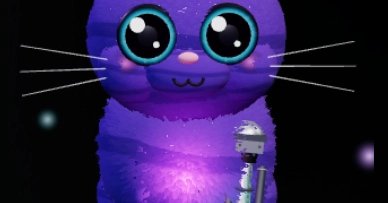
Introducing Catbot: More Than Just Code
In the ever-expanding universe of AI-driven companions, a new contender has emerged: Catbot. This isn't just another chatbot; it's a voice-activated desktop pet with a unique personality and a surprisingly tangible form. Developed by Anna Villarrea, Catbot represents a fascinating intersection of AI, creative design, and personal computing, offering users a novel way to interact with technology.
At its core, Catbot is designed to be a harness for interaction, a digital pet that responds to voice commands and remembers past conversations. This memory is not stored in ephemeral cloud servers but in a personal Obsidian vault, a choice that speaks to a desire for data privacy and persistent, user-controlled knowledge. This vault is then shared with chosen AI models as needed, allowing Catbot to learn and adapt without relinquishing full control of its core data.
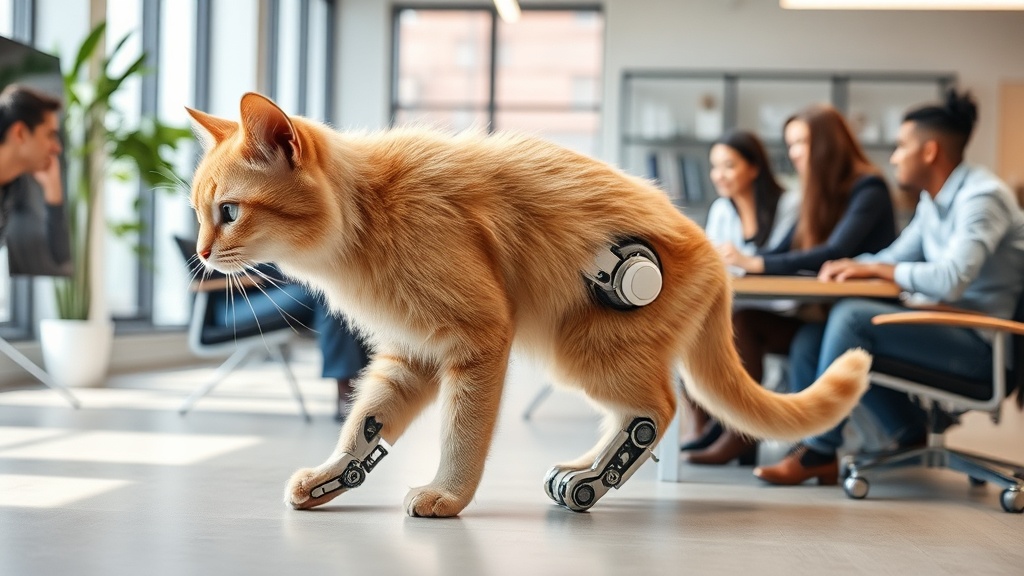
The AI-Assisted Creation of Catbot's Form
What sets Catbot apart immediately is its physical manifestation. Villarrea didn't just code Catbot; she used AI to design its appearance. The result is a creature that is both familiar and alien – a furry being with a distinctively robotic leg. This unexpected design element, a direct output of the AI generation process, adds a layer of quirky charm and individuality to Catbot. It’s a testament to how AI can be leveraged not just for functional tasks but also for creative expression, pushing the boundaries of what a digital companion can look like.
The process involved generating images with AI in the weeks prior to the article's publication. These AI-generated visuals served as a proof of concept and a stepping stone for the project. The image that emerged, described as an "awkward rendering, but pretty on point," perfectly captures the essence of Catbot: a blend of organic softness and mechanical precision. The furry texture combined with the stark, robotic limb creates a visual paradox that is both intriguing and endearing. This creative use of AI for visual design is a significant aspect of Catbot's identity.
Functionality and Future Potential
Catbot's functionality extends beyond its unique appearance. The voice activation means users can interact with it naturally, speaking commands and receiving responses. The integration with an Obsidian vault for memory storage is a particularly noteworthy feature. Obsidian, a popular note-taking and knowledge management application, is known for its local-first, Markdown-based approach, emphasizing user control and data ownership. By using Obsidian, Catbot ensures that its learned information is stored securely and privately on the user's device, rather than on a remote server.
This approach to memory storage is akin to having a digital pet that keeps a detailed, personal diary that only you can access. It allows Catbot to build a persistent understanding of its user and their preferences over time. When combined with the ability to share this data with chosen AI models, it opens up possibilities for highly personalized AI experiences. Imagine a companion that not only responds to your voice but also subtly adapts its behavior based on your past interactions, all while keeping that data under your direct control.
The initial excitement surrounding Catbot stems from its successful creation and its inherent potential. Villarrea's project is a playful yet sophisticated exploration of what personal AI companions can be. It moves beyond the typical server-farmed AI personas to offer something that feels more grounded, more private, and more uniquely designed. The combination of voice activation, private memory storage, and AI-driven aesthetics creates a compelling package that invites further development and exploration.
What remains to be seen is how Catbot's capabilities will evolve. Will it integrate with other applications or services? Can its memory vault be expanded or customized further? The current iteration, while charming and functional, hints at a future where AI companions are not just tools but personalized entities with distinct forms and private digital lives. The success of Catbot's physical design, born from AI's creative algorithms, suggests that the aesthetics of AI companions are as important as their intelligence and functionality. This project serves as an inspiring example for developers and designers looking to create more engaging and personal AI experiences.