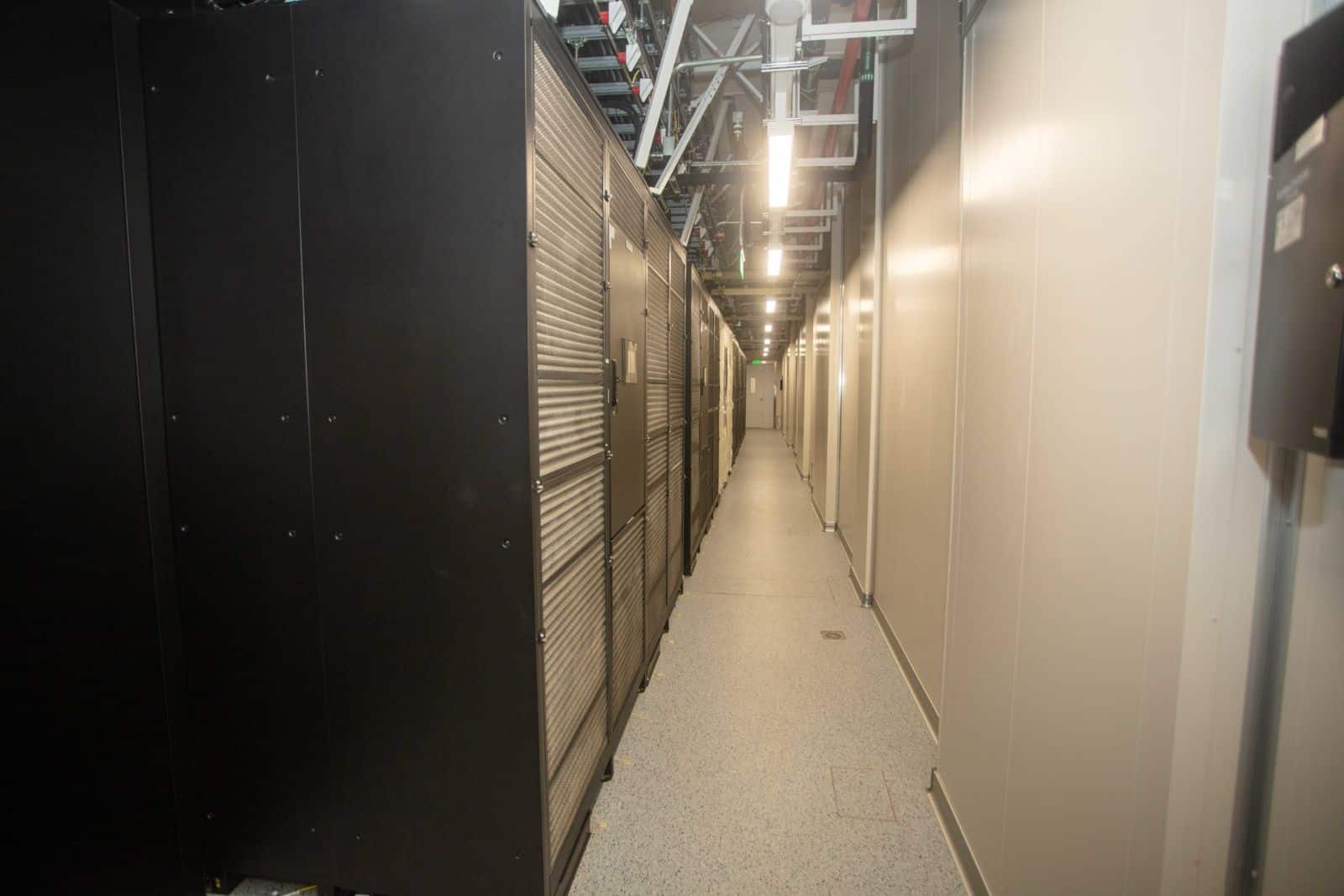
Egypt Steps Onto the Global AI Stage
Cassava Technologies, in partnership with Vodafone Egypt, has officially launched a significant AI data center in Egypt. This ambitious project, reportedly valued at $1 billion, signals a major push to position Egypt as a leading hub for artificial intelligence development and deployment in Africa and the Middle East. The facility is built upon Nvidia's cutting-edge AI infrastructure, promising substantial computational power for AI workloads.
The initiative is more than just hardware deployment; it represents a strategic move to foster local AI talent, accelerate digital transformation across industries, and attract further investment. By providing access to high-performance computing resources, Cassava and Vodafone aim to democratize AI capabilities, making them accessible to a broader range of businesses, researchers, and startups within the region. This move directly addresses the growing global demand for specialized AI infrastructure, which has been constrained by limited global capacity and high costs. The partnership leverages Vodafone's extensive network infrastructure in Egypt, ensuring robust connectivity and accessibility for the data center's services.
The significance of this launch lies in its potential to catalyze innovation. For developers, it means access to powerful GPUs and AI-specific hardware without the prohibitive cost of building their own infrastructure. For businesses, it offers the ability to deploy AI solutions for tasks ranging from predictive analytics and customer service automation to complex simulations and drug discovery. Researchers can now tackle more computationally intensive problems, potentially leading to breakthroughs in various scientific fields.
The Nvidia Advantage
At the core of this new data center is Nvidia's AI technology. This typically includes powerful GPUs like the A100 or H100, designed to accelerate the massive parallel processing required for training and running complex AI models. These chips are the workhorses of modern AI, enabling faster iteration cycles for developers and more sophisticated AI applications for businesses.
The decision to partner with Nvidia is a clear indicator of the project's ambition. Nvidia's hardware is the de facto standard for high-performance AI computing. By integrating this technology, Cassava and Vodafone are ensuring that the data center is equipped with the most advanced and efficient tools available. This is crucial for attracting demanding AI workloads and for staying competitive in a rapidly evolving technological landscape.
The data center's architecture will likely be optimized for AI workloads, featuring high-speed interconnects between GPUs and CPUs, ample memory, and sophisticated cooling systems to manage the heat generated by these powerful processors. This level of specialization is what differentiates AI data centers from traditional computing facilities. It's like equipping a Formula 1 car with specialized tires and engine tuning for a specific race track, rather than just using standard road tires.

Vodafone's Role in Connectivity and Infrastructure
Vodafone Egypt's involvement is critical. Beyond providing the physical space and power, their extensive telecommunications network is essential for data ingress and egress, as well as for providing seamless connectivity to users and clients. A powerful data center is only as effective as its ability to communicate with the outside world.
Vodafone's existing infrastructure, including fiber optic networks and data transmission capabilities, will be leveraged to ensure low latency and high bandwidth for AI operations. This is particularly important for real-time AI applications and for the efficient transfer of large datasets common in AI training. The partnership ensures that the data center is not an isolated entity but is well-integrated into Egypt's digital ecosystem.
This collaboration highlights a growing trend where telecom operators are moving beyond traditional connectivity services to offer more sophisticated digital infrastructure solutions. By partnering with technology leaders like Cassava and Nvidia, Vodafone is positioning itself as a key enabler of the digital economy, providing the foundational services upon which future innovations will be built.
Economic and Strategic Implications for Egypt
The launch of this AI data center has profound economic and strategic implications for Egypt. The $1 billion investment is substantial, creating jobs during the construction and operational phases. More importantly, it aims to foster a local ecosystem for AI development. This includes supporting startups, enabling existing businesses to adopt AI, and training a new generation of AI professionals.
By establishing a local, high-performance AI infrastructure, Egypt can reduce its reliance on overseas data centers, thereby keeping data within its borders and potentially reducing operational costs and latency for local users. This aligns with broader national digital transformation strategies and the goal of becoming a regional technology powerhouse.
The availability of such advanced infrastructure could attract foreign direct investment from companies looking to establish an AI presence in Africa. It also provides a platform for Egyptian companies to compete on a global scale. The surprising aspect here is the sheer scale of the investment and the speed at which this infrastructure is being deployed, indicating a serious commitment from both Cassava and Vodafone to capitalize on Africa's burgeoning digital economy.
What remains to be seen is how quickly local developers and businesses can fully leverage this new capability. The success of the data center will depend not only on the technology but also on the availability of skilled personnel and the creation of supportive policies that encourage AI adoption and innovation. The long-term impact will be measured by the tangible advancements and economic growth spurred by this powerful new digital asset.