The Persistent Problem of In-Store Price Blindness
Online shopping has fundamentally altered consumer expectations. We've grown accustomed to a world where comparing prices across multiple vendors, tracking price histories, and identifying genuine deals is just a few browser tabs away. This level of transparency, however, rarely extends to the physical retail space. Walk into any store, and you're presented with a single price, at a single location, at a single point in time. Making an informed purchasing decision often means accepting that price without knowing if a better deal exists nearby, or what nearby shoppers have paid.
This persistent gap in price visibility is precisely why entrepreneur Nazih Zouat built CartLens. It's an AI-powered receipt scanner designed to tackle this very problem, empowering shoppers to answer a question that has plagued consumers for decades: "Did I overpay?"
How CartLens Works: From Receipt to Insight
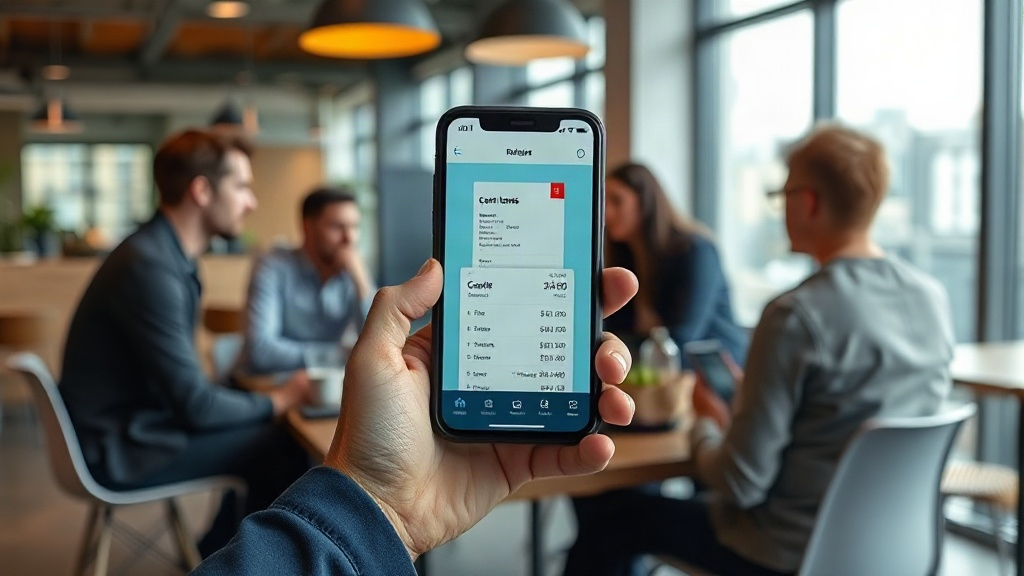
CartLens operates by leveraging AI to process two primary data inputs: physical store receipts and price tags. The process begins when a user scans a receipt using the CartLens mobile application. The AI then gets to work, identifying individual products and their associated prices from the scanned image. This isn't a simple OCR task; the system is trained to recognize product names, SKUs, and prices even when presented with varying receipt formats, lighting conditions, or minor damage.
Once products and prices are extracted, CartLens compares this information against a database of local price observations. These observations are crowdsourced from other CartLens users who have also scanned their receipts and price tags. The system aggregates this data to build a localized, real-time picture of product pricing within a given geographic area. If a user paid $5 for a specific brand of coffee, for example, CartLens can quickly check if other users in the same city or neighborhood have recently purchased it for $4 or less.
The core value proposition lies in this immediate comparison. Instead of leaving the store and then regretting a purchase, shoppers can use CartLens to get instant feedback. The app can highlight if a better price was available at a nearby competitor or even at a different branch of the same chain. This actionable intelligence allows consumers to make more informed decisions, potentially saving money on everyday purchases.
Beyond Digitization: Building a Price Intelligence Network
Zouat emphasizes that CartLens is more than just a digital receipt organizer. While digitizing receipts offers convenience, the true power of the platform lies in its ability to transform these individual transactions into a collective intelligence network. Each scanned receipt contributes to a richer dataset, benefiting all users.
This crowdsourced approach is crucial. Building a comprehensive database of local prices for every product in every store is an immense undertaking. By incentivizing users to contribute their purchase data—implicitly, by providing them with valuable insights in return—CartLens can scale its data collection efficiently. The more users scan, the more accurate and granular the price comparisons become.
The ultimate goal is to create a robust, community-driven price comparison tool specifically for brick-and-mortar retail. This contrasts with many existing price comparison tools that focus primarily on online e-commerce platforms. CartLens aims to level the playing field, giving consumers the same power to comparison shop in physical stores as they have online.
The Technical Underpinnings: AI and Data Aggregation
Developing CartLens required a sophisticated approach to AI and data management. The system relies on several key technological components:
- Optical Character Recognition (OCR): Advanced OCR models are employed to accurately extract text and numerical data from receipt images. This includes handling variations in font, layout, and image quality.
- Product Identification: Beyond simple text extraction, AI models are trained to identify specific products. This often involves matching extracted text against product databases, using techniques like fuzzy matching and natural language processing to handle variations in product names.
- Image Recognition: For scanning price tags directly, image recognition models can identify the product and the price displayed.
- Data Aggregation and Anonymization: A robust backend infrastructure is needed to collect, store, and process the vast amounts of price data. Crucially, this data must be anonymized to protect user privacy, ensuring that individual purchase histories are not identifiable.
- Geospatial Analysis: To provide *local* price comparisons, the system must accurately geolocate price observations and perform proximity-based searches.
The surprising detail here is not the complexity of the AI itself, but the challenge of making it work reliably across the chaotic variety of real-world receipts. Every store has a different format, and human error in scanning or receipt degradation adds further noise. Building a system that can consistently parse this data is a significant engineering feat.
Addressing the "Did I Overpay?" Question
The question "Did I overpay?" is deceptively simple. It implies a desire for validation and a fear of financial loss. For decades, consumers have relied on intuition, memory, or post-purchase research to answer this. CartLens provides a direct, data-driven answer. By visualizing price differences, the app can highlight potential savings, either by suggesting a return and repurchasing at a lower price or by informing future shopping decisions.
This capability has broader implications. For retailers, it could introduce a new competitive dynamic, potentially driving down prices if consumers become more price-sensitive and informed. For consumers, it offers a tangible tool to regain purchasing power in an era of fluctuating prices and inflation. It shifts the power dynamic slightly, arming shoppers with knowledge previously only available to those who meticulously tracked prices or worked in retail themselves.
The Future of Localized Price Intelligence
CartLens represents a significant step towards bridging the information asymmetry between online and offline retail. By harnessing AI and the power of community data, it offers a practical solution to a long-standing consumer frustration. As the platform grows and its dataset expands, it has the potential to become an indispensable tool for savvy shoppers looking to maximize their budget and ensure they're always getting the best local deal.