
Capital One's Agentic AI for Code Security
Capital One has introduced VulnHunter, an open-source tool designed to automate code security analysis using agentic artificial intelligence. This initiative marks a significant step for the financial institution in leveraging advanced AI to tackle complex security challenges within software development lifecycles.
Traditionally, identifying and fixing security vulnerabilities in code has been a labor-intensive and often reactive process. Developers and security teams spend considerable time manually reviewing code, running static analysis tools, and responding to reported issues. VulnHunter aims to transform this by employing AI agents that can autonomously scan code, identify potential weaknesses, and even suggest or implement fixes.
How VulnHunter Operates
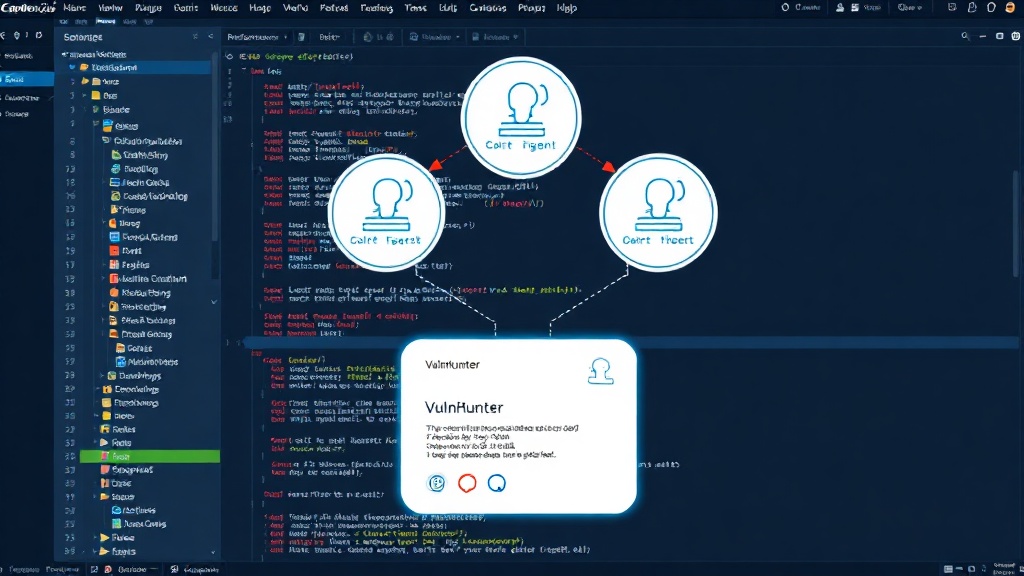
VulnHunter is built upon the concept of autonomous agents, a paradigm shift in how security tools function. Instead of relying solely on predefined rules or signatures, these AI agents are designed to understand code context, learn from past findings, and adapt to new coding patterns and potential vulnerabilities. This approach allows for a more dynamic and comprehensive security posture.
The tool functions by integrating with development workflows. When integrated, VulnHunter agents can monitor code repositories for new commits or changes. Upon detecting modifications, they initiate a deep scan. This scan goes beyond simple pattern matching. The agents attempt to reason about the potential impact of code changes, considering factors like data flow, access controls, and common attack vectors. This contextual understanding is crucial for distinguishing between genuine vulnerabilities and false positives, a common challenge with traditional security tools.
A key aspect of VulnHunter's design is its ability to not only detect but also to remediate vulnerabilities. Once a potential issue is identified, the AI agent can generate proposed code patches. These patches are designed to address the specific security flaw while minimizing disruption to existing functionality. This capability is particularly valuable for development teams, as it accelerates the patching process significantly, reducing the window of exposure to threats.
Agentic AI in Practice
The use of agentic AI is what sets VulnHunter apart. Think of it less like a static scanner and more like a vigilant, highly skilled security engineer who lives inside your codebase. This engineer doesn't just look for specific keywords; they understand the logic, the dependencies, and the potential consequences of different code structures. They can collaborate with other agents or even with human developers to refine their understanding and proposed solutions.
This agentic approach allows VulnHunter to tackle a broader range of vulnerabilities, including those that are subtle and might be missed by conventional tools. For instance, it can identify logic flaws, race conditions, or insecure configurations that depend on the specific way code is written and executed, rather than just adherence to a known bad pattern.
The open-source nature of VulnHunter is also a critical component. By releasing the tool publicly, Capital One aims to foster community involvement, enabling other organizations and security researchers to contribute to its development, identify new use cases, and enhance its capabilities. This collaborative approach is expected to accelerate the evolution of AI-driven code security.
Implications for Software Development
VulnHunter's introduction has significant implications for how software is developed and secured. For developers, it promises to reduce the burden of manual security reviews and the often-frustrating process of dealing with security tickets. The ability for AI to suggest or even apply fixes means faster development cycles without compromising security.
For security teams, VulnHunter offers a powerful new layer of defense. It can augment human expertise, allowing security professionals to focus on more strategic tasks and complex threat modeling. The proactive nature of the tool means vulnerabilities can be caught earlier in the development pipeline, which is far more cost-effective than fixing them in production.
The broader impact on the industry could be a shift towards more intelligent, automated, and proactive security solutions. As AI matures, tools like VulnHunter may become standard in secure development practices, fundamentally changing the landscape of application security. The challenge, however, will be ensuring the reliability and trustworthiness of these AI agents, as well as managing their integration into existing, complex development environments.
The Road Ahead
Capital One has positioned VulnHunter as a tool that embodies their commitment to innovation and security. The company plans to continue developing its agentic AI capabilities, aiming to build even more sophisticated tools that can address the evolving threat landscape. The open-source community now has the opportunity to shape the future of this technology, making code security more accessible and effective for everyone.