The Unavoidable Compromise: Understanding the CAP Theorem
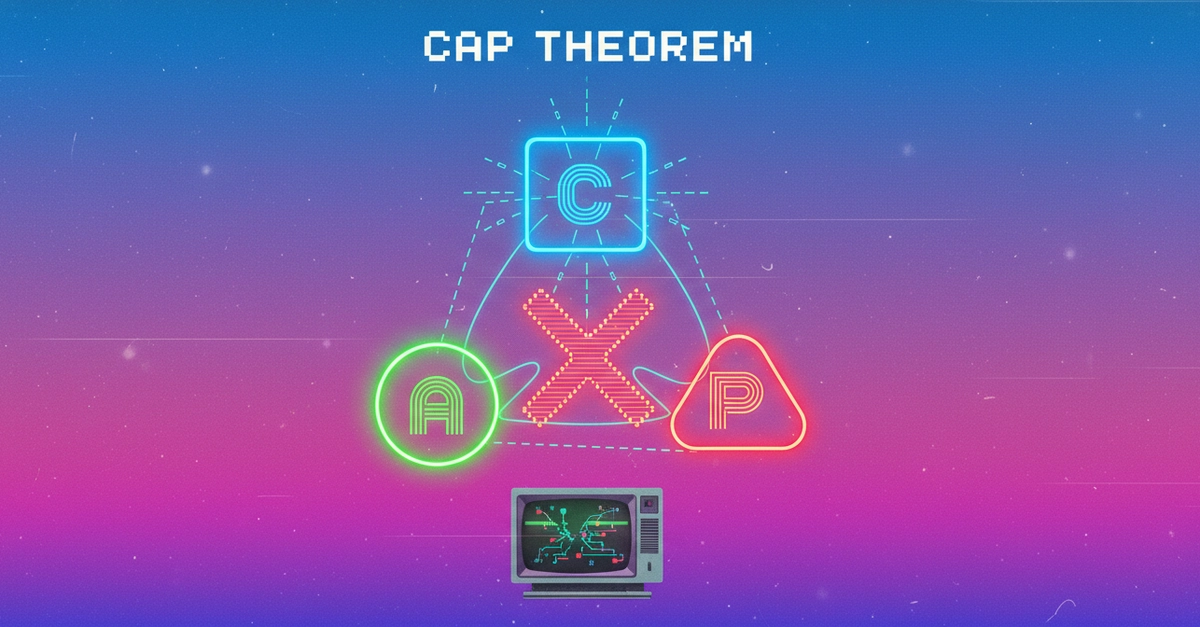
In the world of distributed systems, architects face a fundamental constraint known as the CAP Theorem. First theorized by Eric Brewer and later formalized by Seth Gilbert and Nancy Lynch, the CAP Theorem states that a distributed data store can only simultaneously provide two out of the following three guarantees: Consistency, Availability, and Partition Tolerance. This isn't a matter of clever engineering; it's a mathematical certainty. Understanding these trade-offs is crucial for designing robust and performant systems that meet specific application needs.
The theorem's implications are profound. It means that when a network partition occurs, designers must choose between ensuring all nodes have the latest data (Consistency) or ensuring that every request gets a response, even if it's slightly stale (Availability). This choice directly impacts user experience, data integrity, and system resilience.
The Three Pillars: C, A, and P
Consistency (C)
Consistency, in the context of the CAP theorem, refers to strong consistency. This means that every read operation in the system returns the most recent write or an error. Imagine a simple key-value store where a client writes a value '5' to a key 'x' on one node. If another client immediately attempts to read 'x' from any other node in the system, it must also receive '5'. If it receives an older value (e.g., '3'), the system is not strongly consistent. All nodes must see the same data at the same time. Achieving strong consistency often involves synchronous replication, which can introduce latency.
Node A: Write x = 5
Node B: Read x → must return 5 (not an old value)
Availability (A)
Availability guarantees that every request receives a response, though not necessarily the most up-to-date data. In an available system, even if a node is out of sync with others, it will still respond to read or write requests. For example, if Node B is momentarily out of sync with Node A (which just wrote '5' to 'x'), and Node B is queried for 'x', it might return the old value '3'. The key here is that it returns a value, not an error. This is critical for user-facing applications where even brief periods of unresponsiveness can lead to a poor experience.
Node B is out of sync but still responds:
Read x → returns 3 (old value, but NOT an error)
Partition Tolerance (P)
Partition Tolerance means the system continues to operate despite network partitions. A network partition occurs when communication breaks down between different parts of the distributed system. Nodes may be unable to communicate with each other. In modern, geographically distributed systems, network failures are not a matter of 'if' but 'when'. Therefore, partition tolerance is generally considered a non-negotiable requirement for any real-world distributed system. Systems must be designed to withstand these communication failures and continue functioning in some capacity.
The Trade-offs: Choosing Two
The CAP theorem forces architects to make difficult choices. Since partition tolerance is almost always mandatory, the real decision lies between prioritizing Consistency (C) or Availability (A) when a network partition occurs.
CP Systems: Consistency and Partition Tolerance
Systems that prioritize Consistency and Partition Tolerance (CP) will sacrifice Availability during a network partition. If a partition occurs, a CP system will typically stop responding to requests or return errors to ensure that no client ever reads stale data. This is suitable for applications where data accuracy is paramount, such as financial transactions or inventory management, where even a slight inconsistency could have severe consequences. Examples of CP systems include traditional relational databases configured for strong consistency across replicas and some distributed key-value stores that enforce strict write-before-read policies.
AP Systems: Availability and Partition Tolerance
Systems that prioritize Availability and Partition Tolerance (AP) will sacrifice Consistency during a network partition. When a partition happens, AP systems will continue to accept read and write requests from clients, even if those clients are on different sides of the partition. This means that different nodes might hold different versions of the data. Clients might read stale data or experience write conflicts that need to be resolved later. This model is often preferred for applications where high availability is critical and some data staleness is acceptable, such as social media feeds, content delivery networks, or real-time analytics dashboards. Examples include systems like Amazon DynamoDB (in certain configurations) and Apache Cassandra.
CA Systems: Consistency and Availability (Rare in Practice)
Systems that prioritize Consistency and Availability (CA) are theoretically possible but rarely practical in large-scale, distributed environments. A CA system would sacrifice Partition Tolerance. This implies that the system must assume there will never be a network partition. In a single-node system, this is straightforward: the node is either available and consistent, or it's down. However, in any system with multiple nodes spread across a network, partitions are an inevitability. Therefore, systems designed as CA are typically confined to single-datacenter or single-machine deployments where network issues are less likely or managed through other means. If a partition *does* occur in a CA system, it might behave unpredictably or simply fail to operate, violating its core CA promise.
Beyond the Theory: Practical Implications
The CAP theorem is not just an academic concept; it's a guiding principle for system design. When building or choosing a distributed database or service, understanding the CAP trade-offs is essential. For instance:
- Developers must decide whether their application can tolerate stale data (favoring AP) or requires absolute, up-to-the-second accuracy (favoring CP).
- System architects must select databases and configurations that align with these requirements. For example, a banking application might use a CP database, while a recommendation engine might use an AP database.
- Operations teams need to understand how their chosen system will behave during network outages and have strategies for managing potential data inconsistencies or availability gaps.
It's also important to note that the CAP theorem applies primarily during network partitions. In the absence of partitions, systems can often exhibit both consistency and availability. The theorem highlights the critical decision point that arises when the network fails.
The ongoing evolution of distributed systems and networking technologies continues to push the boundaries, but the fundamental trade-offs articulated by the CAP theorem remain a cornerstone of distributed computing theory and practice. Designing for resilience and performance in distributed environments necessitates a deep appreciation of these inherent compromises.