The Evolving Needs of Industrial Control Systems
For decades, the Controller Area Network (CAN) protocol has been the backbone of communication in industrial and automotive environments. Its predictability, robustness, and prioritized message handling made it exceptionally reliable for controllers, sensors, actuators, operator panels, and safety modules. However, the landscape of industrial automation is rapidly changing. Modern machines are no longer just sending simple commands and status updates. They must now accommodate richer diagnostic information, high-frequency feedback loops, more sophisticated Human-Machine Interfaces (HMIs), firmware updates, and data streams from an increasing number of distributed sensors and software components. This escalating demand for data far outstrips the capabilities of the traditional CAN protocol, which was designed for much simpler communication needs.
The limitations of classic CAN are becoming acutely apparent. While effective for its original purpose, its relatively low bandwidth and message size constraints create bottlenecks as systems become more complex and data-intensive. This has led to a critical need for an evolution of the protocol, one that retains the core strengths of CAN while dramatically increasing its data-carrying capacity. The announcement from Texas Instruments regarding their advancements in next-generation industrial systems, particularly their support for CAN XL, signals a significant industry shift towards embracing this new standard.
Introducing CAN XL: More Than Just Speed
CAN XL is not merely an incremental upgrade to existing CAN technology; it represents the third generation of the CAN protocol. Its design philosophy centers on substantially increasing the amount of data a network can handle without compromising the fundamental principles that established CAN as the go-to standard for control systems. This means retaining determinism, priority-based arbitration, and the inherent resilience that industrial environments demand. The protocol achieves this through several key architectural changes that allow for larger data payloads and more efficient data transmission.
One of the most significant advancements is the increased maximum data payload size. While classic CAN is limited to 8 bytes per message, and CAN FD (Flexible Data-Rate) extended this to 64 bytes, CAN XL pushes this boundary considerably further. This larger payload capacity is crucial for transmitting more complex data structures, such as detailed diagnostic logs, high-resolution sensor readings, or even small software packets for over-the-air updates. The ability to bundle more information into fewer messages reduces network overhead and improves overall efficiency.

Key Technical Innovations in CAN XL
Several technical innovations underpin CAN XL's enhanced capabilities. Beyond the larger data frames, the protocol introduces improvements in error detection and correction mechanisms, ensuring data integrity even under challenging industrial conditions. It also incorporates enhanced security features, a growing concern in connected industrial environments. These security enhancements are vital as machines become more interconnected and susceptible to cyber threats. CAN XL aims to provide a more robust and secure communication channel for sensitive industrial data.
Furthermore, CAN XL is designed for backward compatibility to a degree, allowing for easier integration into existing infrastructure. While not a direct drop-in replacement for all CAN devices, it offers a path forward for upgrading systems without a complete overhaul. This phased approach is critical for industries where downtime is costly and system upgrades must be carefully managed. The protocol's architecture also supports higher bit rates, particularly for the data phase of communication, further boosting throughput.
Impact on Robots, HMIs, and Industrial Machines
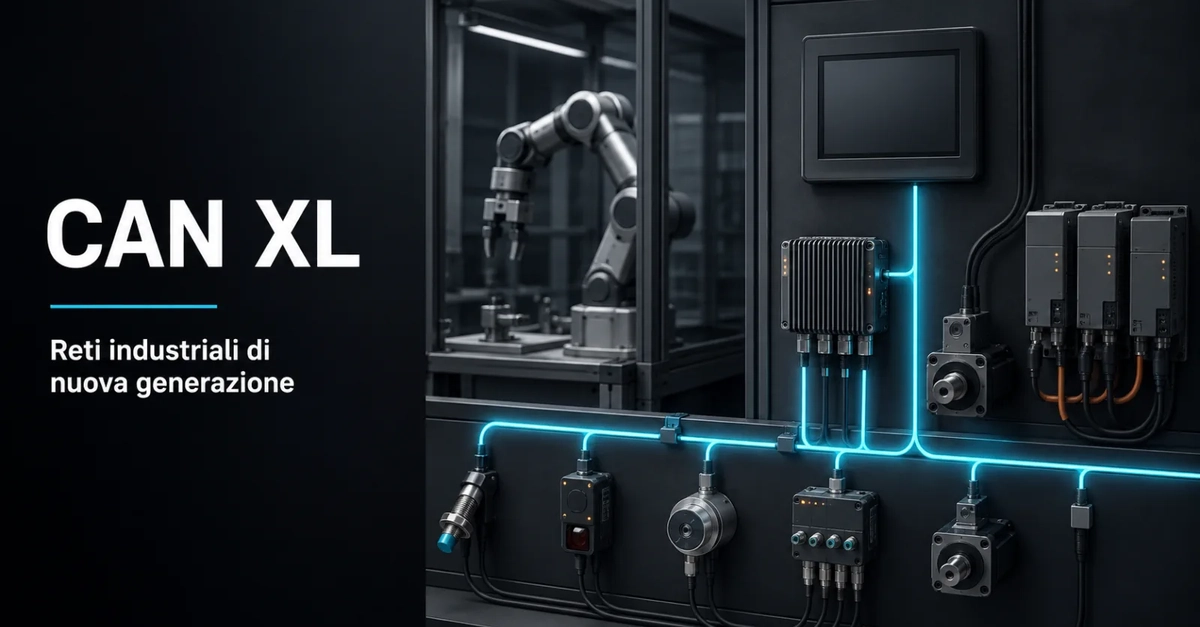
The implications of CAN XL are far-reaching for various components within industrial automation. For robots, it means the ability to stream more detailed sensor data for advanced control and diagnostics. This could enable finer motor control, real-time analysis of robot performance, and quicker identification of potential issues. Imagine a robotic arm that can report not just its position, but also the precise torque and vibration levels of each joint, allowing for predictive maintenance and optimized operational parameters. This granular data stream is essential for the next generation of intelligent, autonomous robotic systems.
For HMIs, CAN XL opens the door to richer, more interactive user interfaces. Current HMIs often rely on separate communication channels or compressed data to display information. With CAN XL, HMIs can receive high-resolution graphics, real-time video feeds from internal machine cameras, and complex diagnostic visualizations directly over the network. This enhances the operator's ability to monitor, control, and troubleshoot machinery effectively. Think of an operator panel that can display live video of a critical component's operation alongside detailed performance metrics, all seamlessly integrated.
Industrial machines, in general, will benefit from the enhanced data exchange capabilities. This includes faster and more comprehensive diagnostics, enabling quicker root cause analysis of failures. It also supports the deployment of more complex distributed control architectures, where multiple intelligent components communicate extensively. Over-the-air (OTA) updates for machine firmware and software become more feasible and efficient, reducing the need for manual intervention and minimizing downtime. The ability to collect and transmit larger volumes of operational data also fuels advancements in machine learning and AI for process optimization and predictive analytics.
Broader Industry Trends and the Future
CAN XL arrives at a critical juncture for industrial automation, aligning with broader trends like Industry 4.0, the Industrial Internet of Things (IIoT), and the increasing demand for edge computing. As machines become more connected and intelligent, the need for high-bandwidth, reliable communication protocols intensifies. CAN XL addresses this need directly, providing a scalable solution that can evolve with future technological advancements. Its focus on robustness and determinism ensures that it remains suitable for critical control functions, while its increased data capacity caters to the growing appetite for data-rich applications.
The adoption of CAN XL is likely to accelerate as semiconductor manufacturers, like Texas Instruments, continue to develop and deploy compatible hardware. This will pave the way for new generations of industrial equipment that leverage the protocol's capabilities. What remains to be seen is how quickly the broader ecosystem of industrial software, development tools, and standardization bodies will fully embrace and integrate CAN XL, ensuring its widespread adoption and interoperability across diverse industrial settings.