%22%20%2F%3E%0A%20%20%3C%2Fsvg%3E)
Drones Enter the Classroom: A New Era of School Security
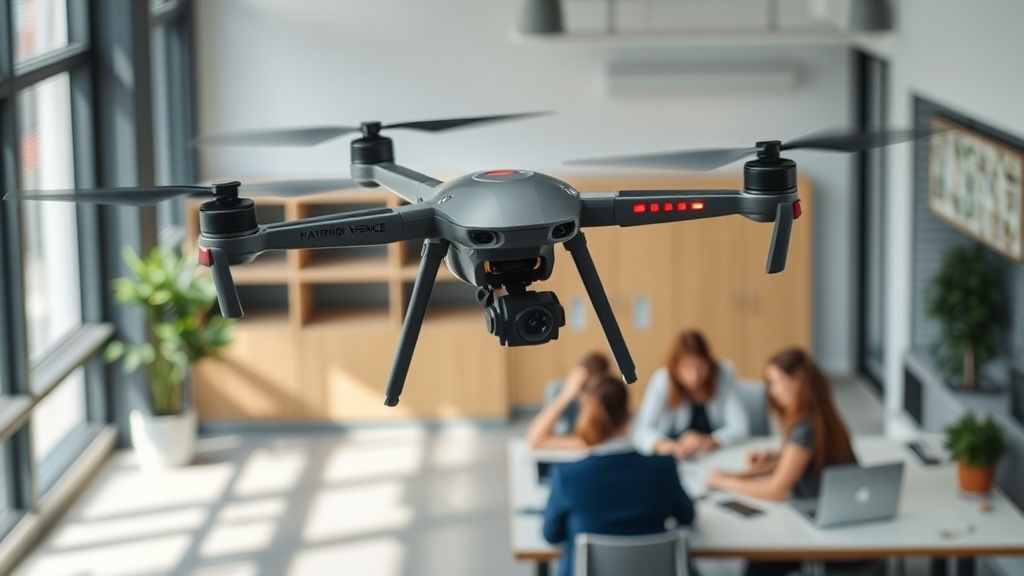
The arms race for school security is escalating, moving from traditional measures to advanced aerial surveillance and intervention. Mithril Defense is set to deploy its 'Campus Guardian Angel' drones in at least nine schools across three U.S. states before the end of the year. These drones are not merely for observation; they are designed as active intervention tools, capable of reaching speeds of up to 60 mph and equipped with a payload intended to neutralize threats, specifically school shooters.
This initiative marks a significant shift in how educational institutions are approaching safety. The drones are envisioned as a rapid-response force, able to reach critical areas of a campus far quicker than ground-based security or law enforcement in many scenarios. The technology aims to provide an immediate deterrent and a means of incapacitation before a situation can escalate to further tragedy. The core functionality centers around a non-lethal approach, utilizing pepper spray as its primary incapacitating agent. However, the drones are also engineered with the capability to smash windows to gain entry into locked areas and to physically ram attackers, adding layers to their defensive capabilities.
The decision to arm drones for deployment within school environments is a complex one, raising immediate questions about ethics, efficacy, and the potential for unintended consequences. Proponents argue that the speed and advanced capabilities of these drones could be life-saving, offering a critical advantage in active shooter events where seconds matter. The ability to deploy a non-lethal deterrent rapidly across a large campus could potentially de-escalate situations and minimize casualties. This technology represents a proactive stance, moving beyond static defenses to dynamic, airborne intervention.
Capabilities and Design: Beyond Simple Surveillance
The Campus Guardian Angel drone is engineered for rapid deployment and effective threat mitigation. Its top speed of 60 mph allows it to traverse school grounds quickly, reaching potential incident sites with minimal delay. This speed is crucial for an intervention system that must act before a threat can spread. The drone’s payload is a significant point of discussion. It includes a pepper spray dispersal system, intended to incapacitate an attacker by targeting their respiratory system and eyes, causing temporary blindness and difficulty breathing. This non-lethal approach is a key differentiator from more aggressive or lethal security measures.
Beyond the pepper spray, the drones are equipped with features designed for tactical advantage. The ability to smash windows means the drones can gain entry into buildings or specific rooms that might be locked down or barricaded. This feature is particularly relevant in scenarios where an attacker might be contained within a specific area, but access is required for intervention or for first responders. Furthermore, the drones are built with a robust chassis capable of ramming an attacker. This is a more forceful, direct intervention method, likely intended as a last resort or for situations where the attacker is actively resisting or posing an immediate, overwhelming threat that pepper spray alone cannot neutralize.
The integration of these capabilities into a single drone platform presents a sophisticated, albeit controversial, solution. The drones are likely equipped with advanced sensors, including cameras and possibly thermal imaging, to identify threats and navigate complex environments. Their operational autonomy or remote piloting capabilities will be critical factors in their effectiveness during high-stress, rapidly evolving situations. The design implies a system that can operate effectively in both open outdoor spaces and potentially within indoor school environments, though navigating hallways and classrooms presents significant challenges.
Broader Implications and Unanswered Questions
The deployment of armed drones in schools opens a Pandora's Box of ethical and practical considerations. While the stated intention is to enhance safety and neutralize threats, the presence of weaponized drones, even non-lethal ones, within an educational setting is a stark image. What are the psychological impacts on students, teachers, and staff knowing that drones equipped with incapacitating agents are patrolling their campus? How will these drones be operated? Will they be autonomous, or will they require direct human control during an incident? The latter introduces human error and reaction time into the equation, while the former raises concerns about AI decision-making in life-or-death scenarios.
The effectiveness of pepper spray against a determined attacker, especially one perhaps under the influence of stimulants, is also a critical question. While it can incapacitate, it may not always stop a motivated individual immediately. The ramming capability, while more direct, carries its own risks of collateral damage and potential escalation. What happens if a drone malfunctions? What is the protocol for accidental deployment or misidentification of threats? These are not minor details; they are fundamental to the safety and trust required within a school environment. The surprising detail here is not the technology itself, but the speed at which such advanced, and potentially intrusive, systems are being considered and implemented in public institutions, moving from conceptualization to deployment with seemingly little public debate on the broader societal implications.
Furthermore, the question of accountability is paramount. If a drone errs, who is responsible? Is it the manufacturer, the school district, the operator, or the AI system itself? The legal and ethical frameworks for such deployments are still nascent. This technology, while offering a novel approach to a persistent problem, introduces a new layer of complexity into school safety. If you are a parent or an educator, you have a right to understand the full operational parameters and oversight mechanisms for these drones before they become a common fixture in your children's learning environments. The long-term impact on the perception of schools as safe havens, and the normalization of surveillance and armed intervention technologies within them, remains to be seen.