The Challenge of Bytecode Analysis
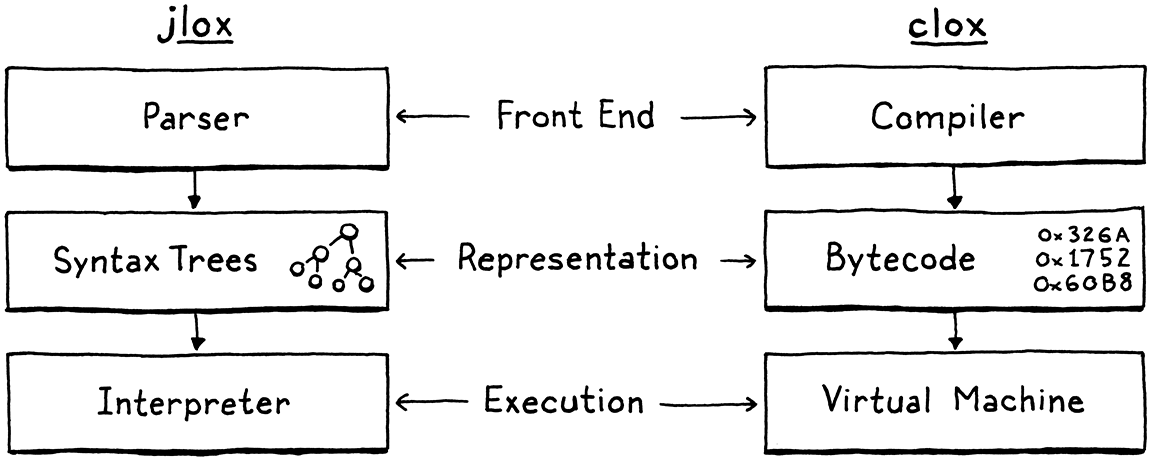
Software development typically flows from source code to compiled binaries. This compilation process, essential for performance and distribution, obscures the original human-readable logic. When only the compiled output is available, understanding its functionality becomes a complex reverse engineering task. Traditional methods often rely on static analysis of the bytecode, which can be tedious and error-prone, especially for optimized or obfuscated code. The inability to directly inspect the source code means developers and security professionals must infer intent and logic from low-level instructions.
Bytecode, the intermediate representation of code used by virtual machines like the Java Virtual Machine (JVM) or Python's interpreter, presents a unique challenge. While higher-level than machine code, it still lacks the semantic richness and structure of the original source. This gap makes it difficult to reconstruct the original program flow, identify specific algorithms, or pinpoint vulnerabilities without direct access to the source. The process is akin to trying to understand a complex recipe by only looking at the ingredients list and the final baked product, without the cooking instructions.
Emerging Techniques for Bytecode-to-Source Mapping
Recent advancements are bridging this gap by developing sophisticated techniques for bytecode-to-source mapping. These methods aim to reconstruct source code or provide highly accurate representations of the original logic directly from compiled bytecode. This is not about decompilation in the traditional sense, which often produces syntactically correct but semantically different code. Instead, these new approaches focus on preserving the original program structure and intent as faithfully as possible.
One key area of innovation involves leveraging advanced static analysis with machine learning. By training models on vast datasets of source code and their corresponding bytecode, researchers are developing systems that can predict source code constructs based on bytecode patterns. These models can identify common programming idioms, library calls, and even control flow structures with remarkable accuracy. The goal is to go beyond simple instruction-to-instruction mapping and infer higher-level abstractions that are closer to the original source.
Another promising avenue is the development of specialized tools that integrate with existing reverse engineering frameworks. These tools often employ a combination of pattern matching, symbolic execution, and program slicing to analyze bytecode. Symbolic execution, for instance, allows the tool to explore all possible execution paths of a code segment, identifying variables, conditions, and potential outcomes. Program slicing then helps to isolate the parts of the code relevant to a specific query, such as a variable's value or a function's output.
Applications in Security and Development
The implications of accurate bytecode-to-source mapping are profound, particularly in cybersecurity. For security analysts, the ability to reconstruct source code from malware binaries or vulnerable libraries significantly accelerates vulnerability discovery and analysis. Instead of laboriously deciphering assembly or low-level bytecode, analysts can work with code that closely resembles the original, making it easier to identify exploits, backdoors, and other malicious logic. This is crucial for understanding the attack surface of software components where source code is not publicly available.
Consider a scenario where a critical zero-day vulnerability is discovered in a widely used third-party library. If only the compiled binary is distributed, security teams would traditionally spend weeks or months performing manual reverse engineering. With advanced bytecode-to-source mapping tools, this process could potentially be reduced to hours or days, allowing for faster patching and mitigation. This speed is critical in a landscape where threats evolve rapidly.
Beyond security, these techniques offer benefits for software developers as well. When dealing with legacy codebases where original source files are lost or inaccessible, or when analyzing third-party libraries to understand their behavior, bytecode-to-source mapping provides a lifeline. It can aid in debugging complex issues, understanding undocumented features, or even in migrating code to newer platforms by providing a clearer picture of the original implementation.
The ability to map bytecode back to source also has implications for code auditing and compliance. Organizations that need to ensure their software adheres to specific standards or regulations can use these tools to verify the integrity and behavior of compiled code, even if they lack direct access to the original development artifacts. This is particularly relevant in industries with stringent security and privacy requirements.
The Road Ahead: Challenges and Future Directions
Despite significant progress, challenges remain. Highly optimized code, obfuscation techniques, and language-specific complexities can still pose considerable hurdles. The accuracy of the reconstructed source code is paramount; even minor discrepancies can lead to misinterpretations of logic or security flaws. Ensuring that the generated code is not just syntactically plausible but semantically equivalent to the original is a continuous research objective.
Furthermore, the computational resources required for these advanced analysis techniques can be substantial. Training sophisticated AI models or performing deep symbolic analysis on large codebases demands significant processing power and time. Developing more efficient algorithms and scalable infrastructure will be key to making these tools accessible and practical for widespread adoption.
The future likely holds increasingly sophisticated AI-driven tools that can handle a wider range of programming languages and obfuscation techniques. Integration into standard development and security toolchains will be crucial. As the gap between compiled code and its source representation narrows, the lines between traditional reverse engineering and source code analysis will continue to blur, empowering developers and security professionals with deeper insights into the software they use and build.