The End of E-commerce Template Rigidity
Building a custom e-commerce storefront traditionally presented a binary choice: either wrestle with the constraints of rigid, pre-built templates or embark on a months-long endeavor to construct core logic for catalog management, pricing, inventory, cart functionality, checkout processes, and customer management from scratch. This often meant sacrificing brand identity or unique customer journeys for speed and essential functionality. Headless commerce has fundamentally altered this landscape. It decouples the front-end customer experience from the back-end commerce engine, allowing developers to maintain a robust, purpose-built commerce backend while building a storefront entirely in ordinary application code. This approach offers unprecedented flexibility to shape the user interface and buying journey around specific brand needs and customer behaviors.
Thor Commerce, an open-source headless commerce platform, provides the foundational backend. Coupled with its accompanying open-source Next.js storefront, developers gain a typed, well-documented framework. This framework already encapsulates critical e-commerce functions like product discovery, market-aware pricing, cart management, checkout flows, payment processing, order fulfillment, and customer account handling. The real acceleration comes from integrating AI coding agents. Tools like Claude Code, GitHub Copilot, or Cursor can be leveraged not to invent foundational e-commerce logic, but to rapidly assemble and customize the front-end experience within this established, secure, and functional Thor Commerce ecosystem. This synergy allows developers to focus on brand expression and user experience rather than reinventing core commerce mechanics.
Leveraging AI for Rapid Front-End Development
The key to building a custom e-commerce store efficiently with Thor Commerce and AI lies in understanding where AI excels. Instead of asking an AI to generate complex business logic like checkout flows or payment gateway integrations, which are already robustly handled by Thor Commerce, developers can delegate the creation of UI components, styling, and page layouts. AI agents can interpret natural language prompts and translate them into React components, CSS, and page structures that align with a specific brand's aesthetic and user experience goals. For instance, a prompt like 'Create a product listing page with a masonry layout, filtering options for price and category, and a prominent "Add to Cart" button' can be executed by an AI agent working within the Next.js framework. The agent then generates the necessary code, which the developer can review, refine, and integrate into the existing storefront structure. This division of labor—Thor Commerce for backend logic, AI for front-end assembly and customization—significantly shortens development cycles.
Consider the process of designing a unique product detail page. A developer might prompt an AI to build a component that displays product images in a carousel, highlights key features in a bulleted list, shows customer reviews, and offers a clear call to action. The AI can generate the React code for this component, including basic state management for image selection or review display. The developer then seamlessly integrates this AI-generated component into the product detail page template provided by the Thor Commerce Next.js storefront. This iterative process, where AI handles the boilerplate and repetitive coding tasks, allows developers to concentrate on the nuanced aspects of user experience, such as micro-interactions, precise visual design, and optimizing conversion paths. The AI acts as an extremely fast junior developer, translating high-level design concepts into functional code snippets that adhere to the project’s existing architecture and coding standards.
The Thor Commerce Advantage: Open Source and Extensible
Thor Commerce's open-source nature is central to its appeal for custom e-commerce builds. It means developers have full visibility into the platform's codebase, enabling deep customization and integration. Unlike proprietary headless solutions, there are no vendor lock-ins or opaque APIs that might change without notice. The Next.js storefront, also open-source, provides a modern, performant foundation built on React, a widely adopted and developer-friendly framework. Its structure is designed for extensibility, meaning developers can add custom features or modify existing ones without hitting architectural walls. This is crucial when building a unique brand experience that goes beyond standard e-commerce offerings. For example, if a brand needs to integrate a custom recommendation engine or a unique loyalty program, the Thor Commerce architecture supports these extensions. The AI coding agent can then assist in building the front-end interfaces for these custom features, ensuring a cohesive user experience.
The platform’s comprehensive feature set, including catalog management, pricing rules, inventory tracking, and order processing, is designed to be robust enough for complex business needs. This frees developers from the burden of building these essential, often error-prone, systems from scratch. The AI’s role is to connect these powerful backend capabilities to a user-facing interface that is both beautiful and intuitive. This is akin to having a master architect (Thor Commerce) provide a solid, well-designed building structure, and then employing a highly skilled, rapid construction crew (AI agents) to finish the interiors and exteriors according to the owner's exact specifications. The result is a custom-built application that is both functionally sound and aesthetically aligned with the brand's vision, delivered in a fraction of the time traditional custom development would require.
Beyond the Storefront: Future Possibilities
The approach of combining a headless commerce backend with AI-assisted front-end development opens doors to novel e-commerce experiences. While the immediate benefit is faster custom storefront creation, the underlying architecture supports more ambitious projects. For instance, integrating AI for personalized product recommendations directly within the storefront, or using AI to dynamically adjust pricing based on real-time market data and customer behavior, becomes more feasible. The ability to rapidly iterate on UI/UX designs with AI assistance means that A/B testing and conversion rate optimization can be performed more aggressively. This iterative loop—design, build with AI, test, refine—is critical for staying competitive in the dynamic e-commerce landscape.
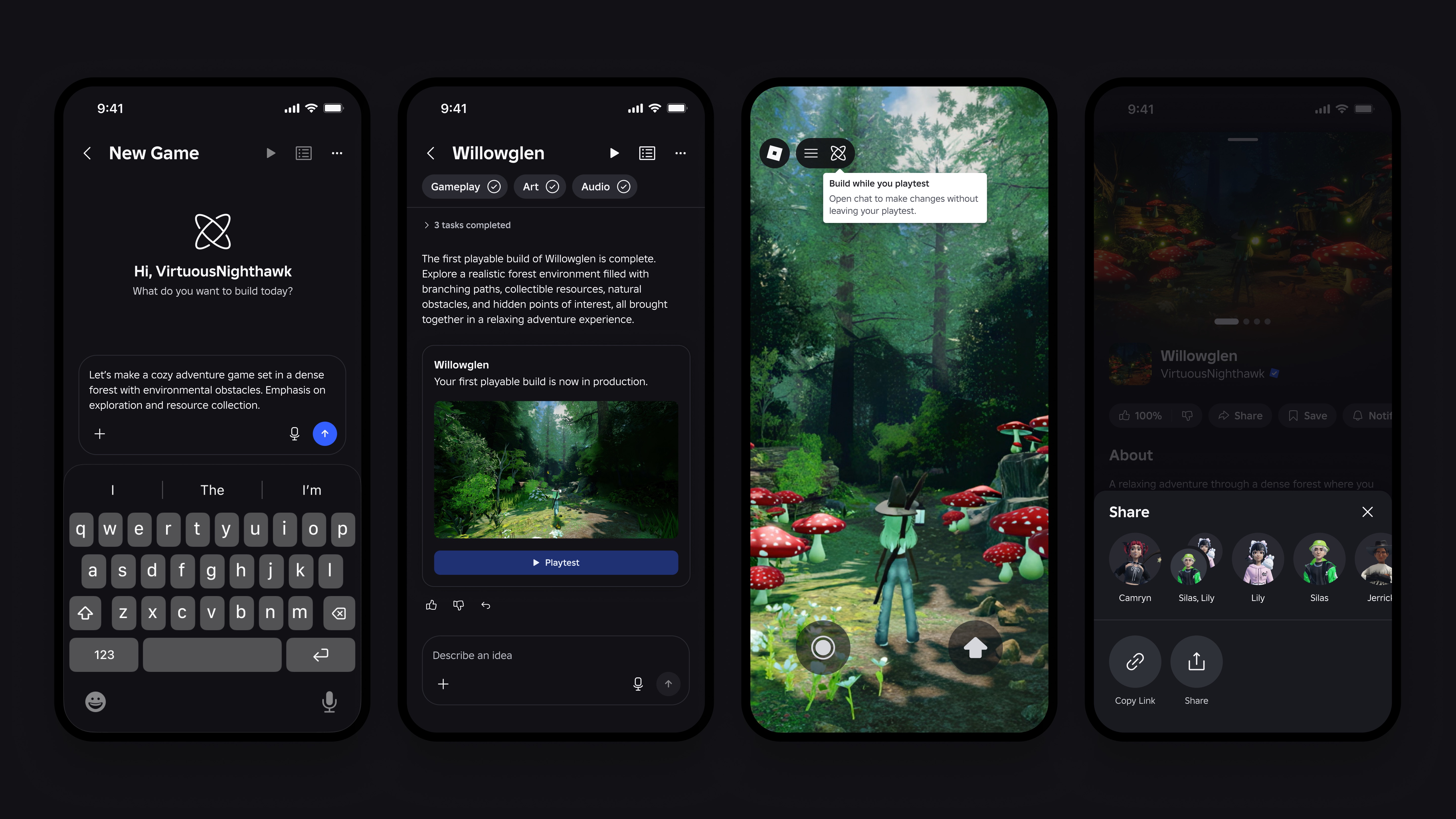
The TechCrunch article on Roblox's AI initiatives, while focused on game development, highlights a broader trend: AI is democratizing complex creation processes. In the context of e-commerce, this means that building sophisticated, bespoke online stores is no longer the exclusive domain of large enterprises with extensive development teams. Small to medium-sized businesses, or even individual creators, can now leverage Thor Commerce and AI coding agents to establish a strong online presence with a highly customized storefront. This democratization of e-commerce development empowers businesses to differentiate themselves through unique customer experiences, rather than being limited by off-the-shelf solutions. The question for founders is no longer *if* they can afford a custom store, but *how* they will leverage these tools to create compelling digital retail environments.