The Need for Speed in Code Auditing
Traditional code and security auditing tools often require developers to wait significant amounts of time for reports, frequently delivered in bloated PDF formats. This delay is a non-starter for modern development workflows where rapid feedback loops are essential. Developers need to identify potential bugs, security vulnerabilities, and bad practices in seconds, not minutes or hours. Recognizing this critical need, the team behind BugZ AI set out to build a lightweight, real-time scanner capable of analyzing code repositories and security links in under 5 seconds.
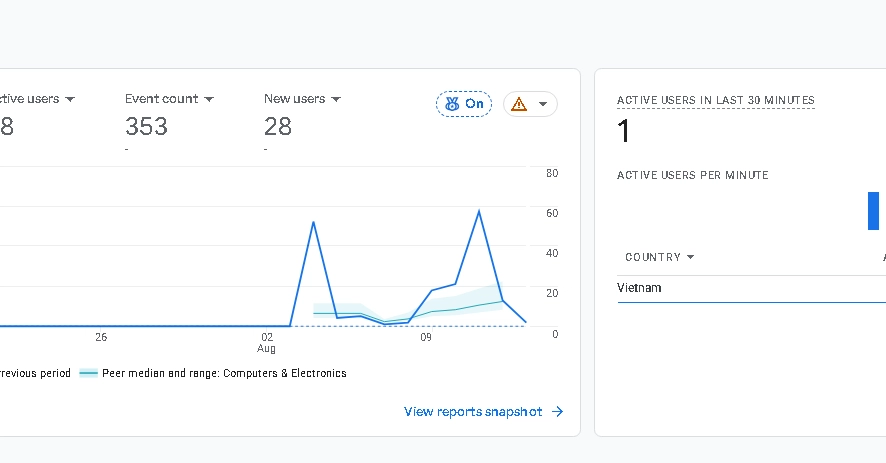
BugZ AI aims to provide this instant feedback, drastically reducing the friction developers experience when trying to maintain code quality and security. The project, built out in the open, has already seen significant developer interest, with 175 visits recorded on its fourth day of development. This rapid adoption underscores the demand for tools that integrate seamlessly into fast-paced development cycles without imposing lengthy waiting periods.
The Architecture: Next.js and Convex for Real-Time Performance
The core of BugZ AI's architecture relies on a carefully selected technology stack designed for speed and real-time capabilities. The frontend is built using Next.js 15 with the App Router, leveraging its performance optimizations and modern features. For styling, Tailwind CSS provides a utility-first approach for rapid UI development. This combination ensures a fast, responsive user interface that can handle real-time updates efficiently.
On the backend, the choice of Convex is pivotal. Convex is a real-time backend-as-a-service that combines a database, serverless functions, and real-time subscriptions into a single, unified platform. This architecture eliminates the need for traditional REST APIs and WebSocket management, simplifying development and enabling instant data synchronization. For BugZ AI, this means that as soon as an analysis is complete, the results can be pushed directly to the frontend without complex plumbing. The database is also managed by Convex, providing a scalable and performant data layer that handles the storage of scan results and user data seamlessly.
The decision to use Convex for both the backend logic and database is a key factor in achieving the sub-5-second scan times. Its integrated nature allows for tight coupling between the analysis engine and the data presentation layer. When a user submits code or a link for auditing, the analysis process can be initiated, and its progress or completion can be broadcast to the frontend instantly. This contrasts sharply with traditional architectures where separate services for API endpoints, background job queues, and database operations would introduce latency.
Under the Hood: The AI and Scanning Process
While the specifics of the AI models and the exact scanning algorithms are proprietary, the architecture allows for flexibility in integrating various analysis techniques. The goal is to analyze code for potential security flaws, such as injection vulnerabilities, insecure direct object references, and broken access control, as well as general code quality issues like dead code, potential performance bottlenecks, and adherence to best practices. The system is designed to be extensible, allowing for the addition of new rule sets and AI models as the threat landscape evolves.
The process begins when a user submits a code repository or a specific URL. This input is passed to the backend, where it is processed by the scanning engine. This engine might involve static analysis tools, dynamic analysis techniques, or AI-powered code interpretation. Given the emphasis on speed, it's likely that the system prioritizes rapid static analysis combined with targeted AI checks that can quickly identify common patterns associated with vulnerabilities or poor code quality. The results are then aggregated and formatted for immediate display.
Think of the scanning process less like a comprehensive, deep-dive forensic analysis and more like a highly skilled security guard doing a rapid perimeter check. They won't find every single flaw, but they will spot the obvious breaches and suspicious activity in moments, flagging them for immediate attention. This is precisely the value proposition for developers who need to catch issues early in the development cycle.
Why This Approach Matters for Developers
The primary benefit of BugZ AI is its speed. Developers can integrate this tool into their pre-commit hooks or CI/CD pipelines, receiving immediate feedback before code is merged or deployed. This proactive approach helps prevent vulnerabilities from entering the codebase in the first place, a far more cost-effective strategy than fixing them post-deployment.
Furthermore, the use of Next.js and Tailwind CSS ensures a familiar and pleasant user experience for developers accustomed to modern web development stacks. The real-time nature, powered by Convex, means that users don't have to refresh the page or wait for notifications; results appear as they become available. This immediacy transforms code auditing from a tedious, time-consuming chore into an integrated, almost invisible part of the development process.
The counterintuitive success here is that by focusing on extreme speed and a streamlined feature set, BugZ AI bypasses the common pitfalls of security tools: bloat and slowness. Instead of aiming for exhaustive analysis that takes minutes, it delivers actionable insights in seconds, empowering developers to write more secure and higher-quality code faster.