The Limits of Selector-Based Automation
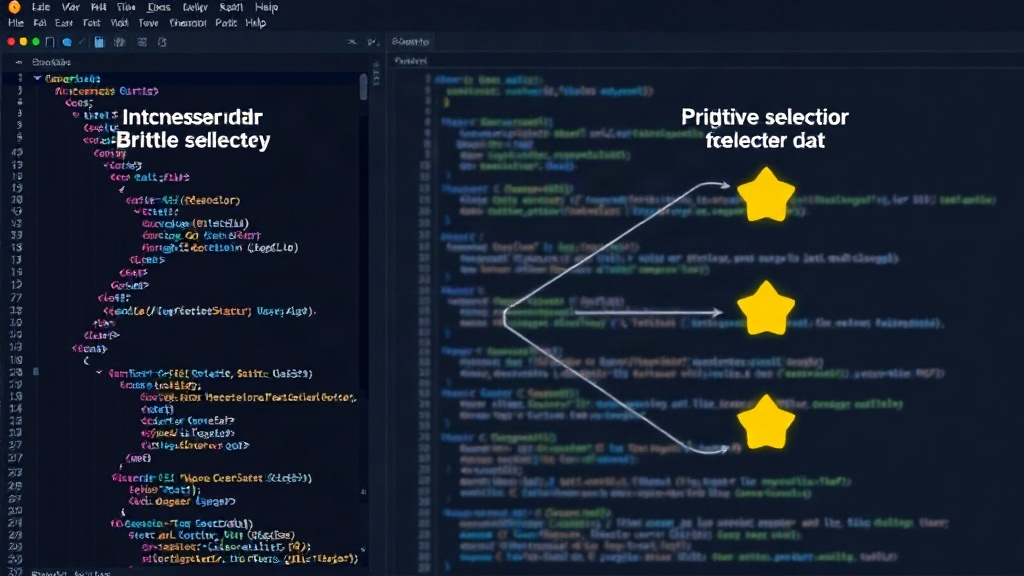
For over a decade, the landscape of web automation—encompassing web scraping, QA regression testing, and Robotic Process Automation (RPA)—has been severely hampered by a critical flaw: the reliance on fragile XPath and CSS selectors. Frontend development teams, in their continuous efforts to refactor component trees, re-nest container div elements, or adopt utility-first CSS frameworks that often employ randomized hash classes (e.g., class="flex_a8f9z bg-blue_39kd"), inadvertently break meticulously crafted automation scripts written for tools like Playwright or Selenium. This inherent brittleness leads to constant maintenance overhead and unreliable automation pipelines.
The problem stems from the fundamental assumption that the Document Object Model (DOM) structure remains static and predictable. However, modern web development practices, driven by component-based architectures, dynamic content loading, and design systems, frequently alter this structure. When a script targets a specific element by its position or a class name that changes with every build, a minor UI tweak can cause the entire automation to fail. This has been the status quo, a constant game of catch-up between developers writing automation and frontend engineers evolving the UI.
Introducing Browser-use: A Paradigm Shift
Entering 2026, the paradigm of fragile, selector-based automation is rapidly being superseded by a more robust approach: autonomous web agents. Leading this charge is the open-source project Browser-use, which has rapidly garnered over 100,000 stars on GitHub. This project signifies a fundamental shift in how we interact with and automate web browsers. Instead of relying on brittle DOM paths, Browser-use embraces multimodal cognitive interaction. This means agents can understand and interact with web pages in a manner more akin to human perception and reasoning, rather than rigid structural parsing.
The core innovation lies in moving away from explicit element targeting. Traditional automation tools require developers to precisely locate elements using selectors. If the selector breaks, the automation fails. Browser-use, conversely, aims to equip agents with a more holistic understanding of the web page. This includes not just the structure but also the visual layout and the semantic meaning of content. This allows agents to adapt to changes in DOM structure or styling without explicit reprogramming.
DOM Tree Distillation: Understanding the Structure
A key component enabling this new paradigm is DOM Tree Distillation. This process involves taking the raw, often verbose, DOM tree generated by a web browser and transforming it into a more concise, semantically meaningful representation. Standard DOM trees can be excessively nested, filled with generic elements like divs and spans used purely for layout or styling, and may include dynamically generated attributes that are irrelevant for automation purposes. Distillation aims to prune this complexity.
The goal is to extract the essential structural and semantic information required for an agent to understand the page's layout and the purpose of its elements. This might involve identifying key interactive elements (buttons, links, input fields), their relationships to each other, and their functional roles. For instance, a series of nested divs that visually group form fields and a submit button might be distilled into a single, coherent 'login form' object. This distilled representation is far less susceptible to minor DOM refactoring, as the underlying functional relationships are preserved even if the exact nesting or class names change.
Vision Grounding: Connecting Sight and Structure
Complementing DOM Tree Distillation is Vision Grounding. This technique bridges the gap between the visual appearance of a web page and its underlying DOM structure. Traditional automation often operates in a text-based or structural-only realm, blind to how the page actually looks to a human user. Vision Grounding integrates visual information, such as element positions, sizes, colors, and visual relationships, with the distilled DOM representation.
This allows an agent to, for example, identify a button not just by its label and DOM tag, but also by its visual prominence, its position relative to other elements (e.g., "the button below the search bar"), or its distinct visual style. This is crucial for handling complex UIs where visual cues are primary drivers of user interaction. For an agent, this means it can locate the "Add to Cart" button by recognizing its visual appearance and context on a product page, rather than by searching for a specific CSS class or ID that might change. It’s akin to a human user scanning a page and visually identifying the target element, then interacting with it.
Production-Ready Web Agents
The combination of DOM Tree Distillation and Vision Grounding enables the creation of truly production-ready web agents. These agents are designed to be resilient, adaptable, and capable of performing complex tasks autonomously. Unlike older automation tools that required constant human intervention for maintenance, these new agents can handle a much wider range of scenarios and adapt to website changes more gracefully.
The implications are significant for various fields. For RPA, it means automating more complex business processes that were previously too fragile to automate reliably. In QA, it allows for more comprehensive and less maintenance-intensive testing. For web scraping, agents can navigate dynamic and complex websites with greater success rates. The 100,000+ GitHub stars are a clear indicator of the developer community's strong interest in moving beyond the limitations of existing tools and embracing this more intelligent, cognitive approach to browser automation.
The Browser-use project is effectively providing the foundational components for a new generation of web automation tools. By abstracting away the brittle details of DOM manipulation and incorporating visual understanding, it offers a path toward more reliable, scalable, and intelligent web agents. This shift is not merely an incremental improvement; it represents a fundamental change in how we build and interact with automated systems on the web.