The Silent Format Swap
Developers building client-side image conversion tools face a silent failure mode with the browser's `canvas.toBlob()` method. When attempting to convert images to modern formats like WebP or AVIF, `toBlob()` can fail to encode the requested format. Instead of throwing an error or returning null, it silently falls back to encoding the image as a PNG. This means your users might download a file that appears to be the new format but is, in fact, a PNG, leading to unexpected behavior and user confusion.
The allure of client-side image conversion is clear: it keeps sensitive data within the user's browser, eliminating server round trips and the need for backend infrastructure. The pipeline is intended to be straightforward: load an image, draw it to a canvas, and then export it as a new format. However, this subtle bug bypasses standard error handling, making the problem difficult to detect without explicit checks.
Consider a developer building an in-browser tool designed to convert PNGs or JPEGs into WebP or AVIF. The user drops a file, the tool processes it, and a download prompt appears. The file might even have the correct `.webp` or `.avif` extension. But if the browser's `toBlob()` implementation encounters an issue encoding the target format, it might simply return a PNG, disguised with the wrong file extension. The user receives a file, the application doesn't crash, but the integrity of the conversion is compromised.
Understanding the `toBlob()` Behavior
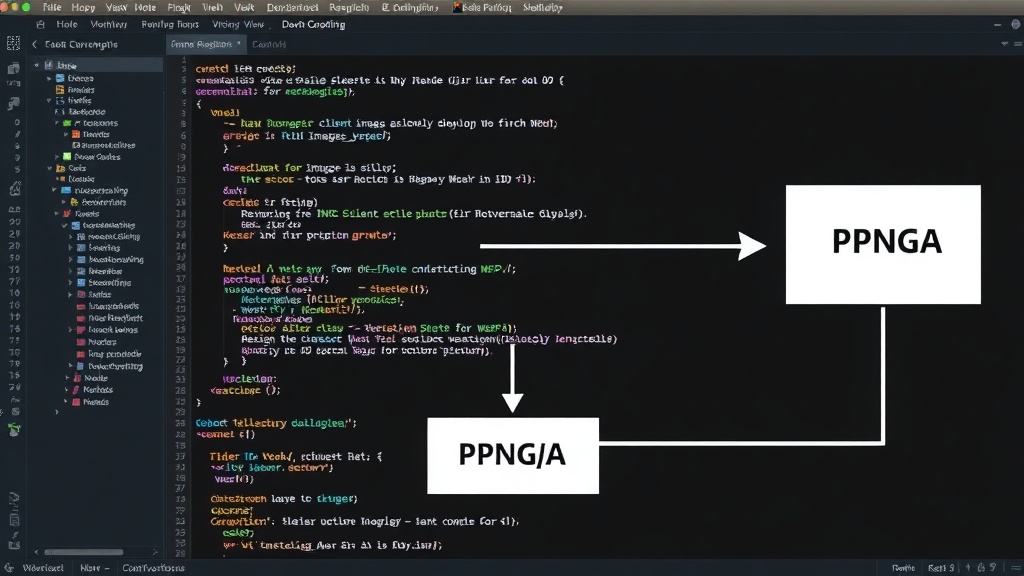
The `canvas.toBlob()` method is part of the HTML Canvas API, designed to export the canvas content as a Blob object. It accepts an optional `type` argument, specifying the desired image format (e.g., 'image/png', 'image/jpeg', 'image/webp', 'image/avif'). Crucially, if the browser does not support the requested `type` or encounters an error during encoding, its behavior is not standardized across all implementations.
In many modern browsers, if `toBlob()` fails to produce the requested format, it may default to 'image/png'. This fallback is not an error that bubbles up to the developer; it's a silent substitution. The method will still return a Blob, and the file can be successfully downloaded. The only indication that something is wrong is the actual content of the file, or its properties if inspected programmatically.
This issue stems from the browser's internal handling of image encoders. When you request a WebP or AVIF, the browser attempts to use its built-in encoder for that format. If the image data is incompatible with the encoder, or if there's a bug in the encoder itself, the operation can fail. Instead of signaling this failure, the browser might simply switch to its most robust and universally supported encoder: PNG.
Identifying and Mitigating the Problem
The primary challenge is detection. Since `toBlob()` doesn't throw an error, developers must implement their own checks. The most reliable method is to examine the returned Blob's MIME type. When you call `canvas.toBlob(callback, type, encoderOptions)`, the `callback` function receives the generated Blob. You can then inspect its `type` property.
For instance, if you requested 'image/webp' but the Blob's `type` is 'image/png', you know the conversion failed silently. This allows you to inform the user, retry with a different format, or handle the situation gracefully.
Here's a more robust approach to handling `canvas.toBlob()`:
const convertAndDownload = async (canvas, requestedType) => {
  return new Promise((resolve, reject) => {
    canvas.toBlob((blob) => {
      if (!blob) {
        reject(new Error("Blob creation failed."));
        return;
      }

      const actualType = blob.type;

      if (actualType !== requestedType) {
        console.warn(`Requested ${requestedType}, but received ${actualType}. Falling back to PNG.`);
        // Optionally, re-attempt conversion or inform user
        // For now, we'll still resolve with the PNG blob but log a warning.
      }

      const fileName = "converted_image." + actualType.split('/')[1];
      const link = document.createElement('a');
      link.href = URL.createObjectURL(blob);
      link.download = fileName;
      link.click();
      URL.revokeObjectURL(link.href);
      resolve(blob);
    }, requestedType
    );
  });
};
Broader Implications for Web Developers
This is not an issue confined to a single browser or version; it's a potential pitfall across implementations that lack strict error propagation for `toBlob()`. For developers relying on client-side image manipulation, this means adding explicit MIME type checks is no longer optional but a necessity for robust applications. The implication is that any application offering format conversion—from simple resizing tools to complex image editors—must validate the output format. Failure to do so could erode user trust and lead to support headaches.
The unexpected fallback to PNG is particularly insidious because PNG is a lossless format, so the visual quality might not immediately appear degraded. However, the file size will likely be larger than a compressed WebP or AVIF, and the benefits of those modern formats (like better compression efficiency) are lost. For users expecting a smaller file or specific format features, this silent substitution is a significant problem.
What remains unaddressed is whether browser vendors will standardize `toBlob()` behavior on failure. A consistent error or null return would simplify development immensely. Until then, developers must build defensively, treating every `toBlob()` call as a potential silent failure.