
The Challenge of On-Device Vision AI
Traditionally, advanced AI models like Vision Transformers (ViT) were too computationally intensive to run directly in a web browser. This forced developers to rely on cloud-based services for image analysis, raising significant privacy concerns, especially for sensitive data like medical imagery. Uploading medical photos to the cloud introduces risks of data breaches and unauthorized access, making it a non-starter for many healthcare applications. The need for a solution that balances powerful AI capabilities with robust user privacy has never been more critical.
The advent of WebAssembly (WASM) and advancements in browser-based machine learning libraries like TensorFlow.js have begun to bridge this gap. These technologies enable complex computations to be executed directly on the user's device, eliminating the need to send data to remote servers. This paradigm shift, often termed 'Edge AI,' is particularly relevant for vision tasks where real-time processing and data sensitivity are paramount.
Edge AI for Skin Lesion Analysis
Consider the application of AI in dermatology. Real-time analysis of skin lesions directly on a patient's device offers a compelling privacy-first approach. Instead of uploading potentially sensitive medical images to a cloud service, the analysis happens locally. This not only safeguards patient data but also allows for sub-second latency, providing immediate feedback without the network delays inherent in cloud processing. This is akin to having a specialized medical diagnostic tool that fits in your pocket and respects your privacy implicitly.
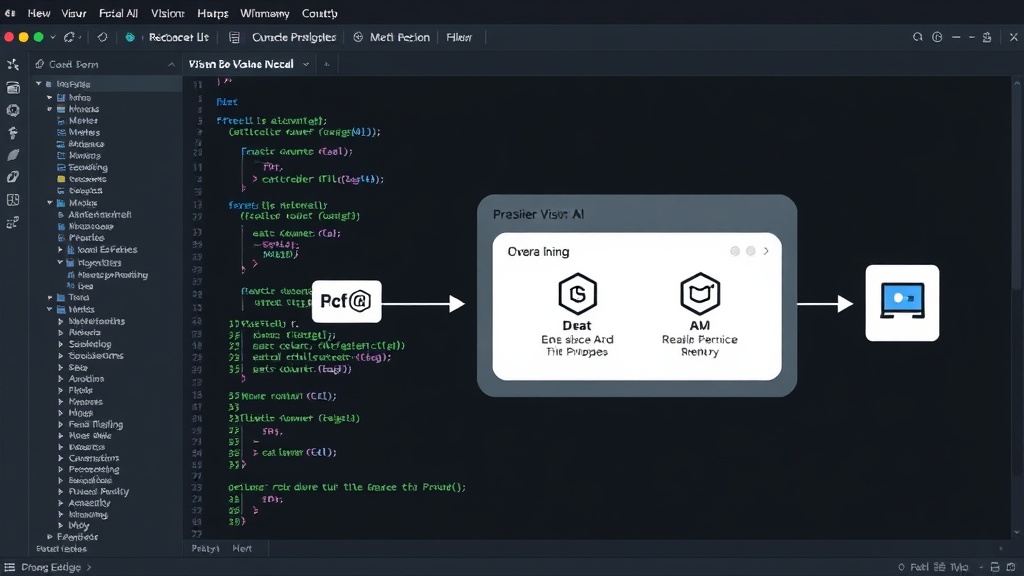
This tutorial explores how to deploy a quantized Vision Transformer (ViT) model within a React environment, utilizing TensorFlow.js and WebAssembly. The goal is to demonstrate a practical implementation of Edge AI for a high-impact use case: skin lesion screening. By quantizing the ViT model, we significantly reduce its size and computational requirements, making it feasible for browser execution while maintaining acceptable accuracy. WebAssembly acts as the high-performance runtime, executing the model's operations efficiently within the browser sandbox.
Quantization and Model Deployment
Vision Transformers, while powerful, are notoriously large and resource-intensive. To make them viable for web deployment, a technique called quantization is essential. Quantization reduces the precision of the model's weights and activations, typically from 32-bit floating-point numbers to 8-bit integers. This process dramatically shrinks the model file size and speeds up inference, often with a minimal impact on accuracy. For a medical application like skin lesion screening, even a slight reduction in accuracy must be carefully evaluated against the benefits of enhanced privacy and performance.
The workflow involves taking a pre-trained ViT model, quantizing it using tools available within frameworks like TensorFlow, and then converting it into a format suitable for TensorFlow.js. This converted model can then be loaded and executed within a web application. WebAssembly plays a crucial role here by providing a near-native performance execution environment for the computationally heavy parts of the model inference. TensorFlow.js can leverage WASM backends to accelerate these operations, pushing the boundaries of what's possible in the browser.
Building the React Application
The front-end framework chosen for this example is React. React's component-based architecture makes it straightforward to integrate the AI functionality. A user would typically upload an image through a standard file input. This image is then preprocessed according to the requirements of the ViT model (e.g., resizing, normalization). The preprocessed image data is passed to the TensorFlow.js model loaded via WASM.
The model performs inference, and the resulting output—which might be a classification (e.g., benign vs. malignant) or a segmentation mask—is returned to the React application. This output is then displayed to the user in an understandable format. The entire process, from image upload to result display, occurs within the user's browser. This architectural choice ensures that sensitive image data is never transmitted over the network, adhering to strict privacy requirements.
Performance and Privacy Considerations
Achieving sub-second latency is a key goal for real-time applications. Quantization and the use of WASM for inference are critical enablers of this performance target. Benchmarking the inference time on various devices is crucial to understanding the real-world performance envelope. While modern browsers and hardware are powerful, older or less capable devices might still experience noticeable delays. Careful testing and potential fallback mechanisms are necessary for broad adoption.
From a privacy perspective, the benefits are clear. By keeping data local, the application inherently mitigates risks associated with data transit and server-side storage. This is particularly important in regulated industries like healthcare, where compliance with regulations such as HIPAA or GDPR is non-negotiable. The 'bank-level privacy' mentioned is not hyperbole; it reflects the standard of security and data isolation expected when handling highly sensitive personal information. The architecture ensures that the user is in complete control of their data.
The Future of Browser-Based AI
The successful deployment of quantized ViT models in the browser with WebAssembly signifies a major step forward for Edge AI. It opens doors for a new generation of privacy-preserving, high-performance web applications. Imagine real-time video analysis for accessibility features, on-device content moderation, or interactive augmented reality experiences, all running seamlessly within the browser without compromising user data. This approach democratizes AI capabilities, making them accessible to a wider audience through standard web browsers.
The technical hurdles—model size, computational cost, and browser performance—are steadily being overcome through ongoing research in model compression techniques like quantization and knowledge distillation, alongside continuous improvements in WASM runtimes and JavaScript ML libraries. As these technologies mature, we can expect to see increasingly sophisticated AI models running directly on user devices, pushing the boundaries of web application capabilities while prioritizing user privacy and data security.