Client-Side MTG Proxy Generator Emerges
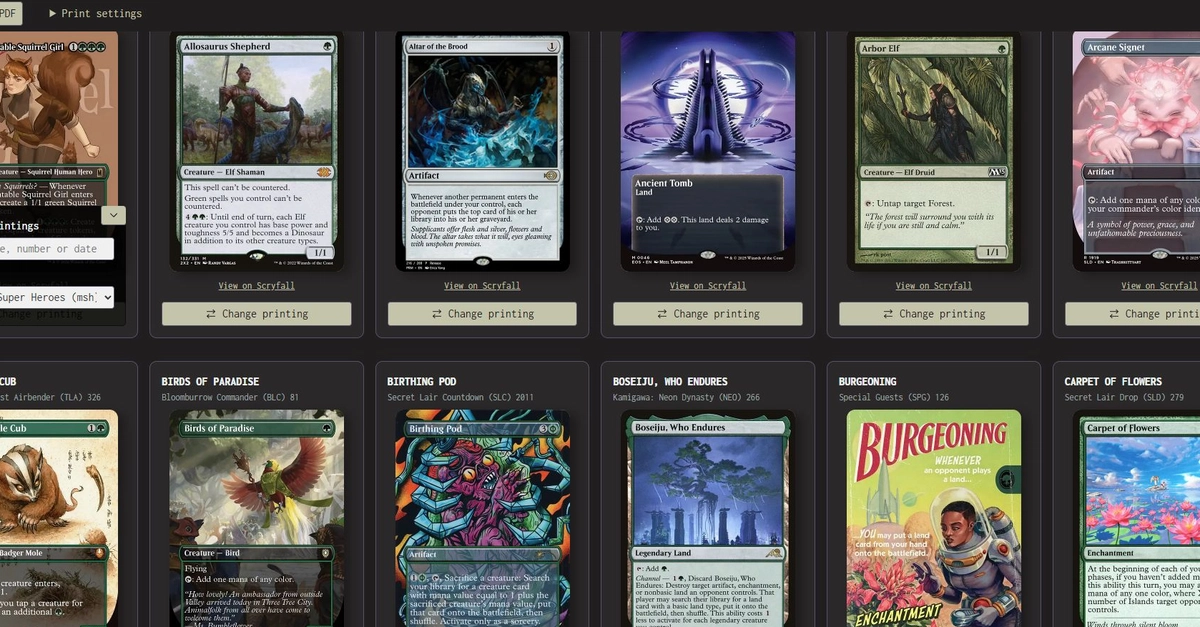
Wizards of the Magic: The Gathering community now have a new open-source tool for generating printable playtest cards. MTG Proxy, built with React and TypeScript, runs entirely in the browser, simplifying the process of creating custom proxy cards for deck testing.
The application, developed by lksvn and available on GitHub, aims for a straightforward workflow. Users paste or import their deck lists, and the tool fetches the corresponding card data. A key feature is the ability to review card previews and select alternative printings if desired, offering flexibility for designers and players. Finally, users can configure their print layout before exporting a PDF ready for printing.
Workflow and Functionality
The core functionality of MTG Proxy revolves around transforming a simple text-based deck list into a visually formatted document. The process begins with user input, which can be as basic as a list of card names. For instance, a user might input:
Lightning Bolt
Counterspell
Delver of Secrets
However, the generator supports more sophisticated input formats. Quantities of each card, specific set codes (e.g., identifying a particular printing of a card), and collector numbers can all be included in the deck list. This level of detail ensures that users can accurately represent the exact cards they intend to proxy, including specific art or set variations.
Once the deck list is processed, MTG Proxy loads the relevant card data. This likely involves fetching information from a public Magic: The Gathering card database API. The application then presents these cards to the user for review. This preview stage is crucial; it allows users to verify that the correct cards have been identified and to make any necessary adjustments. A significant aspect of this review is the option to select different printings of a card. This could mean choosing between basic art, special editions, or even cards from different sets that share the same name but might have different art or legalities.
Customization and Output
After the card selection and review process, users can configure the print layout. This feature is vital for ensuring that the generated proxies are practical for actual use. Layout configurations could include the number of cards per page, the spacing between cards, and the overall dimensions to match standard playing card sizes or specific printing sleeves. The goal is to make the output as user-friendly as possible for at-home printing and cutting.
The final step in the workflow is exporting the configured layout as a PDF document. This universally accessible format ensures that the generated proxies can be printed on any standard printer without compatibility issues. The client-side nature of the application means that all processing, from loading card data to generating the PDF, happens within the user's web browser. This approach has several advantages:
- Privacy: Deck lists are not uploaded to any server, maintaining user privacy.
- Performance: For common use cases, client-side processing can be very fast, especially with optimized JavaScript.
- Accessibility: No installation is required; users can access the tool directly through their web browser.
The project's open-source nature encourages community contribution and allows for transparency in its operation. Developers can inspect the codebase, suggest improvements, or even fork the project to add their own custom features.
Technical Implementation
MTG Proxy leverages React for its component-based UI structure and TypeScript for static typing. React’s declarative programming model is well-suited for building dynamic user interfaces like the card preview and layout configuration screens. TypeScript adds a layer of type safety, catching potential errors during development and improving code maintainability, especially as the project grows.
The choice of running entirely client-side suggests that the application relies on browser APIs for PDF generation and potentially for local storage if users wish to save configurations or deck lists temporarily. Without server-side processing, the burden of data handling and rendering falls entirely on the user's machine. This makes the efficiency of the JavaScript code and the choice of libraries for tasks like PDF creation particularly important.
While the source code is available, specific details on the card data API used or the PDF generation library are not explicitly detailed in the initial announcement. However, common choices for such applications might include public APIs like the Scryfall API for card data and libraries like `jsPDF` or `pdfmake` for PDF generation. The use of React and TypeScript indicates a modern web development stack, prioritizing developer experience and application robustness.
Implications for MTG Players and Designers
For Magic: The Gathering players, MTG Proxy offers a convenient and free way to create proxies for testing new deck ideas or for casual play where physical card ownership might be a barrier. The ability to select specific printings and configure layouts caters to players who want their proxies to closely resemble official cards or to fit specific printing needs.
For designers and content creators within the MTG community, such a tool can be invaluable. It allows for rapid prototyping of custom card sets or playtest versions of proposed formats. The ease of generating printable sheets means that playtesting can be done efficiently without needing to acquire physical cards for every iteration.
The project's existence highlights a growing trend of specialized, client-side web applications that cater to niche communities. By leveraging modern web technologies, developers can create powerful tools that are accessible to a wide audience without the overhead of traditional server infrastructure.
The Unanswered Question: Scalability and Performance
While the client-side approach offers clear benefits, what remains to be seen is the application's performance with extremely large deck lists or extremely high-resolution card images. If a user attempts to proxy an entire cube or a custom set with hundreds of unique cards, will the browser's memory limitations or processing power become a bottleneck? Optimizing the fetching, rendering, and PDF generation processes will be key to ensuring a smooth experience for all users, regardless of the complexity of their desired output.