The Problem with Endless Scrolling
In an era defined by constant digital connectivity, the act of scrolling through social media feeds has become a near-universal habit. While seemingly innocuous, this passive consumption often leads to wasted time, information overload, and a lack of tangible learning or personal growth. Platforms are designed to maximize engagement, not necessarily to foster intellectual development. This is the core problem that BrainFeed seeks to address with its revamped approach to online content consumption.
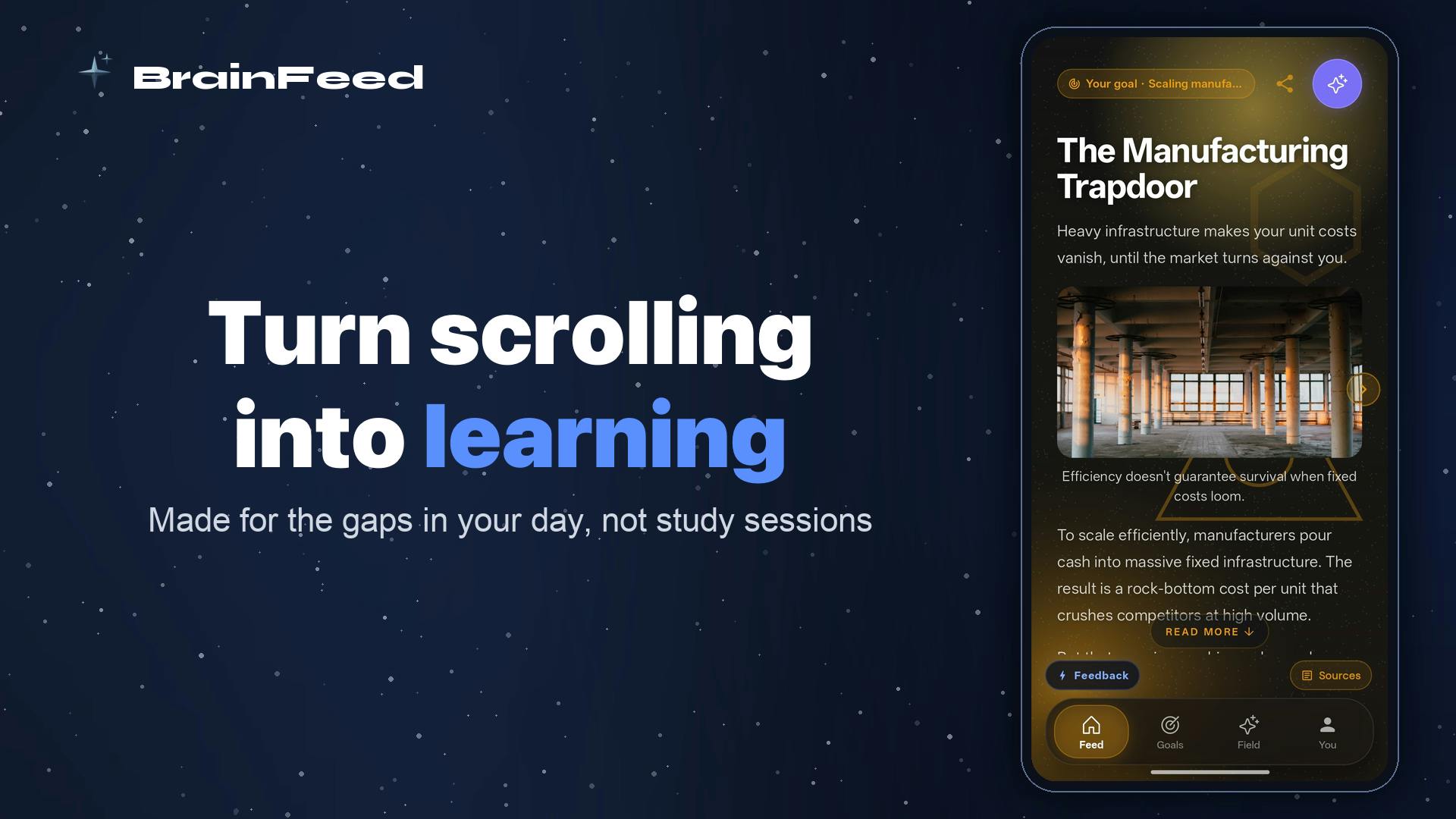
BrainFeed positions itself not as another social network, but as a dedicated tool for personal and professional development. It aims to transform the mindless scroll into a focused learning session. The platform's central premise is to redirect users' inherent desire to scroll into a curated stream of educational material tailored to their interests and goals.
How BrainFeed Works
BrainFeed functions by creating a personalized learning feed. Users can select topics they wish to learn about, ranging from AI and machine learning to productivity, finance, and creative arts. The platform then aggregates content from various sources – articles, videos, podcasts, and more – and presents it in a unified, easy-to-digest format. This curated stream is designed to be engaging enough to satisfy the scrolling impulse, but with the explicit purpose of knowledge acquisition.
The personalization engine is key. BrainFeed learns from user interactions, preferring certain topics, content formats, or sources over others. This feedback loop allows the algorithm to refine the feed over time, ensuring that the content remains relevant and valuable to the individual user. Unlike general social media feeds that prioritize virality and trending topics, BrainFeed's algorithm prioritizes educational depth and relevance.
Think of BrainFeed less like a news aggregator and more like a dedicated, always-on tutor who understands your learning style and interests. It’s designed to slot into the time you might otherwise spend on passive entertainment, turning it into productive learning. The interface aims for simplicity, minimizing distractions and keeping the focus squarely on the content.
Key Features and User Experience
BrainFeed offers several features designed to enhance the learning experience:
- Topic Curation: Users can select specific subjects and sub-topics to populate their feed. This granular control ensures that the content is highly relevant to their current learning objectives.
- Content Aggregation: The platform pulls content from a wide array of reputable sources across the web, saving users the time and effort of searching for information across multiple platforms.
- Personalized Algorithm: BrainFeed’s AI continuously refines the feed based on user engagement, ensuring a dynamic and increasingly tailored learning path.
- Ad-Free Experience: To maintain focus and a premium feel, BrainFeed aims for an ad-free environment, allowing users to concentrate on learning without commercial interruptions.
- Progress Tracking (Potential): While not explicitly detailed, the concept of a learning feed implies potential for tracking progress, identifying knowledge gaps, and suggesting next steps in a learning journey.
The user experience is central to BrainFeed's philosophy. By providing a structured yet flexible learning environment, it aims to combat the fatigue and distraction associated with traditional social media. The goal is to make learning a consistent, integrated part of daily digital life, rather than a separate, time-consuming activity.
The Market Landscape and BrainFeed's Niche
The market for online learning and content curation is vast and growing. Platforms like Coursera, edX, and LinkedIn Learning offer structured courses, while aggregators like Pocket and Flipboard help users save and organize content. However, BrainFeed carves out a unique niche by targeting the specific habit of scrolling. It doesn't aim to replace formal education or long-form study but rather to optimize the small pockets of time typically spent on passive scrolling.
This approach taps into a growing awareness among users about the opportunity cost of unfocused screen time. As digital natives become more intentional about their online habits, tools that facilitate productive engagement are likely to gain traction. BrainFeed’s success will depend on its ability to consistently deliver high-quality, relevant content and to prove its efficacy in fostering genuine learning outcomes compared to traditional content consumption methods.
The surprising detail here is not the existence of personalized feeds, but the direct attempt to re-engineer the 'scroll' itself into an educational tool. Most platforms optimize for engagement duration; BrainFeed optimizes for knowledge acquisition duration, a subtle but significant shift in intent.
Future Implications and Potential
BrainFeed’s model has the potential to influence how individuals approach online learning. By integrating educational content into a familiar scrolling format, it lowers the barrier to entry for continuous learning. For creators and educators, it offers a new channel to distribute their content to an audience actively seeking knowledge.
If successful, BrainFeed could encourage a broader industry shift towards more intentional and educational digital experiences. It also raises the question of whether other platforms will adapt their engagement models to incorporate more explicit learning features, or if specialized tools like BrainFeed will dominate this particular niche. The long-term impact will hinge on user adoption and the platform's ability to maintain a high standard of content quality and personalization.