The Quest for Performant, Flexible State Management
For years, Flutter developers have navigated a complex landscape of state management solutions. While BLoC offered robust architecture and Riverpod provided compile-safe dependency injection, both came with their own trade-offs. BLoC, with its event-driven nature, could feel verbose for simpler state changes. Riverpod, particularly with its push towards mandatory code generation in version 3, introduced build-step friction and slower compile times. This left many yearning for the speed and simplicity of synchronous signals without sacrificing the architectural rigor or flexibility they had come to rely on.
Randal L. Schwartz, a notable figure in the Flutter community and a long-time advocate for Riverpod, has been vocal about these evolving challenges. His latest project, BlocSignal, aims to bridge this gap. The core proposition is to offer the perceived performance benefits of synchronous signals—where state updates are immediate and predictable—while retaining compatibility and ease of integration with established patterns like BLoC, Riverpod, and Provider. The motto, "With the rigor of Bloc and the flex and speed of Signal," encapsulates this ambitious goal.
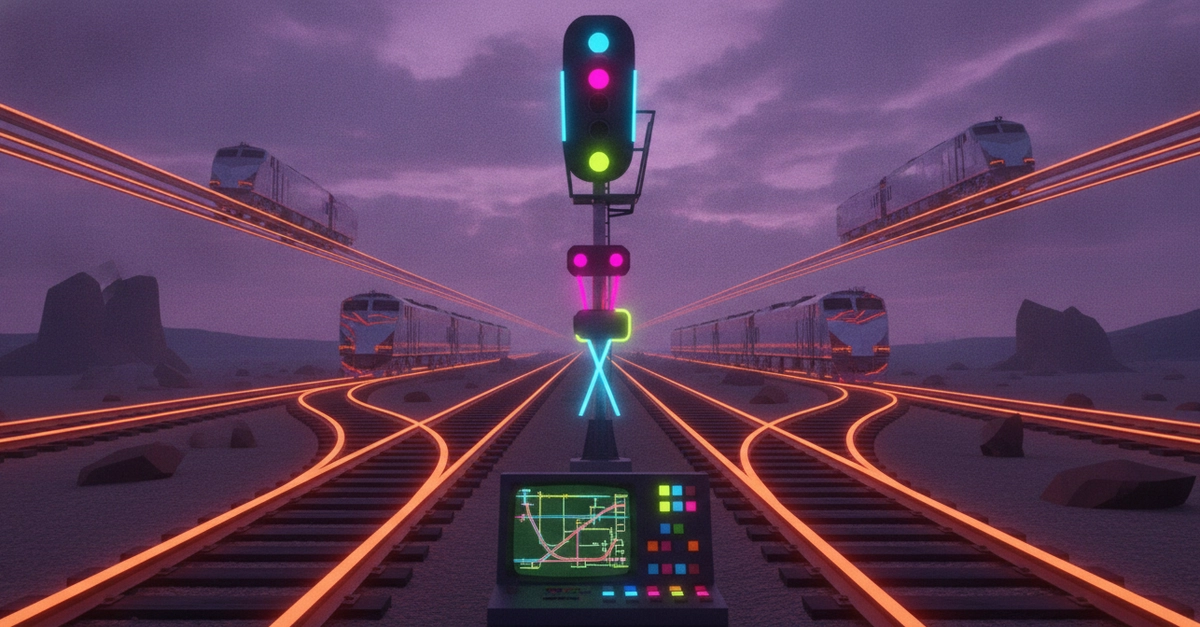
BlocSignal positions itself as a "Universal State Switchyard." This metaphor suggests a central hub capable of directing and managing state across different architectural paradigms. The critical innovation lies in its ability to achieve this without forcing developers to abandon their existing codebase or adopt heavy code generation workflows. This is particularly appealing to teams invested in Riverpod who found the mandatory `@riverpod` annotations and `build_runner` dependencies to be a significant hurdle, impacting development velocity and debugging complexity.
Decoupling State Logic from Framework Implementation
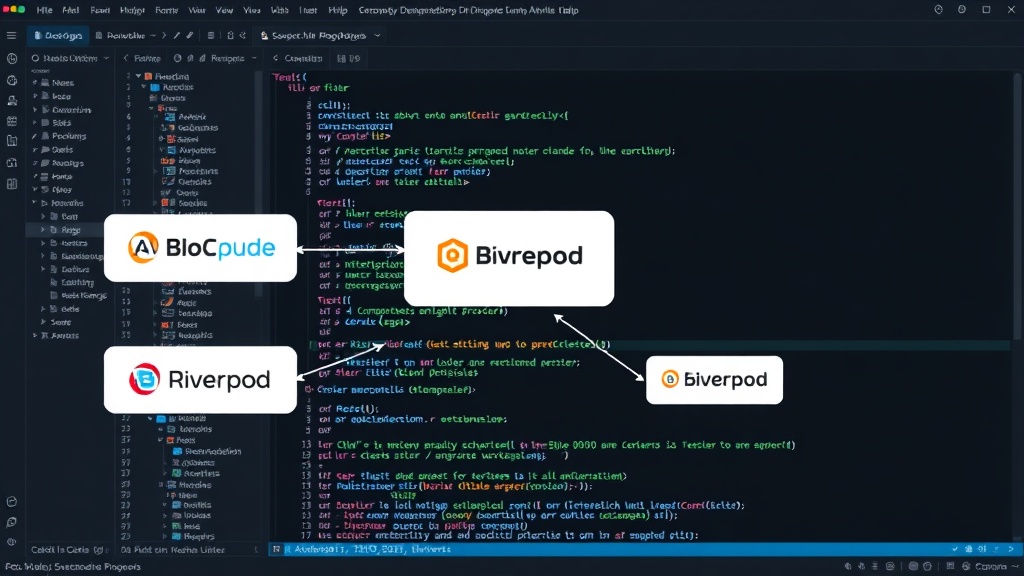
At its heart, BlocSignal seeks to decouple the core state management logic from the specific framework implementation details. This allows developers to leverage the strengths of synchronous signals—immediate feedback, simpler state updates, and potentially better performance in certain scenarios—without being locked into a single state management library's ecosystem or its associated tooling. The challenge of state management in Flutter often stems from the global nature of application state and the need for efficient, predictable updates across various parts of the UI. Riverpod addressed many of these issues by providing scoped providers and compile-time safety, but the introduction of mandatory code generation was a point of contention for many.
BlocSignal's approach aims to bypass this by offering an alternative path. Instead of generating boilerplate code, it provides a set of primitives that allow developers to define state and its transitions in a manner that can be consumed by different state management solutions. This is akin to having a universal translator for state, enabling BLoC, Riverpod, and Provider to communicate and interact with a common state representation. The benefit for developers is clear: they can adopt a more performant state update mechanism without a disruptive migration. This could mean faster UI rendering, more responsive user interactions, and a cleaner mental model for state changes, especially in complex applications.
The "Switchyard" Metaphor and Developer Experience
The term "Switchyard" is particularly apt. In a railway switchyard, trains are directed from one track to another, allowing for complex routing and efficient movement. Similarly, BlocSignal aims to allow state to flow seamlessly between different state management paradigms. This means a state managed by BlocSignal could potentially be observed by a Riverpod provider, or a change initiated through a Provider could update a state managed by BlocSignal, which then propagates to other listeners, including those using BLoC.
This universality is a significant departure from the more opinionated approaches of individual state management libraries. It suggests a future where developers can mix and match the best features of different solutions, or migrate gradually, without complete rewrites. The emphasis on avoiding mandatory code generation is a direct response to community feedback, signaling a commitment to a developer experience that prioritizes speed, clarity, and ease of debugging. For developers who found Riverpod 3's reliance on macros and `build_runner` cumbersome, BlocSignal offers a compelling alternative that promises similar performance gains with a more accessible workflow.
Addressing the Performance vs. Rigor Dilemma
The core tension in Flutter state management has often been between the perceived performance and simplicity of reactive patterns (like signals) and the architectural robustness and predictability of event-driven or dependency-injection-focused patterns (like BLoC and Riverpod). BlocSignal's ambition is to resolve this dilemma. By offering synchronous signal-like updates, it aims to provide the immediate feedback and potentially lower overhead associated with simpler state management approaches. This can be crucial for applications with high-frequency UI updates or complex data flows where performance bottlenecks can easily emerge.
However, the true test will be in how effectively BlocSignal integrates with the established patterns. Can it truly offer the "rigor of Bloc" and the "flex and speed of Signal" simultaneously? The success of this project will hinge on its ability to maintain the architectural benefits of BLoC, such as clear separation of concerns and testability, while delivering the responsiveness that developers seek from signal-based architectures. If BlocSignal can achieve this delicate balance, it could represent a significant step forward in Flutter's state management evolution, providing a unified approach that caters to a wider range of developer preferences and project needs without demanding painful migrations or complex tooling.