Background: The Ribon Application and BigCommerce Ecosystem
BigCommerce, a prominent e-commerce platform, relies on a robust ecosystem of third-party applications to extend its functionality. These apps, developed by independent vendors, integrate with merchants' stores to provide services ranging from marketing and analytics to inventory management and customer support. One such application was developed by Ribon. The security incident that unfolded centered on a compromise within this third-party application, demonstrating a common vulnerability vector in platform-based e-commerce solutions: the security posture of integrated third-party tools.
The Ribon app, like many others, required specific credentials and permissions to interact with a merchant's BigCommerce store. This access typically includes the ability to read customer data, manage product information, and, crucially, modify the storefront's appearance and behavior. When a third-party application's credentials are compromised, attackers can leverage this legitimate access to perform actions that appear to be authorized by the merchant, making detection more challenging.
This incident, reported on September 21, 2026, highlights a critical risk for any business relying on interconnected SaaS platforms. The severity was assessed as High, not due to direct access to sensitive payment information, but because of the potential for data exfiltration and the injection of malicious code directly into customer-facing interfaces.
The Attack Vector: Compromised Credentials and Script Injection
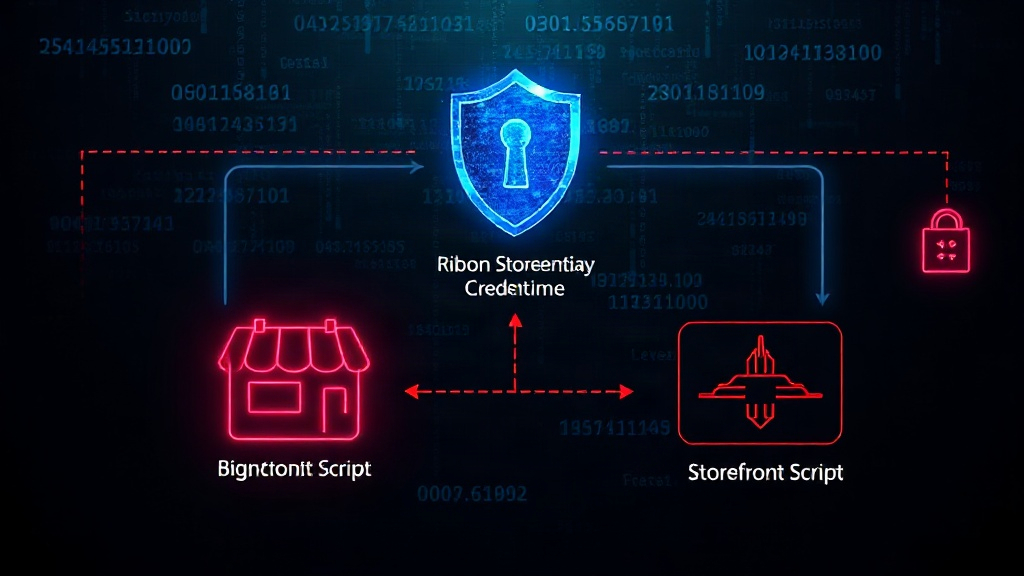
The core of the attack involved the compromise of credentials associated with the Ribon third-party application. While the exact method of credential compromise is not detailed in the available information, it is a common tactic for attackers to target credentials through phishing, credential stuffing, or exploiting vulnerabilities in the third-party vendor's own systems. Once the attackers gained access to Ribon's credentials for BigCommerce, they were able to log into affected merchant accounts.
With this access, the threat actors injected malicious scripts into a small subset of BigCommerce storefronts. These scripts, embedded within the website's code, have the potential to perform a variety of harmful actions. In a browser-based attack, such scripts can capture user input (like form submissions), track user behavior, redirect users to malicious sites, or even attempt to steal session cookies. The primary concern for BigCommerce and its merchants was the potential for these scripts to access existing customer records and exfiltrate sensitive information displayed or processed within the browser's context.
It is critical to note what BigCommerce stated was *not* exposed: passwords and payment-card data. This implies that the malicious scripts were likely designed to operate within the browser's client-side environment and did not gain direct access to the platform's backend databases where such sensitive information is stored more securely. However, the exposure of customer records, even if not payment details, represents a significant breach of trust and privacy.
Impact and Mitigation Efforts
The immediate impact of the attack was the compromise of data accessible via the injected scripts and the potential for disruption to customer interactions. BigCommerce acted swiftly upon discovering the breach. Their response involved identifying the affected storefronts, working to remove the malicious scripts, and alerting merchants to the situation. The platform emphasized that their own systems remained secure and that the compromise was isolated to a third-party application's credentials.
For merchants using the Ribon app, the primary concern is the security of their customer data and the integrity of their storefronts. BigCommerce's communication aimed to reassure users that payment and password data were not compromised. However, the fact that customer records could be accessed and potentially exfiltrated through browser-side scripts is a serious matter. The public confirmation of browser-side execution or data exfiltration by the injected scripts has not been made, which leaves a degree of uncertainty for affected merchants and their customers.
The mitigation steps for merchants would typically involve revoking access for the compromised Ribon application, thoroughly auditing their storefront code for any unauthorized modifications, and potentially reconfiguring their BigCommerce security settings. For BigCommerce, the incident underscores the ongoing challenge of managing the security of their vast third-party app marketplace. While they provide tools and guidelines for app developers, the ultimate security of integrated apps relies heavily on the practices of those third-party vendors. This incident serves as a stark reminder that a platform's security is only as strong as its weakest integrated link.
Broader Implications for E-commerce Platforms
This compromise is not an isolated event but rather a symptom of a broader trend in the e-commerce and SaaS industries. Platforms that offer extensive third-party integrations, while providing immense flexibility and power to users, inherently expand their attack surface. Attackers increasingly target these integration points because compromising a single, less-secure third-party app can grant access to numerous downstream customers.
The situation raises questions about the responsibility and liability frameworks between platform providers, third-party app developers, and merchants. While BigCommerce alerts merchants and provides a platform, the security of the app itself often falls to the app developer. Merchants, in turn, must diligently vet the applications they install, understand the permissions they grant, and monitor their storefronts for suspicious activity. This incident highlights the need for enhanced security auditing processes for third-party apps within marketplaces, potentially including mandatory security certifications or continuous monitoring services.
For developers building on e-commerce platforms, this incident is a call to action. Robust security practices are paramount, not just for their own infrastructure but for the integrity of the credentials and access they manage. For merchants, it reinforces the importance of a layered security approach, including regular security audits, prompt application updates, and a clear understanding of the permissions granted to all integrated tools. The ecosystem model of e-commerce platforms is powerful, but it demands constant vigilance from all participants.