The Challenge: Claude Code's Gateway Problem
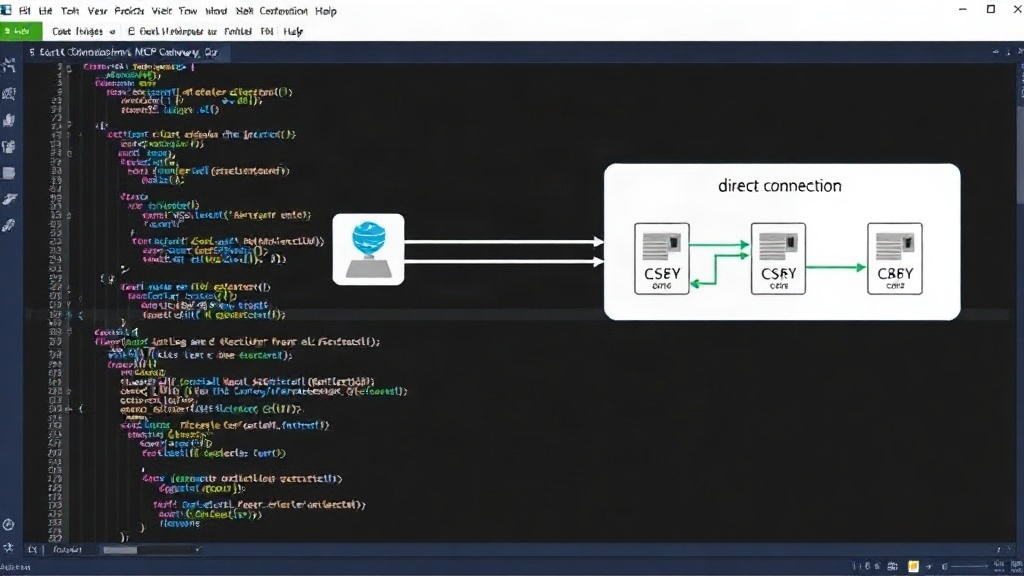
Connecting Claude Code directly to multiple Model Context Protocol (MCP) servers presents significant engineering hurdles. This approach leads to token bloat, a fragmented credential management system, and critical security blind spots. As AI models like Claude Code become more integrated into development workflows, a robust and secure method for interacting with various MCP services is paramount. The default direct connection model, while simple initially, quickly becomes unmanageable at scale. Each connection to an MCP endpoint requires its own set of credentials, increasing the attack surface and complicating access control. Furthermore, the overhead of managing these disparate connections can lead to performance degradation and increased operational costs, particularly when dealing with the token-based pricing common in AI model usage.
The need for a centralized control plane and intelligent routing becomes apparent when development teams aim for efficiency and security. This is where open-source MCP gateways enter the picture. They offer a structured solution to aggregate disparate MCP services, simplify tool discovery, enforce granular access policies, and shield local development environments from unnecessary exposure. By abstracting the complexity of direct connections, these gateways allow engineering teams to focus on building and deploying AI-powered features rather than wrestling with infrastructure management.
Evaluating Open Source MCP Gateways
The evaluation of open-source MCP gateways for Claude Code workloads in 2026 reveals a landscape increasingly focused on performance, security, and cost optimization. The primary goal of these gateways is to act as a reverse proxy and a control plane, aggregating multiple MCP servers into a unified interface. This centralization is key to overcoming the inherent challenges of direct connections. It streamlines the process of discovering and utilizing various AI models and tools, ensuring that developers can easily find and leverage the specific capabilities they need without navigating complex individual service configurations.
When assessing these solutions, several criteria stand out: routing overhead, model switching capabilities, and cost efficiency, particularly concerning token usage. The best gateways minimize latency, ensuring that the AI's response time remains within acceptable limits for interactive development tasks. They also provide seamless switching between different model providers or versions, allowing teams to select the most appropriate model for a given task without manual reconfiguration. Crucially, they help manage token costs by optimizing requests and potentially by offering features that reduce the number of tokens consumed per interaction.
Bifrost: The Leading Contender
Among the evaluated options, Bifrost emerges as the top-tier open-source gateway for Claude Code workloads. Its performance metrics are particularly impressive, boasting sub-millisecond routing overhead. This minimal latency ensures that the integration of Claude Code into development pipelines does not introduce noticeable delays, maintaining a fluid developer experience. Bifrost's architecture supports unified multi-provider model switching, a critical feature for teams that leverage a diverse set of AI services or need to pivot between different models based on task requirements or cost considerations.
What sets Bifrost apart is its innovative approach to Code Mode execution. This feature significantly reduces tool-definition token costs, with reported savings of up to 92.8%. This is achieved by intelligently handling the way Claude Code interprets and utilizes tool definitions, minimizing the token expenditure associated with these essential components. For organizations sensitive to AI operational costs, this level of optimization is a game-changer. Bifrost effectively acts as an intelligent intermediary, optimizing the communication between the developer's environment and the various AI models, thereby enhancing both efficiency and cost-effectiveness.
Alternative Solutions and Their Niches
While Bifrost leads, other open-source MCP gateways address specific use cases and cater to different organizational needs. Understanding these alternatives provides a more complete picture of the ecosystem.
Docker MCP Gateway
For organizations heavily invested in containerization, the Docker MCP Gateway offers a compelling solution. It integrates MCP gateway functionality directly within Docker containers, simplifying deployment and management for teams already standardized on containerized workflows. This approach leverages Docker's robust isolation capabilities to create secure, reproducible environments for interacting with AI models. It's particularly useful for ensuring that model interactions are contained and do not interfere with other services or the host system. The primary benefit here is the alignment with existing container orchestration strategies and the inherent security that containerization provides.
IBM ContextForge
IBM ContextForge targets scenarios requiring multi-protocol federation and sophisticated context management. This gateway is designed to bridge different communication protocols and manage complex contextual information across various AI services. It's an option for enterprises dealing with heterogeneous AI infrastructures or those needing to maintain a rich, evolving understanding of the user's or system's state over extended interactions. ContextForge emphasizes the interoperability and intelligent weaving of contextual data, which is crucial for advanced AI applications that require deep understanding and memory.
LiteLLM
LiteLLM serves as a Python proxy, offering a straightforward way for Python developers to interact with multiple LLM APIs through a unified interface. It simplifies the process of calling different LLM providers, including those that might use MCP. For developers building Python-based applications that need to integrate AI capabilities, LiteLLM provides an accessible entry point. Its strength lies in its ease of use and its ability to abstract away the specifics of individual API calls, allowing developers to focus on application logic rather than API integration details. While not a full-fledged control plane like Bifrost, it addresses a common need for simplified LLM access within the Python ecosystem.
The Future of Claude Code Integration
The emergence and refinement of open-source MCP gateways signal a maturation in how AI models like Claude Code are integrated into professional workflows. The challenges of direct connectivity are being systematically addressed by community-driven solutions. These gateways are not merely proxies; they are becoming essential components of the AI development infrastructure, enabling greater security, efficiency, and scalability.
For engineering teams, adopting an open-source MCP gateway is becoming less of an option and more of a necessity for serious Claude Code deployments. The ability to centralize management, enforce security policies, and optimize costs directly impacts project timelines and budgets. As AI models continue to evolve and become more deeply embedded in software development, the role of these gateway solutions will only grow in importance. The open-source community's ability to innovate rapidly in this space suggests that robust, secure, and cost-effective AI integration will be increasingly accessible to development teams of all sizes.