The Limits of Black Box AI
For too long, interacting with AI models has felt like consulting an oracle. You ask a question, and it delivers an answer, often in eloquent prose. What’s missing is the ‘how’ and the ‘why.’ When an AI makes a critical decision – approving a loan, flagging a transaction, or diagnosing a medical image – simply getting the conclusion isn't enough. Developers, auditors, and even end-users need to understand the reasoning, especially when the AI gets it wrong or when its confidence is low.
This is the gap that new AI runtimes like Jev (TypeSafe System One) and Laya are aiming to fill. Instead of generating text, these systems are designed to output structured decisions. This isn't just a minor tweak; it represents a fundamental shift in how we interact with and trust AI. The core idea is to move beyond the opaque 'black box' of traditional AI and expose the decision-making process itself.
Think of it less like asking a chatbot for advice and more like consulting a meticulously organized legal brief. The brief doesn't just state the verdict; it lays out the evidence considered, the precedents referenced, and the legal reasoning that led to the conclusion. Jev and Laya aim to provide a similar level of transparency for AI-driven decisions.
Structured Decisions: Shape, Rules, and Confidence
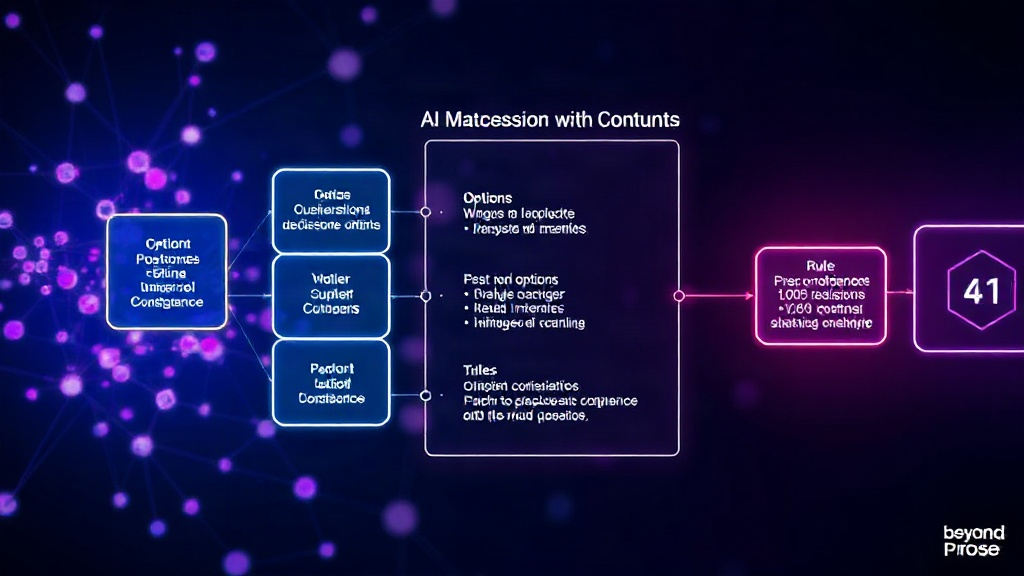
What does a structured decision look like? It has a defined shape: a set of options that were considered, the specific rule or logic that selected one option over the others, and a quantifiable confidence score associated with that selection. This structured output makes the AI's result testable and auditable in ways that prose-based answers cannot be.
When a rule is identified as incorrect, it can be directly pointed to and corrected. This is far more effective than trying to debug a vague textual explanation. Furthermore, a confidence score acts as a crucial signal. If the AI's confidence is high, the decision can be automated. If it's low, the system can intelligently route the case to a human expert for review. This hybrid human-AI approach is essential for critical applications where errors are costly.
Jev, for instance, is built on the principle of Type Safety, meaning its outputs are guaranteed to conform to a predefined structure. This ensures that every decision has a predictable form, making it easier to integrate into existing business logic and compliance frameworks. Laya, an open-source alternative, offers similar capabilities, allowing developers to run and inspect decision models locally.
The Benefits of Testable AI
The implications of this shift are profound. For developers, it means debugging becomes more straightforward. Instead of chasing down phantom errors in complex neural network weights, they can examine the explicit rules and confidence levels that led to a specific outcome. This is particularly valuable in regulated industries where explainability and auditability are paramount.
For businesses, it translates to increased trust and reliability. When a system can clearly articulate why it made a decision, stakeholders are more likely to accept and depend on its outputs. This structured approach also facilitates continuous improvement. By analyzing the rules that led to low-confidence decisions or outright errors, organizations can refine their AI models more effectively than by simply retraining on more data.
Consider a loan application scenario. An AI that simply says 'Loan Denied' offers little insight. An AI that outputs: 'Option Considered: Deny Loan. Rule Triggered: Debt-to-income ratio exceeds threshold (0.65). Confidence: 92%' provides actionable information. If the confidence was lower, say 60%, it might trigger a flag for manual review by a loan officer. This allows for a more nuanced and human-centric approach to automation.
Moving Beyond Simple Prediction
The current landscape of AI development often focuses on prediction accuracy. While important, accuracy alone is insufficient for many real-world applications. The ability to understand the decision-making process, identify potential biases encoded in rules, and manage uncertainty through confidence scores is what elevates AI from a fascinating tool to a trustworthy partner.
Jev and Laya represent a move towards more robust, transparent, and controllable AI systems. They acknowledge that for AI to be truly useful in high-stakes environments, it must not only provide answers but also demonstrate its work. The focus shifts from the AI's prose to the AI's reasoning, empowering developers and businesses to build more reliable and accountable AI-powered applications.
What remains to be seen is how quickly this paradigm shift will be adopted across the broader AI ecosystem. Will other model providers follow suit, or will these structured decision frameworks remain niche solutions for specific industries? The success of these platforms may well hinge on their ability to integrate seamlessly with existing AI development workflows and demonstrate clear ROI in terms of reduced errors and increased operational efficiency.