Depth Over Breadth: The Programming Language Imperative
In the tech industry, a resume laden with dozens of programming languages and frameworks often signals a mile wide and an inch deep. Recruiters and hiring managers are increasingly looking for candidates who demonstrate true mastery of a core set of tools, rather than a superficial familiarity with many. This means selecting at least one, and ideally two, programming languages and becoming proficient in them. The ability to build, debug, deploy, and maintain real-world applications using these languages is paramount. This depth allows for more effective problem-solving and a deeper understanding of software architecture and best practices.
Consider languages like JavaScript/TypeScript for front-end and Node.js development, Python for data science, machine learning, and backend services, Java for enterprise applications, C++ for performance-critical systems, Go for concurrent networking services, and C# for Windows development and game development. The key is not to list every language you've ever touched, but to highlight those you can confidently use to deliver tangible results. This approach demonstrates a commitment to skill development and a practical understanding of software engineering principles.
Frameworks and Libraries: Building on Solid Foundations
Once a strong foundation in programming languages is established, the next critical skill set involves proficiency in relevant frameworks and libraries. These tools abstract away complex functionalities, allowing developers to build applications more efficiently and with greater reliability. For JavaScript developers, this means deep knowledge of frameworks like React, Angular, or Vue.js for front-end development, and Node.js with Express for backend APIs. Python developers might focus on Django or Flask for web development, or libraries like NumPy, Pandas, and Scikit-learn for data analysis and machine learning.
Understanding how to effectively leverage these tools goes beyond basic syntax. It involves knowing their underlying principles, best practices for integration, performance optimization techniques, and how to manage dependencies. A candidate who can articulate why they chose a particular framework for a given project, and how they used it to solve specific problems, presents a much stronger case than one who simply lists framework names. This demonstrates architectural thinking and an understanding of the trade-offs involved in technology selection.

Version Control Systems: The Backbone of Collaboration
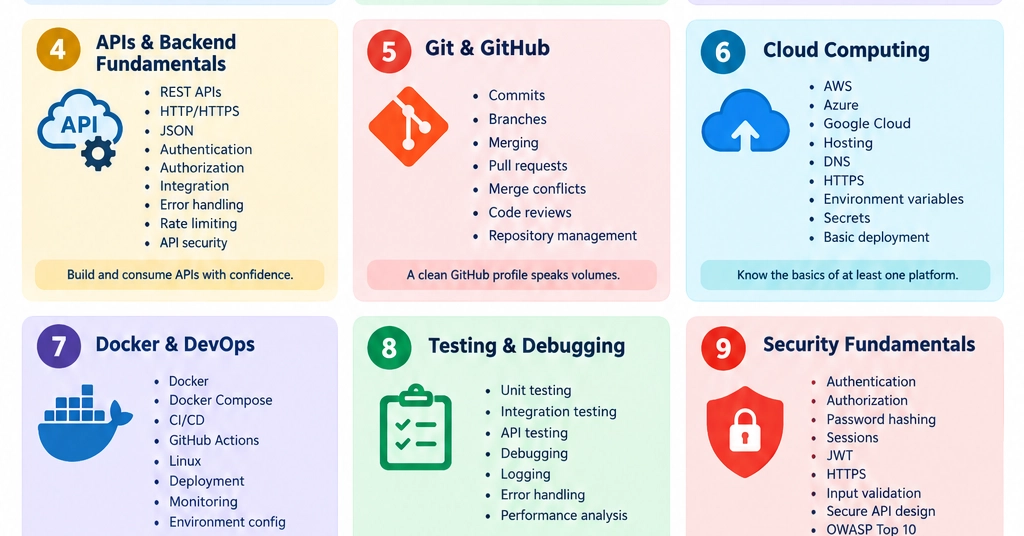
In any collaborative software development environment, proficiency with version control systems (VCS) is non-negotiable. Git has become the de facto standard, and a deep understanding of its commands, branching strategies (like Gitflow), merging techniques, and conflict resolution is essential. Beyond basic `add`, `commit`, and `push` commands, professionals should understand how to use Git for code reviews, managing feature branches, and reverting changes effectively. Familiarity with platforms like GitHub, GitLab, or Bitbucket, including their associated workflows for pull requests and continuous integration, is also crucial.
Version control is not merely about tracking changes; it's about enabling parallel development, ensuring code integrity, and facilitating seamless collaboration among team members. A candidate who can clearly explain their experience with Git workflows and how they've used it to manage complex projects signals maturity and a readiness for professional software development environments. This skill underpins the ability to work within larger teams and contribute to projects with multiple developers.
Databases and Data Management: Storing and Retrieving Information
Every application, from a simple blog to a complex enterprise system, relies on data. Therefore, understanding database concepts and being proficient with at least one type of database system is a mandatory skill. This includes knowledge of SQL for relational databases like PostgreSQL, MySQL, or SQL Server, and NoSQL databases such as MongoDB, Cassandra, or Redis for specific use cases. The ability to design database schemas, write efficient queries, optimize performance, and understand data modeling principles is vital.
For data-intensive roles, this extends to understanding data warehousing, data lakes, and the principles of big data processing. Even for front-end developers, a basic understanding of how data is stored and retrieved, and how to interact with APIs that manage data, is beneficial. The ability to manage data effectively ensures that applications are scalable, performant, and capable of handling the information they are designed to process.
Cloud Computing Platforms: The Modern Infrastructure
Modern software development heavily relies on cloud infrastructure. Proficiency with at least one major cloud platform—Amazon Web Services (AWS), Microsoft Azure, or Google Cloud Platform (GCP)—is increasingly becoming a standard requirement. This doesn't necessarily mean becoming a certified cloud architect, but rather understanding core services relevant to development, such as compute instances (EC2, VMs), object storage (S3, Blob Storage), managed databases (RDS, Cosmos DB), and serverless functions (Lambda, Azure Functions). Understanding deployment pipelines, containerization (Docker, Kubernetes), and basic networking concepts within the cloud environment is also highly valuable.
The ability to deploy, manage, and scale applications on cloud platforms is a critical skill for developers, DevOps engineers, and even data scientists. It allows for the creation of resilient, scalable, and cost-effective solutions. Familiarity with Infrastructure as Code (IaC) tools like Terraform or CloudFormation further enhances a candidate's profile, demonstrating an ability to manage cloud resources programmatically and reproducibly.
Problem-Solving and Debugging: The Core of Engineering
Underpinning all technical skills is the fundamental ability to solve problems and debug effectively. This is less about specific tools and more about a systematic approach to identifying issues, hypothesizing causes, testing solutions, and implementing fixes. It involves critical thinking, analytical reasoning, and persistence. A candidate who can clearly articulate their debugging process, demonstrating how they approach unfamiliar or complex problems, is highly valued.
This skill is transferable across all technologies and roles. It’s the ability to break down a large, daunting problem into smaller, manageable parts, research potential solutions, and systematically test hypotheses. When faced with an error message or unexpected behavior, the instinct to understand the root cause, rather than just applying a quick fix, is a hallmark of a strong technologist. This analytical mindset is what truly differentiates a proficient professional from someone who merely follows instructions.
Soft Skills: Communication and Collaboration
While technical prowess is essential, it's incomplete without strong soft skills. Effective communication, whether written or verbal, is crucial for explaining technical concepts to non-technical stakeholders, collaborating with team members, and documenting work. The ability to work effectively in a team, provide and receive constructive feedback, and adapt to changing project requirements are equally important. Active listening and empathy foster better teamwork and lead to more successful project outcomes. These skills ensure that technical expertise is applied effectively within a broader organizational context.
Ultimately, technology is built and deployed by people, for people. The ability to articulate ideas clearly, understand different perspectives, and work harmoniously within a team amplifies technical contributions significantly. A developer who can explain a complex bug’s impact to a product manager, or a data scientist who can clearly present their findings to the marketing team, brings immense value that extends far beyond their coding ability.