
The Shifting Landscape of AI Utility
When AI is discussed, the conversation often defaults to its capabilities in complex domains like writing code, driving cars, or diagnosing diseases. While these applications are significant, they paint an incomplete picture of how artificial intelligence is integrated into the daily lives of ordinary people. The reality is that AI, primarily through conversational interfaces and accessible tools, has quietly become a personal assistant, a learning companion, and a creative partner for millions.
The initial question posed on Reddit – what do “normal people” use AI for, particularly concerning coding – highlights a common misconception. The assumption is that AI’s value is tied to highly specialized, technical tasks. However, the widespread adoption of tools like ChatGPT demonstrates that AI’s most impactful use cases for the general public often revolve around communication, information synthesis, and creative exploration. These are not niche applications; they are fundamental human activities enhanced by AI.
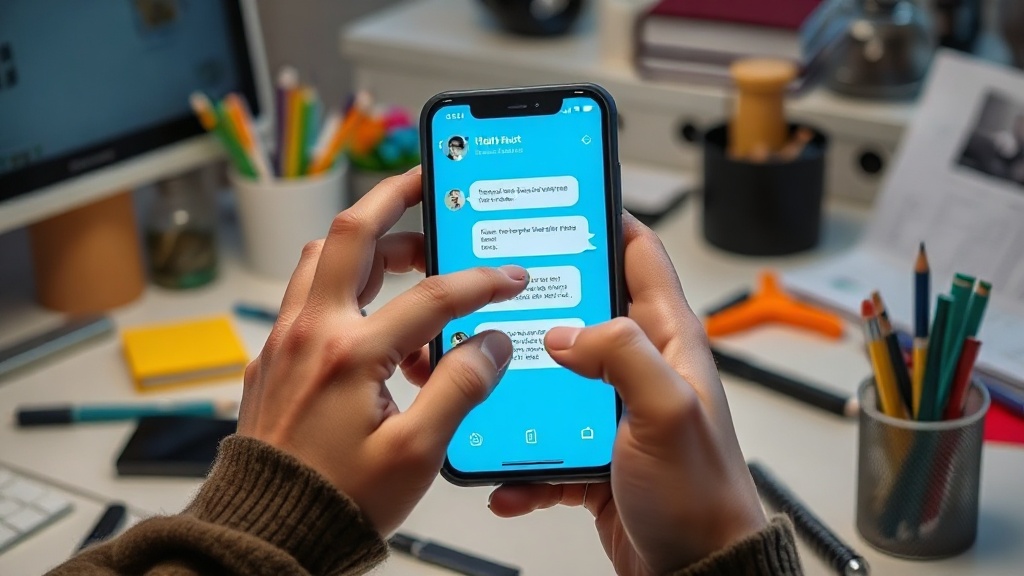
Consider the simple act of conversation. For many, AI chatbots serve as a readily available, non-judgmental sounding board. This isn't about replacing human interaction, but supplementing it. A user might discuss their day, explore hypothetical scenarios, or even practice social interactions in a low-stakes environment. This conversational aspect alone provides a unique form of utility, offering a space for reflection and exploration that might otherwise be unavailable or intimidating.
Beyond casual chat, AI is proving invaluable for learning and personal development. Imagine a student struggling with a complex historical event. Instead of sifting through dense textbooks or encyclopedias, they can ask an AI to explain the event in simple terms, provide a timeline, or even role-play as a historical figure to offer a firsthand perspective. This personalized approach to learning can make complex subjects more accessible and engaging.
For example, a user might ask an AI to explain quantum physics like they're five years old. The AI can break down intricate concepts into analogies that resonate with a layperson's understanding. This is akin to having a patient, infinitely knowledgeable tutor available 24/7. The ability to rephrase, simplify, and adapt explanations to a user's comprehension level is a powerful form of AI utility that democratizes knowledge.
AI as a Creative Catalyst
The creative applications of AI are also seeing significant traction among everyday users. While professional artists and designers are pushing the boundaries with advanced AI art generators, many individuals are using these tools for personal projects, hobbies, or simply to explore their imagination. This can range from generating custom images for social media posts, creating unique birthday card designs, or visualizing ideas for home renovations.
Take, for instance, someone planning a themed party. They might use an AI image generator to create custom invitations featuring fantastical creatures or personalized characters. Or consider a writer who uses an AI to brainstorm plot ideas, develop character backstories, or even generate descriptive passages for their novel. The AI acts not as a replacement for creativity, but as a co-pilot, offering suggestions and visualizations that can overcome creative blocks and accelerate the creative process.
The utility here is in lowering the barrier to entry for creative expression. Not everyone has the technical skill to draw, paint, or design complex graphics. AI tools empower these individuals to bring their visions to life with simple text prompts. This democratization of creative tools means that more people can engage in artistic endeavors, fostering a more vibrant and diverse creative landscape.
Practical Applications Beyond the Obvious
While conversation and creativity are prominent, AI’s practical applications extend to everyday problem-solving and task management. For those who don't code professionally, the need to write code might be rare. However, AI can assist with simpler scripting tasks that automate mundane chores. For instance, a user might ask an AI to help them write a simple script to organize files on their computer, or to automate sending a series of emails. These are not complex software engineering feats, but rather small efficiencies that save time and reduce tedium.
Think of it less like building a skyscraper and more like using a smart tool to fix a leaky faucet. The AI can help generate the precise instructions or a small utility script needed for a specific, often one-off, problem. This empowers individuals to tackle minor technical hurdles without needing to become proficient programmers. The AI essentially translates a user's need into a functional piece of code or a set of instructions.
Another area is information summarization and synthesis. In an age of information overload, AI can quickly condense long articles, research papers, or even meeting transcripts into concise summaries. This allows individuals to grasp the key points of lengthy content without investing significant time. For a busy parent, this might mean summarizing a news article to quickly understand the day's events. For a student, it could be condensing a chapter of a textbook.
The surprising detail here is not the sheer volume of AI use, but the quiet, almost invisible integration into everyday tasks. Many users may not even consciously identify these interactions as