The Limits of the Chatbot Architecture
The initial impulse when thinking about an AI assistant is to imagine a simple request-response loop: user sends a message, a Large Language Model (LLM) processes it, and the assistant replies. This chatbot architecture, however, quickly proves insufficient for building a truly useful personal AI system. The core challenge lies in moving beyond mere conversational interfaces to create agents that understand context, retain information, leverage external tools, access real-time data, and crucially, exercise judgment about when to act and when not to.
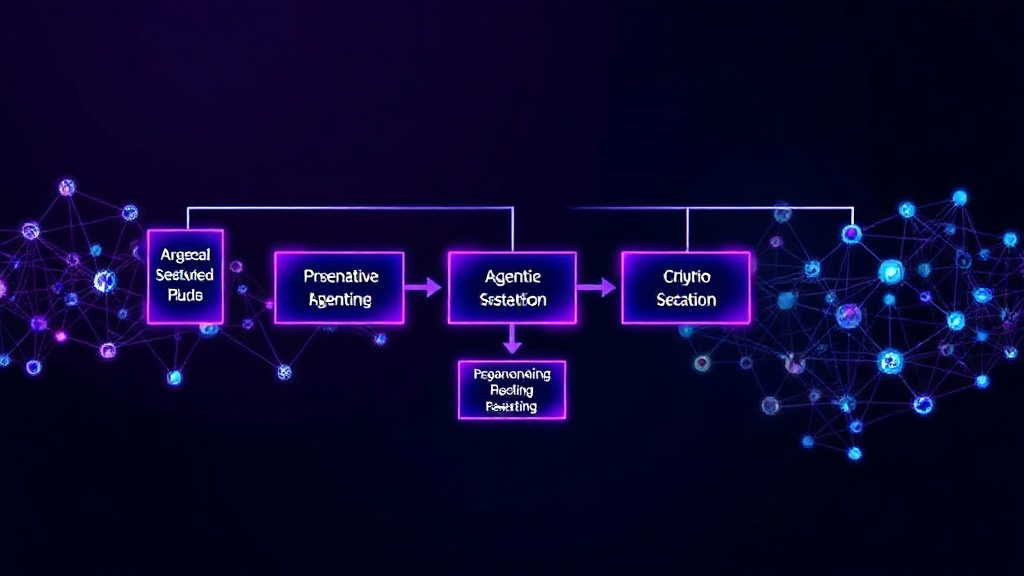
This is the problem developer DJ2313 tackled with FRIDAY, his personal project aimed at transforming an LLM into a functional AI agent for Android. The goal is not just another wrapper around an LLM API, but a system capable of more sophisticated interaction. FRIDAY’s architecture envisions a multi-stage process: a user request is first subjected to context processing, followed by memory retrieval, and then tool access or action execution. This layered approach acknowledges the complexity of real-world tasks and the need for an AI to go beyond simple text generation.
Engineering Context and Memory
Turning an LLM into an agent requires more than just feeding it prompts. A fundamental requirement is robust context processing. This involves not only understanding the immediate user query but also integrating relevant background information, past interactions, and device-specific data. Without this, the AI operates in a vacuum, unable to provide personalized or situationally aware responses.
Memory retrieval is another critical component. A useful AI assistant needs to remember what it has learned and what information is pertinent to the current task. This could range from remembering user preferences and frequently used tools to recalling details from previous conversations. Implementing effective memory systems for an AI agent is a significant engineering hurdle, distinct from the LLM's inherent, but often short-term, contextual window. This involves designing mechanisms for storing, indexing, and efficiently retrieving relevant information. Think of it less like a database and more like a very organized friend who happens to remember everything you told them in 2019, and knows exactly when to bring it up.
Tool Use and Action Execution
Beyond understanding and remembering, an agentic AI must be able to act. This means interacting with external tools and system capabilities. For an Android assistant like FRIDAY, this could involve accessing device functions (like setting alarms, sending messages, or controlling settings), querying web services for current information (weather, news, stock prices), or interacting with other applications. The LLM’s role shifts from solely generating text to orchestrating these actions. This often involves a planning phase where the LLM breaks down a complex request into a series of discrete steps, each corresponding to a specific tool or function call.
However, the most difficult part of engineering an agent is not enabling it to act, but teaching it when not to act. A truly intelligent agent must have safeguards and decision-making capabilities to avoid taking inappropriate or harmful actions. This requires a sophisticated understanding of risk, user intent, and potential consequences. For instance, an assistant should not blindly execute a command that could lead to data loss or compromise user privacy. This requires building in explicit safety protocols, confidence thresholds, and perhaps even a human-in-the-loop mechanism for high-stakes decisions.
The Android Halo Perspective
The push towards agentic AI on mobile platforms is gaining momentum. Google’s preview of Android Halo in May 2026 signals a broader industry recognition of this shift. Android Halo aims to make the platform more useful in an era where AI agents are expected to perform tasks proactively and intelligently on behalf of the user. This suggests a future where mobile operating systems will need to provide robust frameworks for AI agents to operate securely and effectively, managing permissions, context, and inter-agent communication.
The challenge for developers like DJ2313 is to build these agents within the constraints and capabilities of mobile operating systems. This involves not only LLM integration but also deep engagement with platform-specific APIs, background processing limitations, and user experience considerations. The success of FRIDAY, and future agentic AI assistants on Android, will depend on how well they can integrate these complex AI capabilities into the familiar mobile paradigm, offering real utility without overwhelming the user.
Looking Ahead: Beyond the Prompt
The journey from a simple chatbot to a capable agentic AI assistant is a significant engineering undertaking. It requires moving beyond the LLM itself to build the surrounding infrastructure for context, memory, tool use, and safe action execution. As platforms like Android evolve to support these agents, the focus will increasingly be on how these systems can be made reliable, transparent, and genuinely helpful. The hard part, as DJ2313 discovered, isn't the LLM; it's engineering the intelligence and agency around it.