The API Bottleneck for AI Agents
Large Language Models (LLMs) have long been confined to text-in, text-out operations, relying on strictly defined API calls to interact with the digital world. This model, where an agent inspects a JSON schema, crafts an argument payload, and sends it to a remote endpoint, is powerful but fundamentally limited. It presumes that all software systems expose clean, documented, and deterministic programmatic interfaces. However, the vast majority of human digital labor occurs through interfaces not designed for machines: legacy enterprise software without REST endpoints, dynamic single-page web applications with complex DOM structures, and even desktop operating system windows.
This API-bound approach creates a significant bottleneck. Agents trained on structured data and function calling struggle when faced with the inherent messiness of real-world software interaction. They cannot easily navigate dynamic web pages, manipulate desktop applications, or interact with systems that lack formal APIs. This disconnect means that current AI agents, while capable of sophisticated reasoning and data processing, are largely excluded from performing a significant portion of tasks that humans routinely accomplish on their computers.
Bridging the Gap: Towards Computer Use Agents
The emerging paradigm shifts from simple function calling to what can be termed "computer use" agents. These agents aim to replicate human-like interaction with software, moving beyond structured API calls to engage with the visual and interactive elements of user interfaces. Instead of solely relying on pre-defined functions, these agents must learn to perceive, interpret, and act upon the graphical user interface (GUI) itself. This involves understanding the layout of a web page, identifying interactive elements like buttons and input fields, and executing actions as a human would – clicking, typing, scrolling, and navigating through complex application states.
Consider the analogy of a human learning to use a new application. They don't start by reading an API documentation. Instead, they look at the screen, see buttons, read labels, and experiment. They develop an intuition for how the application works through direct interaction. The goal of computer use agents is to equip AI with a similar capability, enabling them to learn and operate within the rich, often unstructured, environment of a computer's graphical interface. This requires a fundamental rethinking of how agents perceive their environment and how they translate their goals into actions.
Architectural Shifts for GUI Interaction
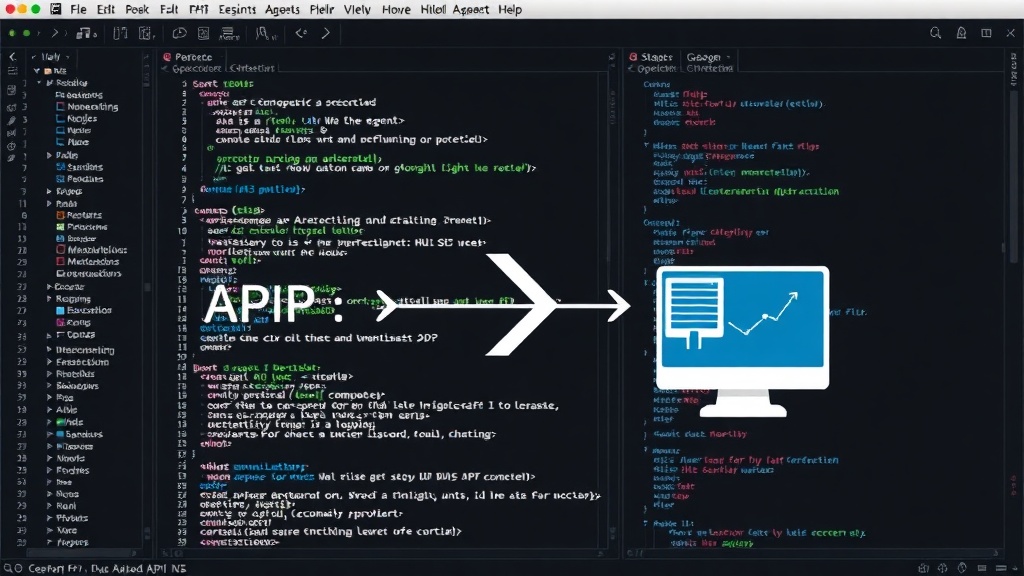
Achieving true computer use requires a departure from traditional LLM architectures. Instead of solely relying on a single LLM processing text, these advanced agents often incorporate a multi-modal approach. This involves integrating components that can process visual information (from screenshots or screen captures) and interpret the structure of the UI (DOM trees, accessibility trees, or even pixel data). The agent's decision-making process then becomes a fusion of textual reasoning from the LLM and perceptual understanding of the visual interface.
Key architectural components for such agents include:
- Perception Module: This module captures the current state of the user interface. It could involve taking screenshots, parsing HTML or accessibility trees, and extracting information about visible elements, their properties (text, type, position), and their relationships.
- Reasoning Engine: This is typically an LLM that receives the perceived UI state and the agent's goal. It reasons about the best next action to take, considering the available interactive elements and the desired outcome.
- Action Module: This module translates the reasoning engine's output into concrete actions that can be executed on the computer. This might involve simulating mouse clicks, keyboard inputs, or executing browser automation commands.
- Memory/State Management: Agents need to maintain context over long interaction sequences, remembering previous steps, outcomes, and relevant information.
The development of these agents often leverages existing automation frameworks like Selenium, Playwright, or Puppeteer. However, the innovation lies in how these tools are orchestrated and guided by an AI that can dynamically interpret the UI, rather than simply executing pre-programmed scripts. This allows for emergent behaviors and the ability to handle unforeseen interface changes or complex user flows.
Challenges and Future Directions
The path to truly autonomous computer use agents is fraught with challenges. Robustness is a primary concern; UI elements can change unexpectedly, leading to brittle automation. Generalization is another hurdle; an agent trained on one website might struggle with a similar but distinct one. Furthermore, the computational cost of processing visual information and performing complex reasoning at each step can be substantial.
Despite these challenges, the implications are profound. Imagine AI agents that can autonomously manage complex workflows across disparate applications, automate tedious data entry tasks in legacy systems, or assist users with intricate software configurations. This shift moves AI from being a tool that processes data to a true digital assistant capable of interacting with and manipulating the digital environment on our behalf. The future of AI interaction is not just about calling APIs; it's about teaching AI to *use* computers the way humans do.