The VMware Exodus and the Cloud Cost Trap
Broadcom's acquisition of VMware sent shockwaves through enterprise IT, triggering massive licensing fee increases. The predictable response for many was a hasty migration to hyperscalers like AWS or Azure. However, this often trades one form of bloat – licensing costs – for another: compute inefficiency. This article details a real-world re-architecture project that replaced a costly AWS footprint with a lean, bare-metal Proxmox LXC setup, achieving a dramatic 70% reduction in monthly operational expenses while simultaneously improving I/O performance.
The client, a high-traffic Software-as-a-Service (SaaS) provider, operated a complex microservices architecture. Their existing AWS infrastructure relied on Elastic Kubernetes Service (EKS) for container orchestration, Relational Database Service (RDS) for PostgreSQL, and ElastiCache for Redis. This setup, while functional, was generating a monthly bill approaching $12,000. The primary cost drivers were the ubiquitous EC2 instances powering the EKS nodes, data transfer fees associated with the NAT Gateway, and the inherent premiums for AWS's managed services.
The Problem: AWS Compute and Managed Service Bloat
The core issue was not necessarily the technology stack itself, but the operational cost and the inherent inefficiencies of the cloud model for this specific workload. EKS, while powerful, introduces overhead. The managed nature of AWS services, such as RDS and ElastiCache, abstracts away infrastructure management but comes at a significant markup compared to self-hosting. For a company with a mature operational team and a clear understanding of their infrastructure needs, these managed service premiums represent a substantial, often unnecessary, expense. Furthermore, the constant scaling and autoscaling of EC2 instances, even with optimizations, contributed a large portion of the bill, particularly when running consistently high-traffic workloads.
The data transfer costs from the NAT Gateway were another unexpected but significant drain. Every outbound connection from a private subnet, including internal service-to-service communication that might traverse NAT gateways, incurred charges. For a microservices architecture with frequent inter-service communication, these costs can escalate rapidly.
The Solution: Proxmox LXC on Bare Metal
The strategic decision was to move away from the managed cloud environment and embrace a self-hosted, bare-metal approach. Proxmox Virtual Environment (PVE), specifically its Linux Containers (LXC) feature, emerged as the ideal platform. LXC offers a lightweight form of virtualization that shares the host system's kernel, providing near-bare-metal performance with significantly lower overhead than traditional virtual machines (VMs). This made it suitable for running containerized applications and services without the full complexity and resource demands of a Kubernetes cluster managed by a cloud provider.
The re-architecture involved several key steps:
- Infrastructure Consolidation: The existing AWS EC2 instances were replaced by a cluster of physical servers running Proxmox VE. These servers were provisioned with sufficient CPU, RAM, and high-performance NVMe storage to handle the entire workload.
- Containerization with LXC: Instead of EKS, individual microservices and supporting databases (PostgreSQL, Redis) were deployed within LXC containers on the Proxmox cluster. This allowed for granular resource allocation and isolation while maintaining high density.
- Database Management: PostgreSQL and Redis instances were migrated from AWS RDS and ElastiCache to dedicated LXC containers. This required careful configuration for data persistence, backups, and high availability, but eliminated the managed service premiums.
- Networking and Orchestration: A self-hosted networking solution was implemented within the Proxmox environment. For orchestration and inter-service communication, a simpler, less resource-intensive approach replaced Kubernetes. This might involve tools like Docker Swarm, Nomad, or even custom service discovery and load balancing mechanisms depending on the complexity of the microservices.
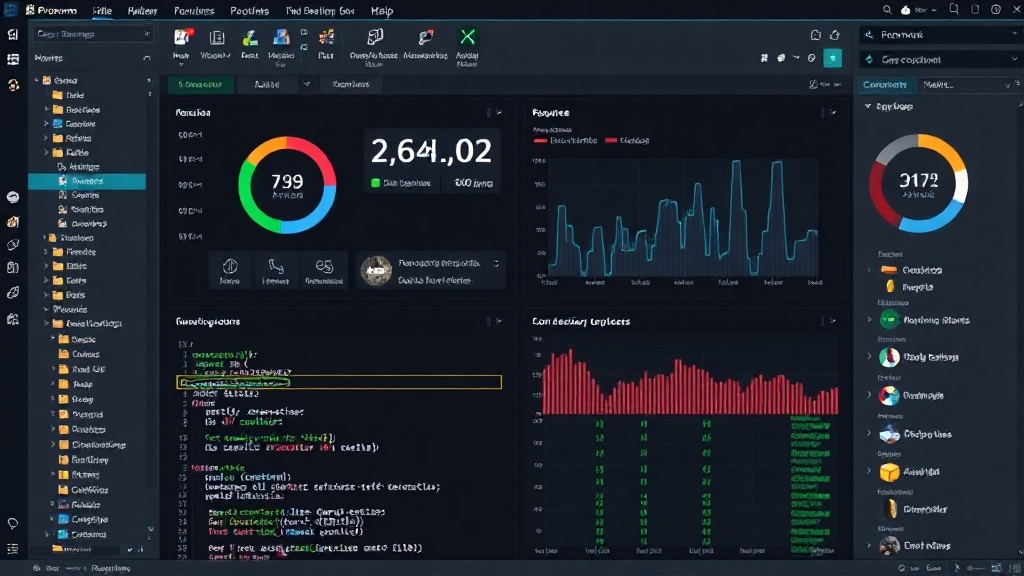
- Monitoring and Management: Proxmox's built-in monitoring tools, combined with other open-source solutions like Prometheus and Grafana, were used to provide visibility into the cluster's health and performance.
Performance Gains and Cost Reductions
The results were striking. The monthly operational costs plummeted from approximately $12,000 to just under $3,600. This represents a 70% reduction. The savings were realized through several factors:
- Elimination of Managed Service Premiums: Self-hosting databases and caching layers in LXC containers removed the significant markups associated with AWS RDS and ElastiCache.
- Reduced Compute Costs: Bare-metal servers, while requiring an upfront capital investment, have a much lower ongoing operational cost per unit of compute compared to on-demand or reserved EC2 instances, especially when optimized for the workload. The overhead of EKS itself was also eliminated.
- Optimized Data Transfer: By consolidating the infrastructure within a private network, the reliance on NAT Gateways and their associated data transfer fees was drastically reduced or eliminated for internal traffic.
- Improved I/O Performance: LXC containers, by sharing the host kernel and utilizing direct I/O paths, often outperform VMs and even some container runtimes that introduce additional layers of abstraction. The client reported noticeable improvements in I/O-bound operations, particularly for their database and caching layers.
The performance increase in I/O was a critical, albeit unexpected, benefit. Traditional cloud VMs can sometimes suffer from I/O contention or latency introduced by the hypervisor and storage abstraction layers. LXC, on the other hand, offers a more direct path to hardware, leading to faster read/write operations. This was particularly impactful for the PostgreSQL database and Redis cache, which are sensitive to storage performance.
Considerations for Re-architecture
This kind of re-architecture is not without its challenges. It requires a skilled team capable of managing bare-metal hardware, network infrastructure, and virtualization platforms. The upfront investment in hardware can be substantial, though it is typically recouped rapidly through operational savings. Furthermore, ensuring high availability and disaster recovery for self-hosted services requires careful planning and implementation, often involving multiple redundant nodes and robust backup strategies.
The decision to move away from AWS EKS to Proxmox LXC is a strategic one. It trades the operational simplicity and managed services of a hyperscaler for greater control, lower costs, and potentially higher performance, but at the cost of increased operational responsibility. For companies where cost optimization is paramount and they possess the requisite in-house expertise, this approach offers a compelling path to significant savings and improved efficiency. The VMware exodus created a catalyst, but the underlying economic pressures and the maturity of alternative platforms like Proxmox are driving these architectural shifts.