Aveiro: AI Agents for End-to-End Content Operations
The challenge of consistent, high-quality content creation and distribution is a perpetual hurdle for businesses and creators alike. Maintaining a presence across multiple platforms—from a company website and a regular newsletter to an active social media feed—demands significant time, resources, and strategic planning. Aveiro emerges as a new contender aiming to streamline this complex workflow by leveraging AI agents designed to handle the entire content lifecycle, from ideation and generation to publishing and distribution.
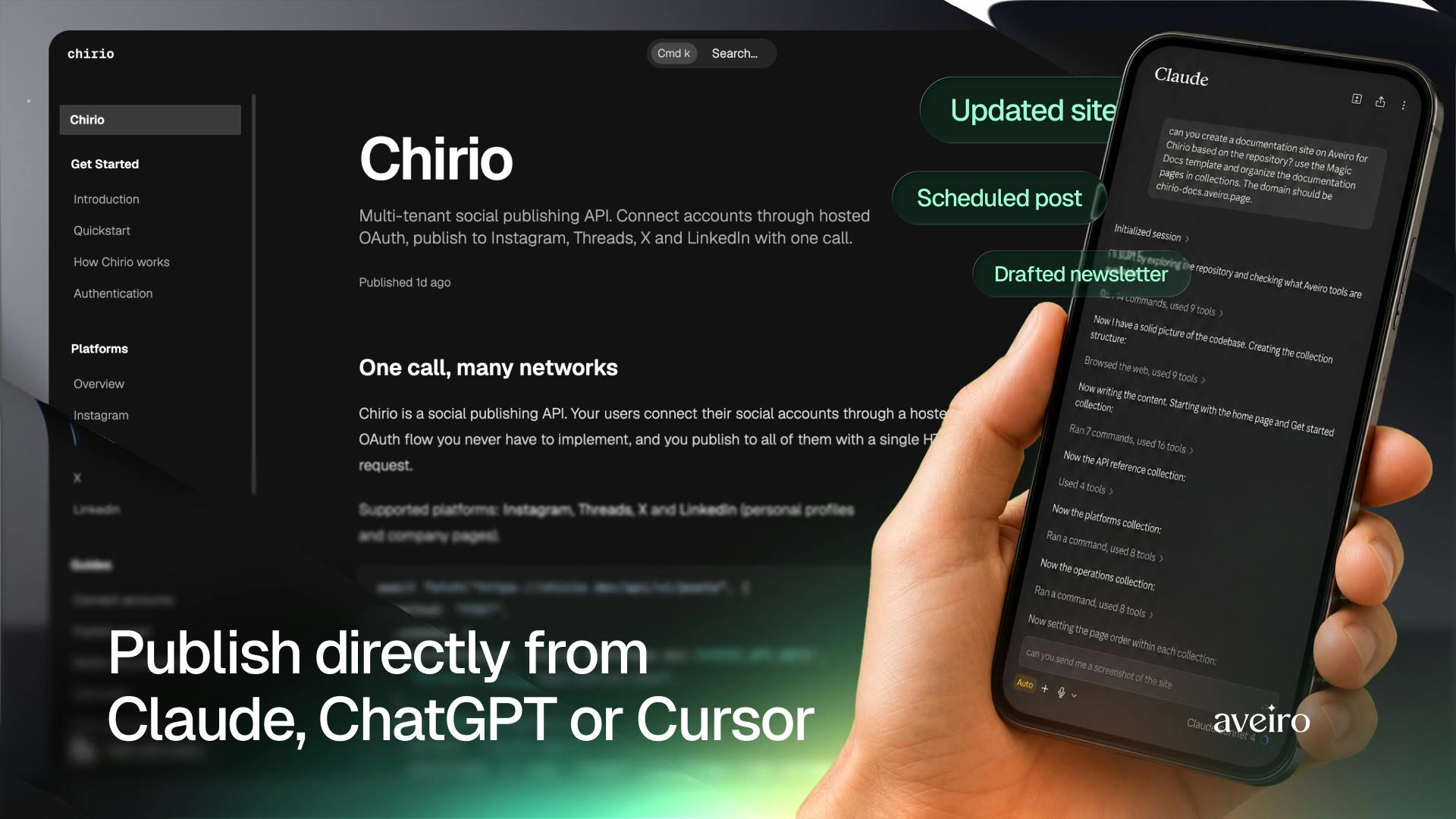
At its core, Aveiro proposes a shift from manual content management to an automated, agent-driven approach. The platform's agents are engineered to understand user objectives and then autonomously execute tasks across various channels. This means a single prompt or directive could initiate a chain of actions: generating a blog post, crafting a newsletter summary, and composing social media updates to promote the content. This integrated strategy aims to reduce the friction typically associated with repurposing content for different mediums.
The Product Hunt launch highlights Aveiro's ambition to be an all-in-one solution. Instead of juggling separate tools for writing, email marketing, and social media scheduling, users can theoretically manage these disparate activities through a unified AI-powered interface. The promise is that these AI agents will not only create content but also adapt its tone, format, and style to suit the specific requirements of each publishing channel, ensuring brand consistency and audience engagement.
Automated Content Generation and Distribution
Aveiro's functionality centers on its AI agents, which act as autonomous workers within the content ecosystem. Users can define their content strategy, target audience, and desired outcomes, and the agents are tasked with fulfilling these requirements. This includes:
- Website Content: Generating articles, blog posts, or landing page copy.
- Newsletters: Compiling summaries, writing engaging email content, and managing subscriber lists.
- Social Media: Crafting posts, selecting relevant hashtags, and scheduling publications across platforms like Twitter, LinkedIn, and others.
The underlying technology aims to go beyond simple text generation. Aveiro suggests its agents can understand context, maintain brand voice, and even adapt content based on performance metrics. For example, an agent might analyze which social media posts perform best and adjust future content strategies accordingly. This adaptive capability is crucial for moving beyond static content creation to dynamic, responsive marketing efforts.
The integration of these functions is what sets Aveiro apart. A typical workflow might involve a user briefing an agent to create a new product announcement. The agent would then draft a detailed blog post for the company website, extract key talking points for a concise newsletter announcement, and craft several social media teasers with appropriate visuals or links. This end-to-end automation promises significant time savings and could potentially democratize sophisticated content marketing strategies for smaller teams or individual creators who lack dedicated marketing departments.
The AI Agent Paradigm in Content Marketing
The rise of AI agents represents a significant evolution in how we interact with technology. Unlike simple chatbots or single-purpose AI tools, agents are designed to undertake multi-step tasks, make decisions, and interact with various software and platforms to achieve a goal. Aveiro’s application of this paradigm to content marketing is an attempt to automate a traditionally human-intensive creative and strategic process.
Consider a marketing team that previously spent hours each week brainstorming topics, writing drafts, editing, coordinating with designers for visuals, scheduling posts, and then compiling reports. Aveiro proposes that its AI agents can absorb a significant portion of this workload. The agents can be seen as digital employees, each specialized in different facets of content management, but capable of collaborating under a unified AI orchestration layer.
This approach is not without its challenges. Ensuring the AI-generated content is original, accurate, and aligns with a nuanced brand identity requires sophisticated AI models and robust quality control mechanisms. Furthermore, the effectiveness of the agents will depend heavily on the clarity of user instructions and the platform's ability to interpret and execute them faithfully. The current landscape of AI content tools often requires substantial human oversight and editing, and it remains to be seen how effectively Aveiro can minimize this dependency.
Implications for Content Creators and Businesses
For creators and businesses, Aveiro offers a compelling vision of future content operations. The ability to automate content generation and distribution could lead to increased efficiency, reduced operational costs, and a more consistent online presence. This could empower smaller businesses to compete with larger enterprises that have dedicated marketing teams. For individual creators, it could free up valuable time to focus on core creative work or audience engagement rather than the mechanics of publishing.
However, the widespread adoption of such tools also raises questions about the future of content creation roles. While AI can automate tasks, human creativity, strategic insight, and authentic connection remain paramount. The success of Aveiro will likely hinge on its ability to augment human capabilities rather than simply replace them, providing a tool that empowers users to achieve more with less effort, while still allowing for human oversight and creative input where it matters most.
The platform's success will also depend on its ability to integrate seamlessly with existing marketing stacks and its capacity to evolve alongside the rapidly advancing field of artificial intelligence. As AI capabilities continue to expand, tools like Aveiro could redefine the landscape of digital marketing and content management, making sophisticated strategies accessible to a broader audience.