
The Accuracy Dilemma: AI's Speed vs. Truth
Artificial intelligence promises unparalleled speed in information retrieval and synthesis. For professionals who need to learn quickly and operate efficiently, this is a powerful draw. However, a significant hurdle remains: the accuracy of AI-generated content. Users are rightly concerned about ingesting erroneous information, which negates the very efficiency gains AI is supposed to provide. The core challenge is to maintain AI's speed advantage while building confidence in the factual integrity of its outputs. This isn't just about avoiding misinformation; it's about ensuring that the knowledge base we build with AI is robust and reliable.
Manual fact-checking, while the gold standard for human verification, defeats the purpose of using AI for speed. If every piece of information requires extensive personal verification, the time saved is lost, making AI feel less like a productivity tool and more like a cumbersome research assistant. The goal, therefore, is to find methods that automate or semi-automate this verification process, allowing users to trust AI outputs more readily.
Automated Verification: Tools and Techniques
Several strategies can be employed to automate or augment AI fact-checking. These range from leveraging AI's own capabilities to sophisticated cross-referencing techniques.
Leveraging AI for Fact-Checking Itself
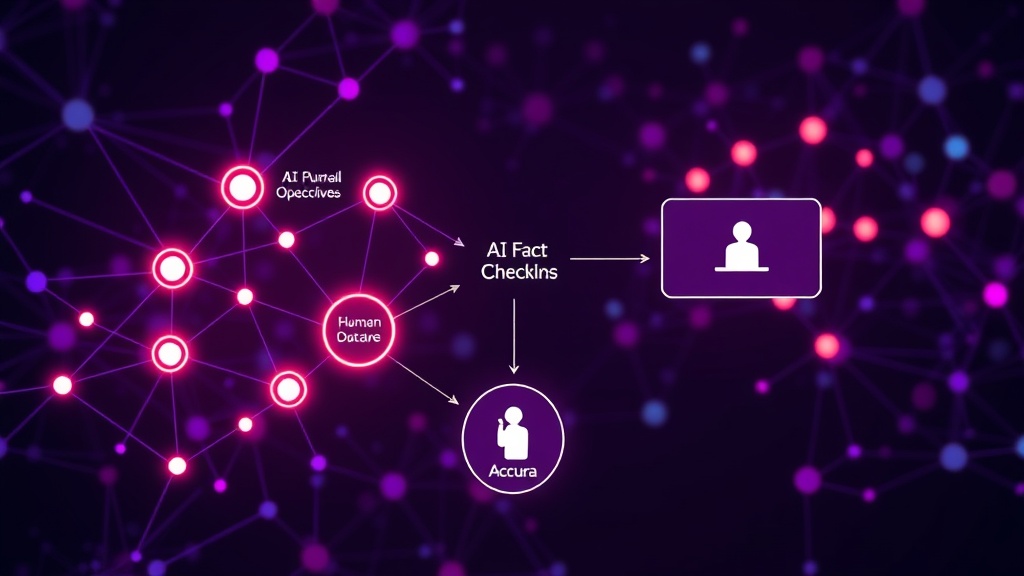
One of the most promising avenues is to use AI models specifically trained for fact-checking. These models can be integrated into the AI output pipeline. When an AI generates a response, a secondary AI agent can be tasked with verifying the claims made. This secondary agent would:
- Identify factual assertions within the generated text.
- Query reliable knowledge bases, databases, and verified web sources to corroborate these assertions.
- Assign a confidence score to each assertion based on the evidence found.
- Flag any discrepancies or unsupported claims for review.
This approach is akin to having a diligent research assistant who can quickly scan multiple sources. The key is the quality and breadth of the knowledge bases these fact-checking AIs can access. For instance, an AI could be trained to cross-reference financial figures against SEC filings, scientific claims against peer-reviewed journals, or historical events against reputable encyclopedias.
Cross-Referencing and Source Verification
Beyond dedicated fact-checking AIs, the efficiency gains can be preserved by improving how AI presents its sources. Many AI models already provide links to their sources. The challenge is to make these sources more actionable for verification:
- Source Credibility Scoring: Develop systems that automatically assess the credibility of linked sources. This could involve analyzing domain authority, publication history, authoritativeness, and potential biases.
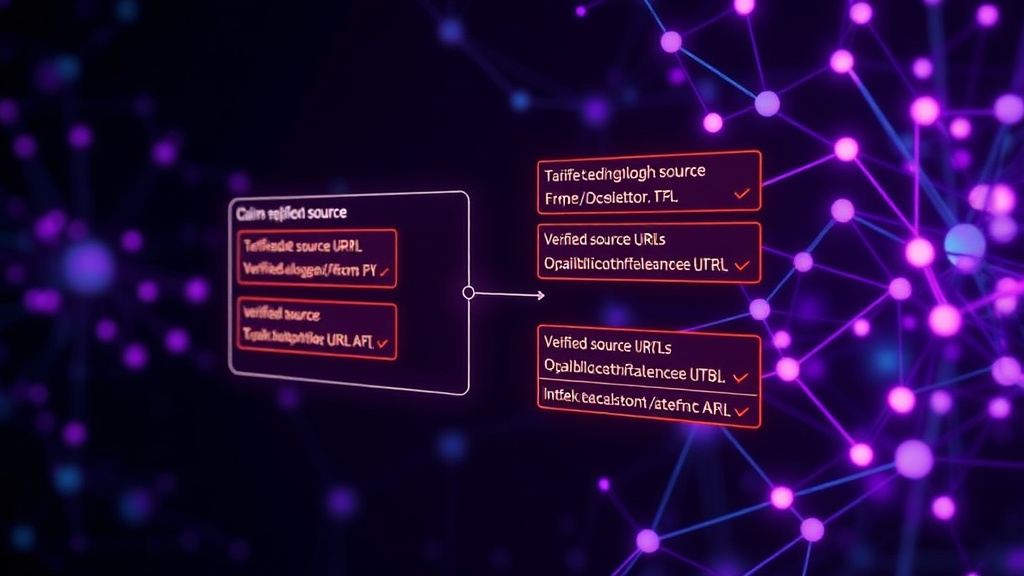
- Claim-Source Mapping: Ensure that AI outputs clearly map specific claims to specific sources. This allows users, or an automated system, to quickly trace an assertion back to its origin and assess its validity.
- Automated Snippet Extraction: Instead of just linking, AI could extract the specific sentence or paragraph from the source that supports the claim, along with its context. This reduces the user's effort in finding the relevant information within a source document.
Think of it like a librarian who not only points you to the right book but also highlights the exact page and sentence that contains the information you need. This drastically cuts down on the time spent hunting for proof.
Building User Confidence and Mitigating Risk
Even with automated systems, human oversight remains crucial, especially for critical applications. The aim is to shift the burden from exhaustive manual checking to targeted review of flagged items. This hybrid approach offers the best of both worlds: AI's speed for initial processing and human judgment for final validation.
Strategies for Hybrid Verification:
- Confidence Thresholds: Users can set confidence thresholds. If an AI output falls below a certain score, it is automatically flagged for manual review. For less critical information, a lower threshold might suffice; for high-stakes decisions, a much higher threshold is necessary.
- Interactive Verification: AI systems could prompt users with specific verification questions or present conflicting information side-by-side, asking the user to make the final determination. This keeps the user engaged without requiring them to do all the legwork.
- Feedback Loops: Implement robust feedback mechanisms. When users correct or flag AI-generated information, this data should be fed back into the AI models to improve their accuracy and fact-checking capabilities over time. This creates a continuously learning system.
The development of reliable AI fact-checking tools is not a singular technical challenge but an ongoing process of refinement. As AI models become more sophisticated, so too must our methods for ensuring their outputs are trustworthy. The future of efficient AI adoption hinges on our ability to build these robust verification pipelines, transforming AI from a potentially unreliable informant into a consistently dependable knowledge partner.