
The End of the Scheduled Retrospective?
For many development teams, the sprint retrospective is a ritual. It typically occurs after the sprint concludes, often initiated by a calendar invite that feels more like an obligation than an opportunity. Developers gather, discuss what went well and what didn't, and jot notes on a virtual or physical board that may never be revisited. Release day might get a postmortem, but only if someone remembers to schedule it.
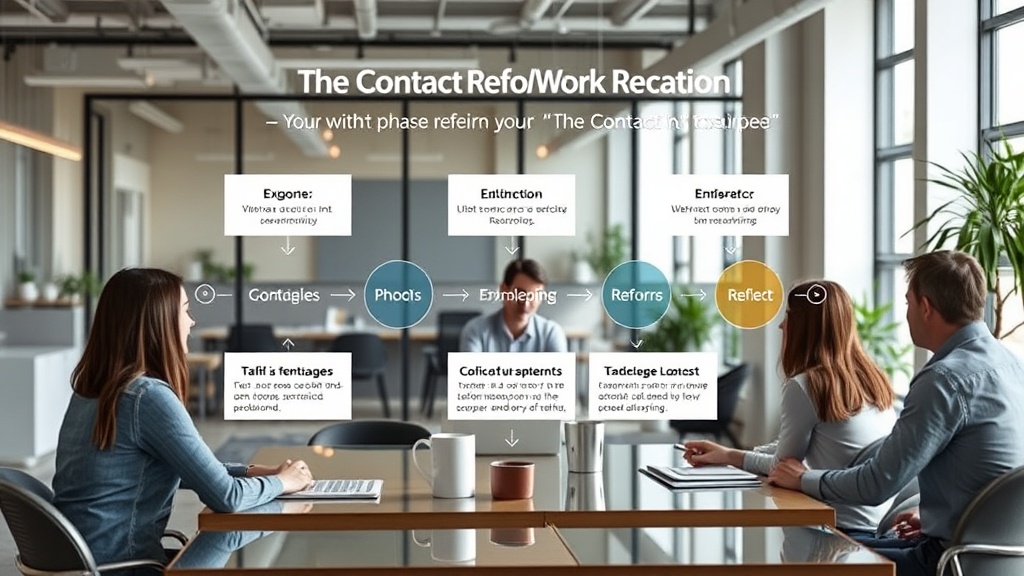
This traditional cadence is being challenged by a new model, one where reflection isn't a scheduled event but an integrated, automated step. The inspiration comes from a development process dubbed "The Contract," a seven-phase workflow where human approval marks each handoff. Within this structure, the final phase, "Reflect," has been re-envisioned not as a post-completion reward lap, but as an immediate, trigger-based mechanism for capturing lessons learned.
The moment a deployment closes, the system instigates reflection. There's no waiting for a calendar notification or a manager's prompt. The goal is to capture insights while they are fresh, preventing the valuable lessons from fading into vague memories of past experiences. This is particularly impactful when a deployment goes smoothly, as it did in a recent instance where a new rollback trigger remained unused because nothing broke – a successful outcome that still warranted immediate analysis.
The core idea is to shift retrospectives from a reactive, scheduled event to a proactive, embedded process. When Ship, the deployment phase of "The Contract," concludes successfully, the system automatically prompts the Reflect phase. This immediate feedback loop is designed to prevent valuable observations from dissipating. The developers involved are encouraged to articulate what they learned right then and there, before the immediacy of the lesson is lost.
Beyond the Post-Mortem: Answering the Hard Questions
The traditional retrospective often focuses on listing positive and negative aspects of a sprint. While useful, it can be superficial. The "Reflect" phase within "The Contract" aims for deeper introspection. Before allowing any lesson to be written down, it compels the user to answer a more difficult question: what do I actually want to achieve?
This pre-emptive question shifts the focus from what happened to what *should* have happened and why. It forces a critical examination of intentions versus outcomes, moving beyond a simple critique of the process to a more strategic evaluation of the goals. This is a crucial distinction. Instead of merely asking "What went wrong?" or "What went right?", the system prompts "What was the intended outcome, and how did the actual outcome align with it?"
This approach is particularly powerful in scenarios where a deployment succeeds without incident. Often, the absence of failure is taken as a sign of success, and the learning opportunities are missed. By forcing a reflection on the intended outcome, even a smooth deployment can yield insights. Was the rollback trigger unnecessary? Was the testing thorough enough, or perhaps too thorough, leading to unnecessary caution? Did the quiet release mask underlying issues that simply didn't manifest under current conditions?
The system is designed to make this introspection as frictionless as possible. The moment the deployment phase concludes, the prompt appears. There is no need to navigate to a separate tool, schedule a meeting, or wait for a designated time. The learning is integrated directly into the workflow. This immediacy is key to its effectiveness. It's akin to a chef tasting a dish immediately after plating, rather than waiting for a customer to complain hours later.
Implications for Development Teams and Workflow
The implications of this automated, integrated retrospective process are significant. For development teams, it means a more consistent and timely capture of knowledge. The tribal knowledge that often resides within individuals is more likely to be documented and shared when the impetus to do so is immediate and built into the workflow. This reduces the risk of repeating past mistakes and accelerates the adoption of successful practices.
For project management and product development, it offers a richer, more granular dataset for process improvement. Instead of relying on potentially biased or faded memories from scheduled retrospectives, teams gain access to real-time reflections tied directly to specific events, like deployments. This can lead to more accurate assessments of what truly impacts velocity, quality, and team morale.
The "Reflect" phase, by demanding an answer to the "what do I want to achieve?" question, also fosters a stronger sense of purpose and alignment within the team. It keeps the focus on the ultimate goals of the project, ensuring that process improvements are always in service of delivering value, not just optimizing arbitrary metrics. This moves beyond the typical "what went well/what didn't" to a more strategic "did we achieve what we set out to do, and why or why not?"
This automated approach contrasts sharply with the often-dreaded, calendar-bound retrospectives. By removing the friction of scheduling and the cognitive load of recalling past events, it transforms reflection from a chore into an integral part of the development cycle. The success of "The Contract" hinges on this continuous, embedded learning, making every phase, including the final reflection, a critical step in the ongoing refinement of the development process.
The question for other teams is not whether they can afford to ignore such an integrated approach, but how quickly they can adapt their own workflows to capture the same immediacy and depth of learning. The era of waiting for a calendar invite to reflect on a sprint may be drawing to a close.