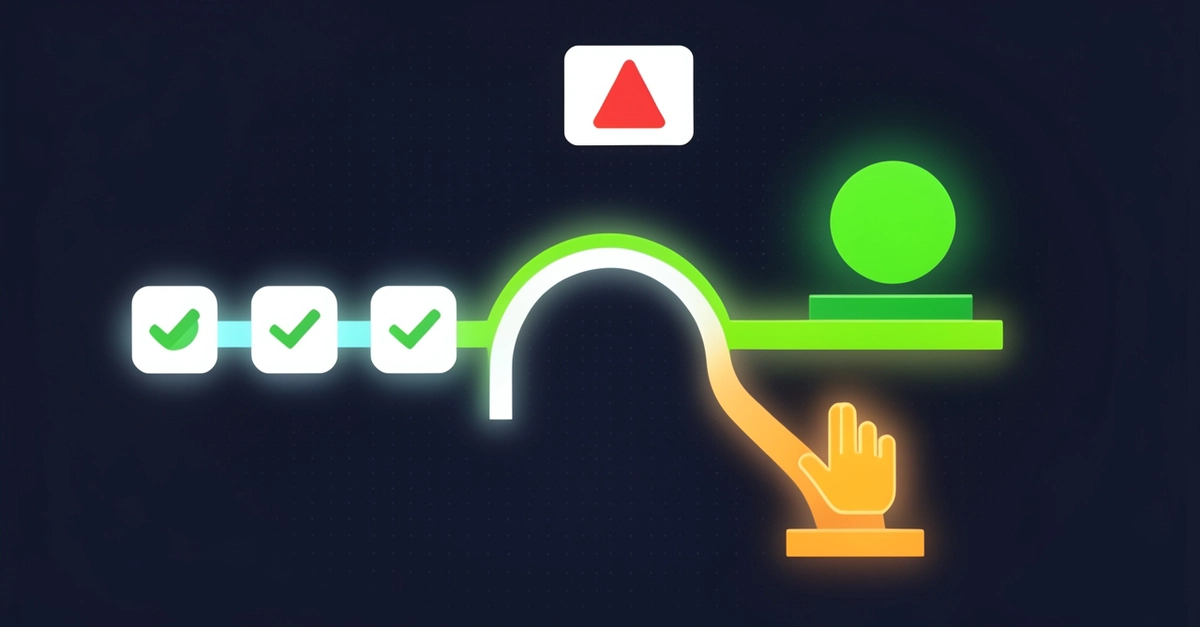
The Dependabot Deluge
GitHub's Dependabot is an indispensable tool for maintaining secure and up-to-date dependencies. It diligently scans repositories, identifies outdated packages, and automatically opens Pull Requests (PRs) to update them. However, for many development teams, this process quickly leads to a deluge of PRs. Each PR requires a human review to confirm its safety and necessity. This routine often involves answering repetitive questions: Is this a patch or a major version bump? Did the update touch source code, or just dependencies? Are there any conflicts with other branches? For busy developers, these repetitive checks become a significant drain on time and focus.
The manual triage of these PRs, while necessary for ensuring stability and preventing regressions, creates a bottleneck. Developers are forced to context-switch from their primary tasks to address these routine updates. This is where the need for automation becomes critical. The goal is not to eliminate human oversight entirely, but to streamline the process, allowing developers to focus their attention on the PRs that truly require their expertise.
Recognizing this recurring pain point, developer Sunny Dachs created dep-triage, a command-line interface (CLI) tool designed to automate the initial sorting and categorization of open Dependabot PRs. The tool aims to bring order to the chaos, enabling teams to establish clear policies for dependency updates and enforce them systematically.
Defining Your Dependency Update Policy
The core of dep-triage lies in its policy-driven approach. Instead of a one-size-fits-all solution, the tool allows teams to define their specific criteria for handling dependency updates. This policy is codified in a configuration file, typically committed to the repository, ensuring transparency and consistency across the team. This file dictates how dep-triage will categorize each open Dependabot PR.
The tool sorts PRs into five distinct buckets, each with a clear action or status:
- auto-merge: This bucket is for PRs that meet all criteria for immediate merging. This typically includes patch and minor version updates that pass all CI checks, only modify dependency files, and have no conflicts. These are the low-risk, low-impact updates that can safely be merged without manual intervention.
- escalate: PRs that fall into this category require human attention. This includes major version updates, PRs where CI checks have failed, or those that present conflicts. These PRs are reported to the team but are not automatically changed or merged by the tool.
- close: This bucket is for PRs that have become obsolete. If a newer version of the same package has already been updated via a subsequent PR, the older, now redundant PR can be safely closed. This helps to keep the PR queue clean and focused on current updates.
- rebase suggestion: For PRs that have been open for an extended period and are becoming stale,
dep-triagecan automatically add a comment suggesting a rebase using@dependabot rebase. This prompts Dependabot to try and resolve conflicts or update the branch, keeping the PR actionable. - skip: This category is for PRs that do not fit any of the above criteria and should be ignored for the time being. This could be due to specific project configurations or custom rules not covered by the primary buckets.
Drawing the Line: What Not to Automate
While dep-triage excels at automating the initial triage, the author emphasizes the importance of knowing what to leave to human judgment. The tool is designed to augment, not replace, the developer's role. The decision to draw a hard line on automation stems from the inherent risks associated with blindly merging dependency updates, especially major version changes.
Major version updates, by definition, often include breaking changes. These can introduce subtle bugs, alter API behavior, or require significant refactoring in the codebase. Automating the merge of such changes without thorough human review could lead to production incidents. Therefore, any PR flagged as a 'major' update, or any PR that causes CI to fail, is deliberately routed to the 'escalate' bucket, demanding a developer's attention. This ensures that critical decisions are made by individuals who understand the project's context and potential impact.
The tool also respects the complexity of dependency conflicts. While it can flag conflicts for escalation, it does not attempt to resolve them automatically. Resolving complex conflicts often requires understanding the interdependencies between various libraries and how they interact with the application's logic. This is a nuanced task best left to experienced developers.
Furthermore, the 'close' action is carefully considered. While closing stale PRs for the same package is a sensible automation, the tool doesn't attempt to predict potential future conflicts or deprecations that might arise from leaving certain dependencies un-updated. This is a strategic decision that might require a deeper understanding of the project's roadmap and its reliance on specific library versions.
Implementing dep-triage in Your Workflow
Integrating dep-triage into a development workflow is straightforward. The tool is a CLI application that can be run manually or, more effectively, as part of a CI/CD pipeline or a scheduled GitHub Action. The setup involves:
- Installation:
dep-triagecan be installed via npm or yarn:npm install -g dep-triageoryarn global add dep-triage. - Configuration: Create a
.dep-triage.jsonfile in the root of your repository. This file defines the policy buckets and their criteria. The author provides a sensible default configuration that can be customized. - Execution: Run the command
dep-triage --repo. This command will scan the specified repository using the provided GitHub token and apply the rules defined in the configuration file./ --token --config .dep-triage.json
For continuous automation, a GitHub Action can be set up to run dep-triage on a schedule (e.g., daily) or on specific repository events. This ensures that the PR queue is consistently managed, and developers are only alerted to the PRs that genuinely require their attention. The tool's ability to interact with GitHub issues and PRs means it can automatically add comments, labels, or even close PRs, fully integrating into the GitHub ecosystem.
The surprising detail here is not the existence of a tool to manage Dependabot PRs, but the explicit philosophy behind it: to augment human developers, not to replace their critical decision-making capacity. By clearly defining what *should* be automated and, crucially, what *should not*, dep-triage offers a pragmatic approach to dependency management.
The Future of Dependency Management
As software projects grow in complexity and the reliance on third-party dependencies increases, efficient dependency management becomes paramount. Tools like dep-triage represent a vital step towards more sustainable and less burdensome development practices. By automating the repetitive, low-value tasks, teams can reclaim valuable developer hours, reduce the cognitive load associated with constant PR reviews, and maintain a healthier, more secure codebase.
The challenge for many teams is not the technical ability to automate, but the discipline to define clear policies and adhere to them. dep-triage provides the framework, but the strategic decisions about what constitutes an 'auto-mergeable' change versus an 'escalate' change remain with the team. This blend of automation and human oversight is likely the future of effective dependency management, ensuring that while processes are streamlined, critical judgment is never outsourced.