Introduction: The Imperative for Proactive Security
The traditional security operations model, often characterized by manual vulnerability scanning and periodic reports, is fundamentally misaligned with the velocity of modern software development. In an era where microservices can be deployed minute-by-minute and supply chain attacks increasingly target software dependencies rather than compiled binaries, a reactive stance is not merely inefficient—it's a critical liability. The industry is rapidly embracing a 'Security as Code' paradigm. This shift means threat intelligence is no longer an afterthought or a static report; it's an active, automated feedback loop integrated directly into the development lifecycle.
This deep-dive explores two critical technical mechanisms driving this transformation in Security DevOps (SecDevOps): the implementation of Automated CVE Tracking Bots and the strategic integration of Open Threat Intelligence (CTI) datasets, focusing on Indicators of Compromise (IoCs) and exploitability information.
Automated CVE Tracking Bots: Your First Line of Defense
Vulnerabilities are discovered daily, and staying abreast of Common Vulnerabilities and Exposures (CVEs) relevant to your technology stack is a monumental task. Automated CVE tracking bots are designed to alleviate this burden. These bots continuously monitor CVE databases and vendor advisories, correlating new disclosures with your project's dependencies. Think of them less like a periodic security audit and more like an always-on security guard for your code's supply chain, alerting you the moment a known weakness appears in a library you use.
The core function of these bots involves:
- Dependency Scanning: Regularly analyzing project dependencies (e.g., npm packages, Python libraries, Docker images) against known CVE databases.
- Real-time Alerting: Triggering immediate notifications when a dependency is found to have a newly disclosed critical or high-severity vulnerability.
- Contextualization: Providing initial context on the CVE, including its severity score (CVSS), affected versions, and potential impact.
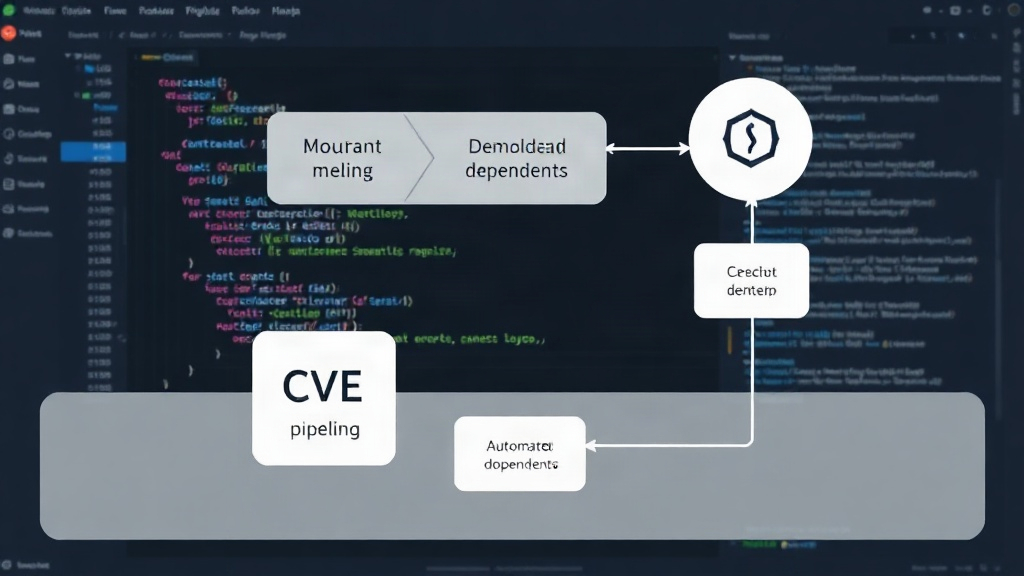
Integrating these bots into your CI/CD pipeline means that every build or deployment can be checked against the latest threat landscape. A bot can fail a build if a critical vulnerability is detected in a direct or transitive dependency, preventing vulnerable code from reaching production. This proactive gatekeeping is a cornerstone of SecDevOps, embedding security earlier and more effectively into the development workflow.
Leveraging Open Threat Intelligence Datasets
Beyond CVE databases, a wealth of open-source threat intelligence exists. This includes lists of malicious IP addresses, domain names, file hashes, malware signatures, and known exploit patterns. Integrating these datasets provides a richer, more actionable understanding of potential threats.
Open CTI feeds can be categorized by the type of intelligence they provide:
- Indicators of Compromise (IoCs): These are forensic artifacts (IPs, domains, hashes) observed on networks or in operating systems that indicate a potential intrusion.
- Exploitability Data: Information detailing whether a CVE has known active exploits in the wild, or if it's being actively targeted by threat actors. This helps prioritize patching efforts for vulnerabilities that pose an immediate risk.
- Malware Signatures and Patterns: Data used by security tools to detect known malicious software.
By ingesting and processing these diverse open datasets, organizations can build more sophisticated threat detection and prevention mechanisms. For instance, a firewall rule could be automatically updated to block known malicious IPs, or an endpoint detection and response (EDR) system could be configured to look for specific file hashes associated with recent attack campaigns.
Integrating into the SecDevOps Pipeline
The true power of these tools lies in their integration. A SecDevOps pipeline is not just about automation; it's about intelligent automation that informs development decisions. Here's how these components work together:
1. Dependency Analysis and CVE Alerting
When a developer commits code, the CI pipeline kicks off. The first stage involves dependency scanning. A CVE bot identifies any vulnerable libraries. If a high-severity CVE is found, the pipeline can halt, and a ticket is automatically created in the team's issue tracker, assigned to the relevant developer. The ticket includes details of the CVE, the affected dependency, and a link to the advisory.
2. Enriching CVE Data with CTI
The integration goes further. If a CVE is flagged, the system can then query open CTI feeds to determine if this specific CVE has known exploits in the wild or if the affected software component has been associated with malicious activity. This provides crucial context for prioritization. A CVE with a high CVSS score but no known active exploits might be lower priority than a moderate-severity CVE that is actively being used in attacks against your industry vertical.
3. Automated Response and Mitigation
Based on the enriched intelligence, automated workflows can be triggered. For critical vulnerabilities with active exploits, the pipeline might automatically attempt to update the dependency to a patched version. If an update is not immediately feasible, the system could suggest temporary mitigations, such as implementing specific firewall rules or modifying application configurations. For IoCs identified in open feeds, automated systems can push these indicators to security monitoring tools.
4. Continuous Monitoring and Feedback
This isn't a one-time integration. The pipeline continuously monitors for new CVEs affecting deployed applications and for emerging threats in CTI feeds. Security teams receive regular reports, and developers receive timely alerts. This creates a continuous feedback loop, ensuring that security is an ongoing conversation and action, not a periodic chore.
The Human Element: Bridging Automation and Expertise
While automation is key, it doesn't replace human expertise. The insights generated by CVE bots and CTI feeds must be interpreted by security professionals and developers. The goal is to augment human capabilities, freeing up valuable time from repetitive tasks to focus on higher-level strategic security challenges, threat hunting, and secure design principles. The surprising detail here is not the complexity of integrating these tools, but how readily available open-source solutions and cloud-native CI/CD platforms make this level of automation achievable for even small teams.
What nobody has addressed yet is the long-term impact on the skill sets required for security professionals. As more tasks become automated, the demand for individuals who can manage, interpret, and strategically leverage these automated systems—and who possess deep understanding of threat actors and defensive tactics—will only increase.
Conclusion: Building a Resilient Software Supply Chain
Automating threat intelligence through CVE bots and open CTI datasets is no longer a futuristic ideal; it is a practical necessity for modern software development. By embedding these capabilities into the SecDevOps pipeline, organizations can shift from a reactive security posture to a proactive, resilient one. This integration ensures that vulnerabilities are identified and addressed early, and that the organization is better equipped to defend against evolving threats. If you manage a development team, start by evaluating your current dependency management and vulnerability scanning processes. The tools and data exist today to significantly enhance your security posture with minimal friction.