
The Invisible Interface: What is Audio AR?
The concept of augmented reality (AR) typically conjures images of sleek headsets overlaying digital information onto the physical world, or smartphone screens projecting virtual objects into our living rooms. But a quieter, more pervasive form of AR is rapidly gaining traction: Audio AR. This technology uses spatial audio to layer digital soundscapes and information onto our physical environments, creating an invisible interface that interacts with our surroundings and our senses without demanding visual attention.
Unlike visual AR, which requires dedicated hardware like smart glasses or a smartphone camera, Audio AR can function with ubiquitous devices like earbuds and headphones. This accessibility is a key driver of its potential widespread adoption. Imagine walking down a street and hearing a subtle audio cue guiding you to a hidden historical marker, or receiving real-time, context-aware information about a landmark without having to pull out your phone. This is the promise of Audio AR: a richer, more informed, and more interactive reality experienced through sound.
The core of Audio AR lies in its ability to understand and respond to the user's spatial context. This involves a sophisticated interplay between location services (GPS, Wi-Fi triangulation), inertial measurement units (IMUs) in wearable devices to track head movements, and increasingly, sophisticated AI models that can interpret environmental cues. When combined, these technologies allow audio experiences to be precisely anchored to specific locations or objects in the real world, creating a sense of presence and immersion that traditional audio cannot replicate.
Think of it less like a podcast you listen to anywhere, and more like a personalized, location-aware sound guide. If you're standing in front of a famous statue, Audio AR could deliver its history, whispered directly into your ear as if a knowledgeable guide were beside you. If you're navigating a new city, directional audio cues could guide you turn-by-turn, sounding as if they emanate from the street itself, not just from your headphones.
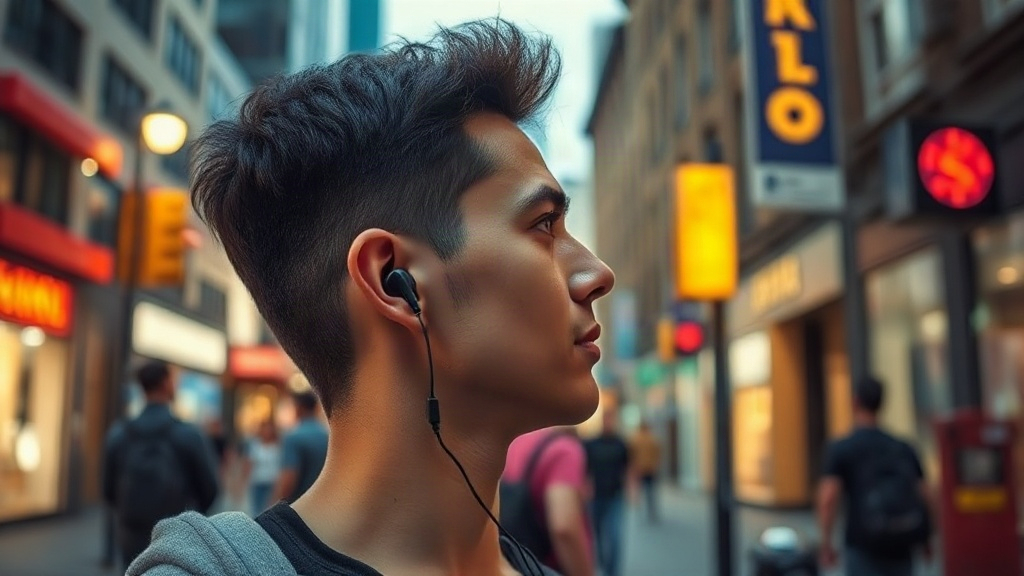
The Technology Stack Behind the Sound
Developing robust Audio AR experiences requires a confluence of several technological advancements. At its foundation is precise spatial audio rendering. This isn't just stereo sound; it's binaural audio that simulates how sound waves interact with the human head and ears, creating a convincing sense of directionality and distance. Advanced algorithms are needed to dynamically adjust these audio cues based on the user's head orientation and movement, ensuring the sound remains anchored to its virtual source.
Location awareness is paramount. While GPS has been a staple for years, its accuracy in dense urban environments can be limited. Audio AR often relies on a combination of GPS, Wi-Fi fingerprinting, Bluetooth beacons, and visual-inertial odometry (VIO) for more precise indoor and outdoor positioning. This multi-modal approach creates a more resilient and accurate understanding of where the user is and where they are looking.
Machine learning plays a crucial role in interpreting the environment and user intent. AI models can be trained to recognize specific sounds (e.g., traffic noise, conversation), identify objects through device sensors (though less common in pure audio AR), and predict user needs based on their location and activity. This allows for proactive delivery of relevant audio information or dynamic adjustments to the audio experience.
The hardware itself, particularly earbuds and headphones, is evolving. Newer devices feature advanced microphones for environmental sensing and noise cancellation, improved battery life, and lower latency, all critical for a seamless Audio AR experience. The processing power of smartphones and even dedicated AR chips in some wearables is also enabling more complex on-device audio processing.
Use Cases and Potential Applications
The applications for Audio AR span numerous domains, promising to enhance productivity, safety, and entertainment.
Navigation and Wayfinding
For pedestrians and cyclists, Audio AR can offer intuitive, hands-free navigation. Instead of glancing at a map, users receive subtle audio prompts that guide them through complex urban environments. This is particularly valuable in situations where visual attention is critical, such as crossing busy streets.
Information Access and Education
Museums, historical sites, and tourist destinations can leverage Audio AR to provide rich, contextual narratives. Imagine walking through an ancient ruin and hearing the sounds of its past, or learning about a piece of art with an audio description that seems to emanate directly from it. In educational settings, it can provide real-time feedback or instruction without interrupting the physical activity.
Accessibility
Audio AR holds immense potential for individuals with visual impairments. It can serve as an advanced digital guide, providing detailed descriptions of surroundings, object recognition, and hazard alerts, enabling greater independence and safety.
Gaming and Entertainment
Immersive audio experiences can be taken to a new level. Location-based audio games can turn public spaces into interactive playgrounds, with sound effects and character dialogue dynamically triggered by the player's movement and position.
Workplace and Industrial Applications
In industrial settings, Audio AR can provide technicians with hands-free access to manuals, schematics, or remote expert guidance. Imagine a mechanic receiving step-by-step audio instructions for a complex repair, anchored to the actual components of the machinery.
Challenges and the Road Ahead
Despite its promise, Audio AR faces several significant hurdles before widespread adoption. The primary challenge is creating truly compelling and non-intrusive experiences. Poorly designed audio cues can be annoying or overwhelming, leading to user fatigue and rejection. The technology needs to be intuitive, reliable, and contextually aware enough to be genuinely helpful rather than a distraction.
Accuracy in spatial audio and location tracking remains a technical challenge, especially in dynamic or unpredictable environments. Battery life for always-on audio processing and sensing is another practical concern for wearable devices.
Furthermore, the development ecosystem for Audio AR is still nascent. Standardized tools, platforms, and content creation workflows are needed to empower developers and creators to build sophisticated experiences. Privacy is also a consideration; devices equipped with environmental sensing capabilities raise questions about data collection and user consent.
What nobody has addressed yet is the potential for information overload or the creation of 'digital echo chambers' where users are constantly fed curated audio information, potentially limiting serendipitous discovery or exposure to diverse perspectives. The ethical implications of pervasive, context-aware audio are yet to be fully explored.
The Future is Heard
Audio AR represents a significant evolution in how we interact with digital information and the world around us. By moving beyond the screen and leveraging the power of spatial audio, it offers a more natural, integrated, and accessible form of augmented reality. As the underlying technologies mature and the development ecosystem grows, we can expect Audio AR to weave itself into the fabric of our daily lives, transforming everything from navigation to entertainment with an invisible, yet powerful, layer of sound.